REVIEW · KUALA LUMPUR
Kuala Lumpur Colonial History Walk – Private Guided Tour
Book on Viator →Operated by Sabri Zain · Bookable on Viator
Colonial KL is close up on foot. This private guided walk turns key colonial-era buildings into a real story you can follow block by block. I especially like how the route packs in major sights without feeling like a checklist, and I also like the guide’s storytelling style that makes dates and architects feel practical. One thing to plan for: it’s still a walking tour, so you’ll want a moderate fitness level and comfy shoes.
The price is $45 per person for 3 to 4 hours, which can be a good value because you’re not paying extra for entry to the stops. It’s also offered as a private experience for up to 4 guests, so small groups can make it easier to ask questions and slow down when something sparks your interest. You’ll finish at Central Market, which is handy for getting back to your hotel.
In This Review
- Key things that make this walk work
- Getting your bearings at Kuala Lumpur Railway Station
- Arthur Benison Hubback’s railway admin building across the street
- A quick orientation to the Klang River and why the city has a name
- Old Market Square Clock Tower: coronation symbolism in the street scene
- Jamek Mosque at the confluence that shaped Kuala Lumpur
- Sultan Abdul Samad: the colonial government complex in full view
- St. Mary’s Cathedral: from timber to brick in 1887 and 1895
- Selangor Club and the idea of membership by education
- Kuala Lumpur Library and the former Government Printing Office (1899)
- 2, Jln Ampang: the bank building story from 1909
- Queen Victoria Fountain: shipped from Britain, remembered for 1897
- Old FMS Railway Office: the shift toward a unified system
- Central Market: Kapitan Yap Ah Loy’s 1888 wet market to a commerce hall
- Price and value: why $45 can make sense for a 3–4 hour private walk
- Who should take this, and who might prefer another style
- Small practical tips for a smoother walk
- Should you book this Kuala Lumpur colonial history walk?
- FAQ
- How long is the Kuala Lumpur Colonial History Walk?
- How much does the tour cost?
- Is this a private tour or a group tour?
- Where does the tour start and end?
- Are admission fees included?
- What should I bring?
- Is there a mobile ticket?
- What is the fitness level needed?
- What is the cancellation policy?
Key things that make this walk work
- A private guide who tells the city like a story, not a script of dates
- Colonial landmarks in a compact central loop, designed for a 3–4 hour pace
- Free-entry stops across railways, churches, mosques, clubs, and markets
- Guides named Priam or Pritam are known for strong building explanations
- A clear start-to-finish flow, starting at Kuala Lumpur Railway Station and ending at Central Market
Getting your bearings at Kuala Lumpur Railway Station
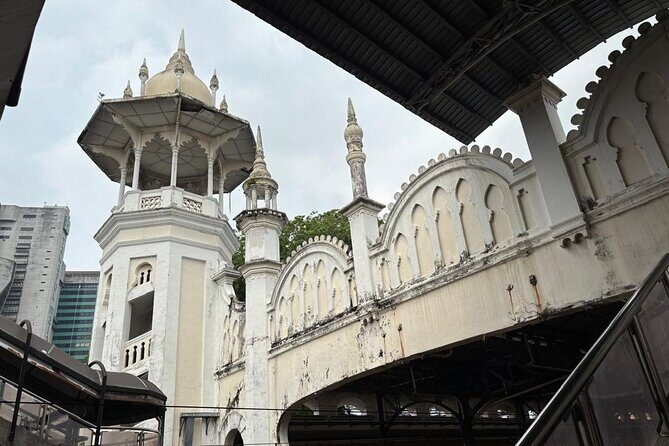
Most colonial-city walks start with a grand square. This one starts where you can feel movement—at the Kuala Lumpur Railway Station. The station’s look is described as a confection of domes and minarets, all in white, which helps you understand why it grabs first-time visitors.
What I like here is that you’re not just seeing a pretty façade. Your guide can connect the station to the way colonial Kuala Lumpur worked as a transport hub. Even the timing helps: you get a short orientation first, so when later buildings reference rail lines, administration, and commerce, they make more sense.
Practical note: the stop is about 15 minutes. That’s long enough for photos and explanations, but not for lingering like it’s a museum.
You can also read our reviews of more walking tours in Kuala Lumpur

Arthur Benison Hubback’s railway admin building across the street
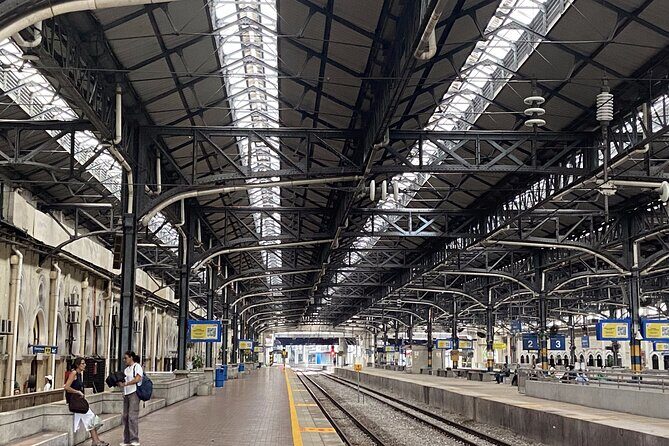
Directly across from the station is the Malayan Railway Administration Building, the former FMS Railway Administration Office. This was designed by Government Architect Arthur Benison Hubback, and construction began in 1914—right in the thick of colonial expansion.
This stop is where the tour shifts from postcard architecture to how power and infrastructure were built together. Railways weren’t just trains. They were administration, logistics, and the blueprint for where people and goods would go.
If you’re the kind of traveler who likes details, this is your moment: you’ll hear how architecture and planning often worked as a single system, and your guide can point out cues that aren’t obvious at street level.
A quick orientation to the Klang River and why the city has a name
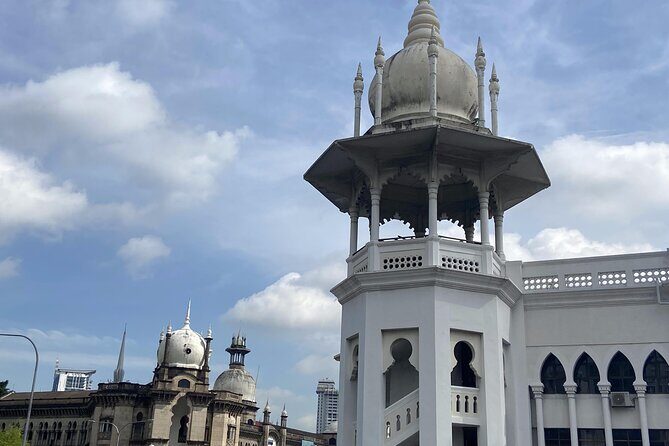
Colonial Kuala Lumpur wasn’t shaped only by buildings. It was shaped by water. The tour includes an orientation to the Klang River (about 120 km long), Selangor’s longest river and Malaysia’s 8th longest, rising in the Titiwangsa range near Klang Gates Quartz Ridge and flowing through Kuala Lumpur before reaching the straits.
Why it matters on a walking tour: rivers explain both placement and identity. And that sets you up perfectly for the next stop at Jamek Mosque, where the story becomes very literal.
This one is brief in the schedule, so keep your camera ready, but don’t expect a long lecture. Think of it as the tour’s foundation layer.
Old Market Square Clock Tower: coronation symbolism in the street scene
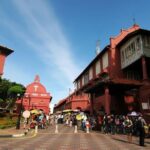
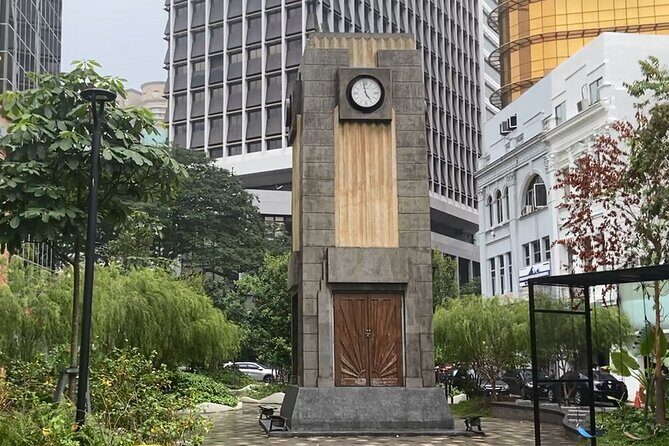
Next up is the Old Market Square Clock Tower. It’s noted for a clock tower erected in 1937 to mark the coronation of His Majesty King George VI. The design is credited to Arthur Oakley Coltman.
This stop works because it’s a reminder that colonial influence didn’t only show up in offices and railways. It showed up in public timekeeping—literally putting a monarchy into everyday life.
The tour keeps you here around 10 minutes, so you’ll want to choose your angle quickly. If you like architectural photography, try to get a shot that includes the clock tower and the surrounding market-square setting, since the tower was meant to be part of daily flow.
Jamek Mosque at the confluence that shaped Kuala Lumpur
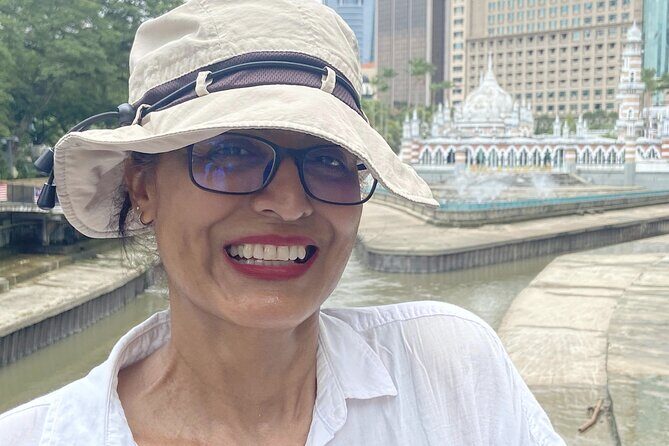
Jamek Mosque is positioned at what’s described as the birthplace of the city: the confluence of the muddy rivers Klang and Gombak. This geographical feature is tied directly to the city’s name.
This is one of the stops that adds balance. Earlier sights can feel like the colonial story from a European lens. Here, you get the local geography and naming logic, which helps you read the rest of the central area with a clearer sense of why Kuala Lumpur grew where it did.
The stop is about 15 minutes. Dress and behavior matter at religious sites, so plan for respectful clothing and keep your pace steady. If you’re unsure what’s appropriate, your guide will usually help you get it right before you move inside or photograph nearby.
You can also read our reviews of more guided tours in Kuala Lumpur

Sultan Abdul Samad: the colonial government complex in full view
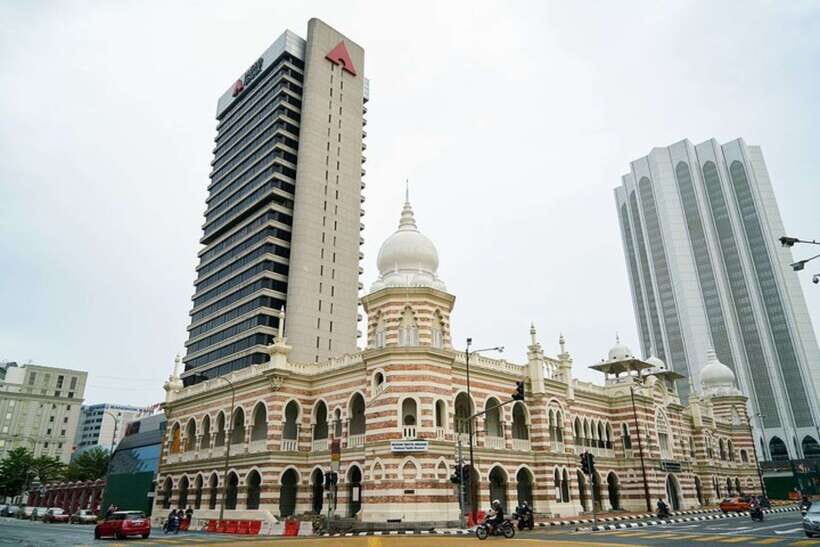
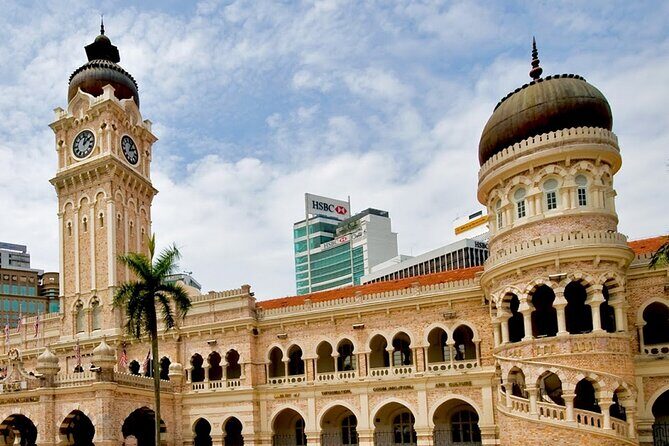
Then you move to the Sultan Abdul Samad Building, a key 19th-century colonial-era structure built in 1894 for the British colonial administration. It’s flanked by several important civic buildings: the former General Post Office, Magistrate Courts, and the Kuala Lumpur Council Building.
This stop is more than a photo opportunity. It’s a chance to see how government presence was designed to look permanent and authoritative. Your guide can help you connect the dots between administrative buildings and the railway and market systems you’ve already seen.
Expect about 15 minutes. It’s a good length if you want both explanation and time to walk around to different sides of the building. Also, because the area is central, you’ll likely see everyday city life intersect with the heritage structures—use that as context, not distraction.
St. Mary’s Cathedral: from timber to brick in 1887 and 1895
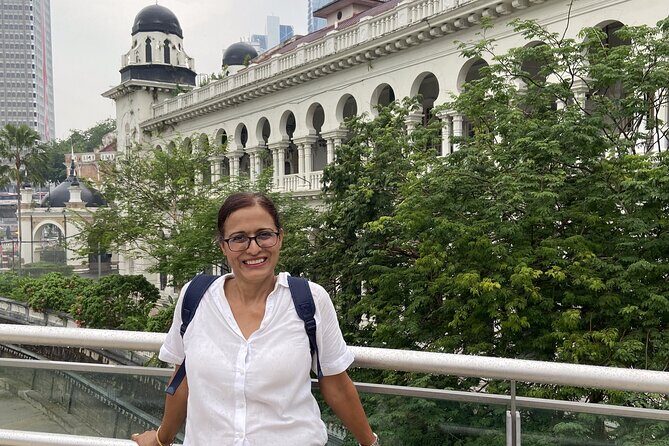
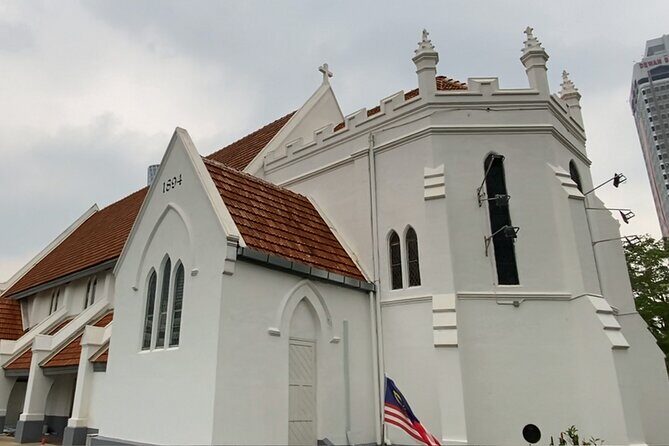
St. Mary’s Cathedral (Anglican Church of St Mary the Virgin) is next, with a story that goes beyond architecture. The church began as a timber edifice of modest ambition in 1887 and was replaced by the present brick structure in 1895.
That timeline is the kind of detail that makes colonial religious architecture feel real. Instead of assuming buildings are fixed, you see development in stages—what was built first, what replaced it, and why.
The stop is about 15 minutes. If you’re sensitive to churches feeling too formal, you might still enjoy this one because the tour frames the cathedral as a practical part of city growth. Your guide can also place it on the hilltop context mentioned in the description (Bukit Aman hill), which helps you understand the visual prominence.
Selangor Club and the idea of membership by education
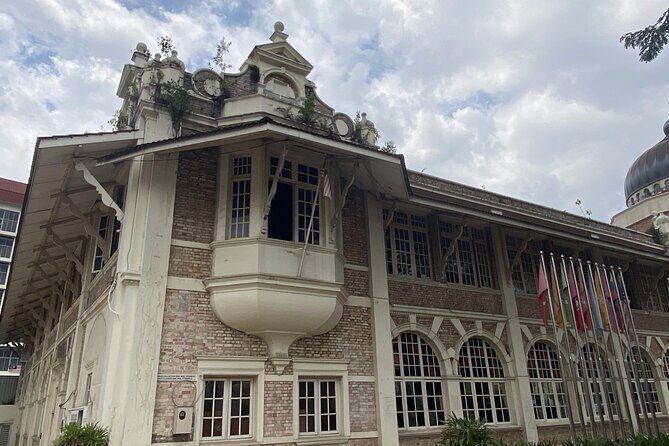
The tour then includes the Selangor Club, founded in 1884. It served as a meeting place for educated and high-ranking members of British colonial society. While many early members were British, the description also notes that admission was based more on education than on nationality.
Why this matters: it gives you a sharper lens for colonial society than just rulers and officials. This kind of club helps explain who had access to influence, conversation, and decision-making power.
The stop is shorter, around the 10-minute range in the schedule. Use it to ask your guide what the club represented socially, and how that kind of institution likely shaped relationships around the central government and business areas.
Kuala Lumpur Library and the former Government Printing Office (1899)
At the Kuala Lumpur Library grounds, you’ll see the former Government Printing Office, completed in 1899. This building is described as the place where government reports, official government books, and notifications were produced.
This is a fantastic stop for readers who like to understand how empires managed information. Printing offices are the quiet engine room of control: documents, announcements, records, and official narratives.
You get about 10 minutes here. That’s perfect if your guide is strong—because you’ll learn what was printed, why it mattered, and how it supported administration. If you’re just rushing through, you’ll miss the point, so try to slow your pace for a few minutes and look for the details your guide calls out.
2, Jln Ampang: the bank building story from 1909
The route includes 2, Jln Ampang, completed in 1909 on the south side of Independence Square. This building housed the main branch of the Chartered Bank of India, Australia and China later known as Standard Chartered. The bank’s roots are traced to its London founding in 1853.
This stop is where the colonial story becomes commercial. Railways move goods. Government rules. Banks keep transactions flowing. It all connects.
Expect around 10 minutes. If you like business history, this is a good place to ask how banking influenced everyday life, not just big trade. If you’re more arts-and-architecture focused, you can still appreciate the building’s role as a monument to financial power.
Queen Victoria Fountain: shipped from Britain, remembered for 1897
At the corner of the Selangor Club Padang, you’ll find the Queen Victoria Fountain. It was shipped from Britain to Malaya to commemorate Queen Victoria’s diamond jubilee in 1897, with the note that it wasn’t assembled on site until later.
There’s a certain irony in that kind of colonial commemoration: symbolism arrives by ship, then gets installed when and how logistics allow. A good guide will help you see how public monuments were scheduled, transported, and used to reinforce loyalty.
This stop is around 10 minutes. Keep it quick and look at the fountain as a street-level marker—something installed to be seen in ordinary time.
Old FMS Railway Office: the shift toward a unified system
Now you go back to rail history at Old FMS Railway Office, described as the first headquarters of the Federated Malay States Railways (FMSR). It marked a move from fragmented state railways to a unified system.
This is an important conceptual stop. Earlier you saw the station and railway administration office. Here you learn the organizational logic behind them. And the description adds a historical marker: Malaya’s first line opened in 1885 from Taiping to Por… (the text cuts off, so don’t expect a full route lesson here). Still, the key takeaway is the timeline and the move toward standardization.
You’ll have about 10 minutes. Since the tour is walking-paced, focus on understanding what changed when railways consolidated.
Central Market: Kapitan Yap Ah Loy’s 1888 wet market to a commerce hall
The tour ends at Central Market Kuala Lumpur, which starts with a story from 1888. The market was first conceived by Kapitan Yap Ah Loy as a humble wet market and then transformed into a hall of commerce. The description also notes that the original structure gave way to a more grander version later.
This ending is smart. It gives you something active and local at the exact point when your brain is full of architecture and colonial dates. If you’ve been looking at government and institutions for hours, a market feels like the city’s heartbeat.
The stop here is longer—about 30 minutes. Use that time for one practical goal: regroup, grab water if you need it (bottled water isn’t included), and eat something easy if you’re staying out longer. And if you need a souvenir, this is also the sort of place where you can shop without needing to plan a separate stop.
Price and value: why $45 can make sense for a 3–4 hour private walk
At $45 per person for 3 to 4 hours, this sits in the mid-range for a private guided city walk. The value comes from a few specific choices:
- Private experience for up to 4 guests means you’re not paying for a huge group dynamic.
- Admission fee coverage is listed, and the tour’s stops are described as free entry points. That reduces surprise costs.
- Printed materials and a guide-led route can be worth it if you like connecting names, dates, and buildings.
- Mobile ticket helps with on-the-day convenience.
The tour is booked on average about 30 days in advance, which is a clue it’s popular. If your travel dates are firm, earlier booking helps.
If you want to keep your costs tight, remember what’s not included: meals and bottled water. So bring cash/credit for food, or plan to pick up water near Central Market or along the route.
Who should take this, and who might prefer another style
This is a great fit if you want:
- Architecture plus context, with a guide who explains what you’re looking at
- A compact central walking route where you can hit multiple colonial-era anchors in one afternoon-style window
- A small-group vibe where you can ask follow-up questions
You might want to choose a different option if:
- You don’t enjoy walking tours and prefer more time sitting in a café with the city drifting by
- You expect every stop to be a long museum visit (this is built for short, guided street-level stops)
Small practical tips for a smoother walk
- Wear shoes you can trust. This is a walking route with multiple short stops.
- Bring water, because bottled water isn’t included.
- Use your camera early. Some buildings look best from certain angles, and the schedule doesn’t give you hours at each one.
- If you’re trying to meet your guide, the tour starts at Kuala Lumpur Railway Station (110, Jalan Sultan Hishamuddin, Kampung Attap, 50000 Kuala Lumpur). It ends at Central Market (50050 Kuala Lumpur), which is convenient for public transport back to your hotel.
Should you book this Kuala Lumpur colonial history walk?
Yes, if you want a private, story-led way to understand colonial Kuala Lumpur without hopping across town. The route is designed for a tight central loop, and the stops cover the main colonial pillars: transport (railways), government (civic blocks), religion (Anglican and mosque landmarks), information (government printing), finance (bank building), and commerce (Central Market).
If you’re the kind of traveler who enjoys details like architects’ names and why a clock tower was placed in 1937, this will feel satisfying rather than rushed. And if you want a light “afternoon plan” that still teaches you something real, this is the kind of tour that helps you see the city as a connected system—not just a set of photos.
FAQ
How long is the Kuala Lumpur Colonial History Walk?
The tour lasts about 3 to 4 hours.
How much does the tour cost?
It costs $45.00 per person.
Is this a private tour or a group tour?
It’s a private tour/activity. Only your group participates, and it’s personalized for up to 4 guests.
Where does the tour start and end?
It starts at Kuala Lumpur Railway Station and ends at Central Market Kuala Lumpur.
Are admission fees included?
Yes. Admission fees for the stops are included, and the listed stops note free admission tickets.
What should I bring?
Bottled water and meals are not included, so you’ll want to bring water or plan to buy it. Wear shoes appropriate for walking.
Is there a mobile ticket?
Yes, the tour includes a mobile ticket.
What is the fitness level needed?
You should have a moderate physical fitness level.
What is the cancellation policy?
Free cancellation is available up to 24 hours in advance for a full refund. If you cancel less than 24 hours before the experience, the amount paid is not refunded.