REVIEW · KUALA LUMPUR
Historical Malacca Tour from Kuala Lumpur
Book on Viator →Operated by SK TRAVEL CAR HIRE M SDN BHD · Bookable on Viator
Malacca in one easy day beats the fuss. This guided trip takes you past Portuguese, Dutch, and local landmarks, with stops that explain how different communities shaped the city. It’s built for people who want culture without wrangling buses and train schedules.
I especially like the hotel pickup and drop-off, because it makes the day feel simple from start to finish. I also love that lunch is included, and the Nyonya lunch is a real highlight that keeps your energy up while you’re walking the historic core.
The main thing to consider is the pace. You’re moving through multiple sites in about 9 hours, and on Fridays some museums have limited hours, so timing matters.
In This Review
- Key things to know before you go
- Why this Malacca day trip feels easier than DIY
- The drive from Kuala Lumpur: what to expect before you start walking
- House of Museums Malacca: antiques by the river, with a quick walk from Jonker
- St. Peter’s Church and Dutch Square: the empire story in stone and streets
- Christ Church and A Famosa Fort: where the Dutch rebuilt and the Portuguese held power
- Cheng Hoon Teng Temple: Chinese roots during Dutch Malacca
- Kampung Kling Mosque and Sri Pogyatha: Harmony Street in real life
- Jonker Street time: shopping and people-watching without rushing
- Price and logistics: is $120 worth it for a one-day Malacca hit?
- Smart tips for Fridays: beat traffic and watch museum hours
- Who this Malacca tour is best for
- Service matters: guides like Chandran/Chandra can make it click
- FAQ
- How long is the Historical Malacca Tour from Kuala Lumpur?
- What time does the tour start?
- How long does it take to get from Kuala Lumpur to Malacca?
- Is hotel pickup and drop-off included?
- Is lunch included?
- Does the tour include entrance tickets?
- Is alcohol included with lunch?
- Is this tour private?
- What fitness level do I need?
- What is the cancellation policy?
- Should you book this Malacca tour?
Key things to know before you go
- Direct, fast transport from Kuala Lumpur (about 1.5 hours each way)
- Hotel transfers included, so you skip the logistics headache
- Guided walking in the core, with plenty of short stops rather than one long grind
- A religion-and-empire mix, from Portuguese forts to Dutch churches and Chinese and Indian temples
- Lunch included, including Nyonya-style food
- Friday timing tip: museum closures can affect your schedule
Why this Malacca day trip feels easier than DIY
If you’ve tried to plan Malacca on your own, you know the annoying part is not seeing the sights. It’s getting from your hotel, to transport, to the right stops, on time—especially if you want a smooth day instead of a stressful one.
This tour solves that with a direct run from Kuala Lumpur and hotel transfers included. The idea is straightforward: you get picked up, driven to Malacca, guided through the most important layers of the city, then back again. For a one-day visit, that is a big deal.
Another thing I like is that the day is clearly organized around history. You’re not just hopping from photo spot to photo spot. The sequence helps you understand why these buildings exist where they do, and how each group left a footprint.
And yes, you’ll still walk and stand. But the tour is designed for a steady flow, not an all-day endurance test. The good fit here is anyone with moderate physical fitness, who can do short stretches at a time.
You can also read our reviews of more historical tours in Kuala Lumpur

The drive from Kuala Lumpur: what to expect before you start walking
Your start is 8:00am, and the transfer to Malacca takes about 1.5 hours. That timing matters because it gets you into the city before you’re competing with the heaviest foot traffic.
On the road, I’d think of this as your warm-up for the day. Once you arrive, you’ll be in the historic center, where the sights are compact enough to cover without burning your whole time just getting between neighborhoods.
This is also one reason I think the tour is good value. You’re paying for a whole package: driver service, guided interpretation, and lunch, plus the entry fees that apply.
House of Museums Malacca: antiques by the river, with a quick walk from Jonker
The first stop is the House of Museums Malacca, located beside the Malacca River. It’s an easy walk to Jonker Walk—about 8 minutes, depending on your pace.
This stop is all about atmosphere. It’s a house full of antiques, which means you’re not only looking at buildings from the outside; you’re seeing what life may have felt like through objects and household pieces. If you grew up in the 1950s era, it can feel like stepping into familiar everyday items from that time period.
Practical note: this stop includes admission. The museum timing can matter later in the day, so if you’re visiting on a Friday, it’s worth keeping an eye on hours (more on that below).
St. Peter’s Church and Dutch Square: the empire story in stone and streets
After you’re oriented with the museum, the tour leans into the Portuguese and Dutch chapters.
St. Petri (St. Peter’s Church) connects to a key turning point: the Portuguese occupation ended when Malacca fell to the Dutch in 1641. That shift triggered persecution of Catholics by the Dutch, and churches were destroyed in the aftermath. Walking around this area, you feel how political control directly shaped what religious life was allowed to look like.
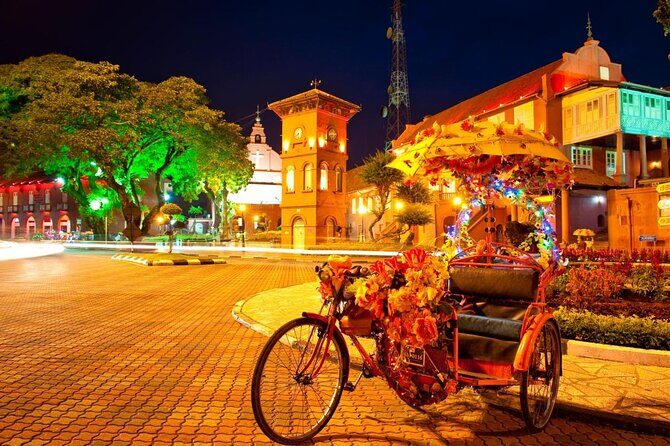
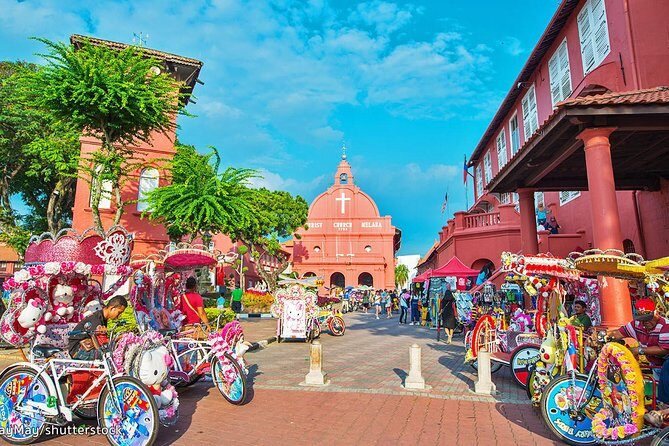
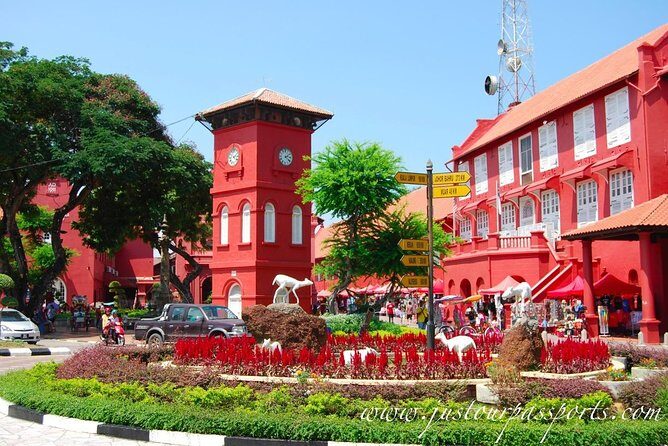
Then you move to Red Square (Dutch Square) and the Stadthuys area. This is one of those places where street names and color-coded landmarks actually make sense because you can picture the administrative center. The Stadthuys sits in the heart of Malacca City, tied to Malacca’s role as an administrative capital.
These two stops work well together. You go from the story of religious disruption to the idea of governance and control, both left behind in the built environment.
Christ Church and A Famosa Fort: where the Dutch rebuilt and the Portuguese held power
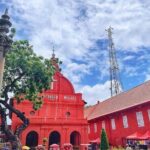
Christ Church is tied to Dutch decisions after the Portuguese period. In 1741, the Dutch burgher community built a new church to replace an older one, the Bovenkerk. The timing connects to the centenary of Malacca’s capture from the Portuguese.
So you’re seeing a pattern: when power changes, religious and civic buildings follow. That’s exactly what makes these historic stops more than just scenery. The details give you a timeline you can keep in your head as you move.
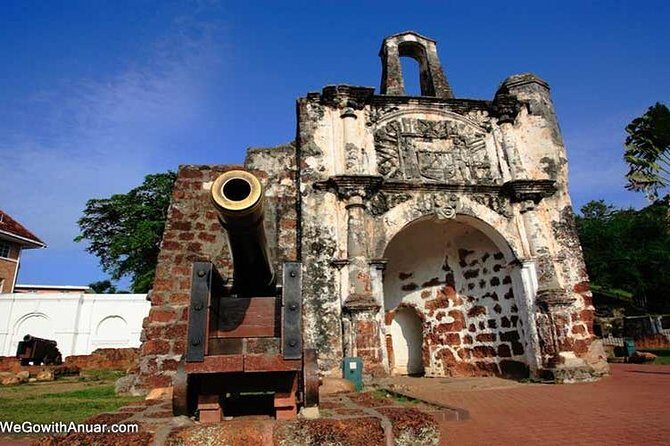
Next comes A Famosa Fort, one of Malacca’s most recognizable landmarks. Built by the Portuguese in 1512, it’s the oldest major Portuguese fortress presence in the city. A particularly interesting detail is that the oldest part is described as a five-storey keep, and that gave its name to the fortress as a whole.
If you like history that’s readable on the ground, this is a strong payoff stop. Forts are physical arguments: they show what people expected to defend, and how cities looked when trade and conflict sat side by side.



Cheng Hoon Teng Temple: Chinese roots during Dutch Malacca
Cheng Hoon Teng Temple is one of the anchors for the Chinese community chapter in Malacca. The site was founded in 1645 during Dutch Malacca, connected to Chinese Kapitans Tay Kie Ki Tay Hong Yong. Later, additional structures were built in 1673 under the leadership of Kapitan Li Wei K… (the tour info truncates the name, but the year and leadership connection are clear).
This temple stop is valuable because it shows how Malacca wasn’t only a European chessboard. It was also an international port where local and migrant communities formed organized religious life.
Even if you’re not chasing architectural details, the key takeaway is the coexistence angle. You’ll notice the tour is built to connect these communities across distances that feel short on a map. Religion, language, and trade weren’t isolated categories here.
Kampung Kling Mosque and Sri Pogyatha: Harmony Street in real life
One of the best parts of this tour is the way it places different faith sites close enough together that you can grasp the idea of neighborhood harmony.
Kampung Kling Mosque traces back to Indian Muslim traders, with an original wooden structure built in 1748. It was rebuilt with bricks in 1872, and it still keeps its traditional design character.
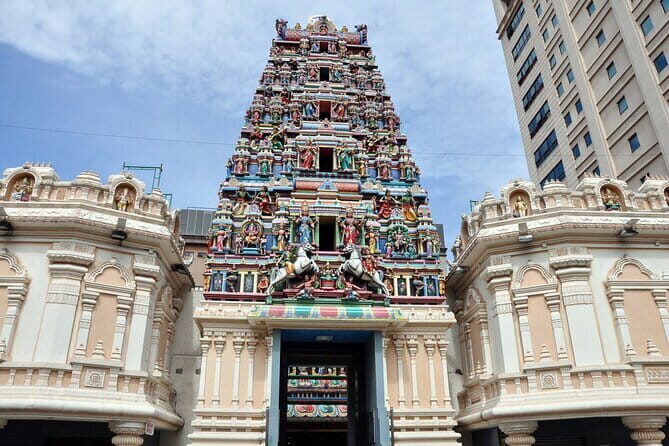
Then the tour heads to Sri Pogyatha Vinoyagar Moorthi Temple. The temple is on Jalan Tukang Emas, also known as Harmony Street, because of how close it sits to the mosque and to Cheng Hoon Teng Temple.
That street label isn’t just a marketing phrase. When you’ve seen the mosque and the temple within walking reach, you get the lived feeling of how different communities could share a city space without erasing each other. The tour even nudges you to think about mutual respect through the order of visits.
Jonker Street time: shopping and people-watching without rushing
After the heavier history stops, the tour ends with time in the Jonker Street area (often called Jonker Walk). This is the Chinatown zone in Malacca City.
You start near the Malacca River, with Jonker Walk beginning across from the area near the Stadthuys. The street is known for historical houses lining both sides, which is exactly what makes it more than a typical shopping strip. You can wander while still feeling the architectural story.
This is a good time to slow down a bit: browse crafts, look for small gifts, or just enjoy the street energy. The tour makes it practical by keeping this portion on the schedule instead of dumping you in the city with no idea where to go.
Price and logistics: is $120 worth it for a one-day Malacca hit?
At $120 per person, this isn’t a budget-cab-only excursion. But it also isn’t priced like a premium museum marathon. The value comes from what’s included:
- Hotel pickup and drop-off
- Lunch included (including Nyonya food)
- Taxes and fees handled, including GST
- Admission included at least for House of Museums Malacca (other major stops are described as free)
You’re basically buying one thing most people try to “save money on”: your time and stress. With transport, guided stops, and meals built in, you’re more likely to actually enjoy Malacca instead of spending the day tracking schedules.
Also, this tour is described as a private tour/activity, meaning it’s only your group. That tends to make the day feel more flexible and less crowded at each stop.
One more small planning detail: it’s typically booked about 47 days in advance. If you’re traveling in a busy period, that’s your clue to book sooner rather than later.
Smart tips for Fridays: beat traffic and watch museum hours
If you’re visiting on a Friday, plan smarter than usual.
A key tip is to try to request an earlier departure, ideally around 7:00am, if possible. Traffic can pile up and cut into your sightseeing time. Starting earlier helps you arrive with more breathing room.
Also, be aware that some museums close on Fridays during a midday window. In this case, the museum hours described are 12.15 to 14.45. So if your day trip hits the museum after that point, you may lose that stop or have to wait.
Finally, manage the order you want on the day. If your tour schedule includes both guided and free time, it can work better to do any unstructured time earlier rather than later, so you’re not trying to fit browsing into a shrinking window.
If you want this tour to feel relaxed, ask the provider about Friday timing before you go.
Who this Malacca tour is best for
This trip is a strong fit if you want:
- A guided day that connects the dots between Portuguese, Dutch, Chinese, and Indian Muslim influences
- Convenient transport from Kuala Lumpur with hotel transfers included
- Included lunch so you don’t spend your day hunting for food options
- A structured set of stops that makes a one-day visit actually feel complete
I’d also recommend it for couples, small groups, and first-timers who want a clear route through the historic core without doing map gymnastics.
If you’re the type who likes to linger for hours in one museum, you might find the pacing a little tight. But for most people, the short stop lengths and steady flow feel like the right compromise.
Service matters: guides like Chandran/Chandra can make it click
A standout theme is the way the guide brings the day to life. Names that came up include Chandran and Chandra, and both were praised for being friendly and for making the history easy to follow.
In practical terms, a good guide here does two things:
- Explains what you’re looking at, including why it changed hands or got rebuilt.
- Keeps the group moving at a pace that still leaves time to look around.
That personal touch turns a list of landmarks into a story you can walk through.
FAQ
How long is the Historical Malacca Tour from Kuala Lumpur?
It runs for about 9 hours.
What time does the tour start?
The start time is 8:00am.
How long does it take to get from Kuala Lumpur to Malacca?
The direct tour gets you to Malacca in about 1.5 hours.
Is hotel pickup and drop-off included?
Yes, hotel pickup and drop-off are included.
Is lunch included?
Yes, lunch is included.
Does the tour include entrance tickets?
House of Museums Malacca includes an admission ticket. Other stops listed are marked as free.
Is alcohol included with lunch?
No. Alcoholic drinks are available to purchase, but they are not included.
Is this tour private?
Yes. Only your group will participate.
What fitness level do I need?
A moderate physical fitness level is recommended.
What is the cancellation policy?
You can cancel for a full refund up to 24 hours before the experience start time. If you cancel less than 24 hours before, the amount paid is not refunded.
Should you book this Malacca tour?
If you want a one-day Malacca visit that’s organized, guided, and low-stress, I think you should book it. The combination of hotel transfers, included lunch, and a stop-by-stop route through key Portuguese, Dutch, and local sites makes it feel efficient without turning into a blur.
I’d book it especially if you’re curious about how different communities shaped Malacca—and you like the idea of seeing that theme made real across temples, churches, and mosques within a walkable historic core. If you’re going on a Friday, do your homework on timing, or ask for the earliest start you can.