REVIEW · KUALA LUMPUR
Half Day Private Cultural Discovery in Kuala Lumpur
Book on Viator →Operated by T V G TRAVEL AND TOURISM L.L.C · Bookable on Viator
Three temples, one car, zero stress. This half-day private route in Kuala Lumpur strings together Hindu, Chinese, and Islamic landmarks in a way that feels efficient without turning you into a human checklist. You’ll also get quick time in Chinatown around Petaling Street, Central Market (Pasar Seni), and Little India in Brickfields, with hotel pickup and drop-off to keep everything simple.
I especially like the private, air-conditioned transport. It means you’re not stuck waiting for a larger group to shuffle between stops, and you get an English-speaking driver/guide who can keep the pace friendly—people like Sathesh and Kumar show up in past feedback for clear explanations and practical help with photos. I also like that most entry points on this route are listed as free, so you can spend your money on the day, not on tickets.
One thing to plan around: religious sites have rules, and timing can matter. Batu Caves expects modest clothing and closed-in comfort for the climb, and the National Mosque (Masjid Negara) is closed to tourists on Fridays—so check your day of the week before you fall in love with the plan.
In This Review
- Key highlights you’ll actually use
- A private Kuala Lumpur loop that saves you from chaos
- Batu Caves: limestone stairs, modest dress, and Lord Murugan
- Masjid Negara: National Mosque architecture and the Friday closing
- Thean Hou Temple: incense time at the Heavenly Mother shrine
- Petaling Street, Pasar Seni, and Brickfields: city culture beyond the temples
- The driver/guide is the secret sauce (and names people remember)
- Timing, pace, and how the 4 hours actually fit together
- Price value: what $30 buys you here
- Should you book this half-day private cultural discovery?
Key highlights you’ll actually use
- Private door-to-door pickup with an air-conditioned vehicle, so the day stays calm
- Free admission is noted for the main religious stops on the itinerary
- Friday timing matters: the National Mosque is closed for tourists on Fridays
- Batu Caves dress code: cover shoulders and knees; wear comfortable shoes for the climb
- More than temples: Petaling Street (Chinatown), Pasar Seni (Central Market), and Brickfields (Little India) fit in
A private Kuala Lumpur loop that saves you from chaos
Kuala Lumpur can be a lot, even when you’re excited. Traffic, weather, and finding the right entrance for each place can chew up your time fast. This is built as a 4-hour private cultural discovery, and that format changes the whole feel of the day.
Instead of spending your energy figuring out buses or rides between distant spots, you get a driver and car for the route. That matters because the schedule includes multiple faith locations plus neighborhood stops. You’ll get enough time to see what you came for, without feeling rushed at every single checkpoint.
It also helps that departures run in both the morning and afternoon. If you’re trying to balance temple time with other plans, you can usually pick the slot that hurts your schedule the least. And because it’s private, it’s really your group’s pace, not a pre-set stampede.
Cost-wise, this is priced at $30 per person. For a private half-day that includes transport and guide support, you’re not paying for multiple separate rides across the city. Food isn’t included, so plan on buying or bringing something light—but you’re in control of that part.
You can also read our reviews of more private tours in Kuala Lumpur
- Private Tour Kuala Lumpur with Petronas Twin Towers Observation Deck & Batu Cave
★ 5.0 · 1,029 reviews
Batu Caves: limestone stairs, modest dress, and Lord Murugan
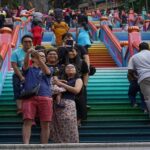
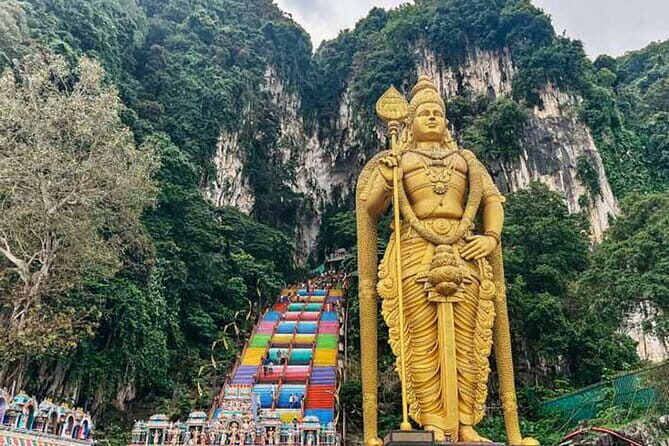
Batu Caves is the kind of place where you instantly get why it’s famous. A limestone hill in Gombak, Selangor, holds a set of caves and cave temples that act as a major Hindu shrine dedicated to Lord Murugan. It draws thousands of visitors, so expect a lively atmosphere around the entrance area.
This stop is scheduled for about 1 hour, and a lot of that time is really about the climb and the in-between moments: moving up, taking in temple scenes, and getting your bearings. If you’re someone who hates being tugged along, the private setup helps because you can move at your own rhythm.
Plan your clothing before you go. Batu Caves asks that women wear modest clothing that covers shoulders and knees, and men should also dress modestly. Shorts and sleeveless shirts are generally discouraged. The shoe advice is just as practical: wear comfortable shoes for the climb. That’s not a style suggestion—it’s the difference between enjoying the visit and being miserable halfway up.
One more practical note: Batu Caves is a clear example of why this tour mixes faith sites. You’re not just looking at buildings; you’re stepping into a place where people come to worship. The scale and devotion you see there can make your other temple visits feel more meaningful, not just photogenic.
Masjid Negara: National Mosque architecture and the Friday closing
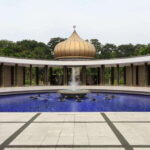
Masjid Negara, Malaysia’s National Mosque, is an architectural landmark with a strong identity. Completed in 1965, it represents Malaysia’s Islamic heritage and is surrounded by landscaped gardens. From a visitor standpoint, it’s the kind of site where even a short visit can teach you how a country expresses faith through space and design.
Your time here is about 30 minutes, which is short on purpose. You’ll want to use that time well: notice how the building sits in its garden setting, and take photos from angles where you can capture both structure and context.
There’s one big day-of-week issue you should treat seriously. The National Mosque is closed for tourist visits on Friday. That matters because this tour includes it as a scheduled stop, not as an optional bonus. If you’re traveling on a Friday, you’ll need to either switch the tour day or choose another plan for mosque time.
Admission is listed as free for this stop, which keeps the experience straightforward. The main thing you’ll spend is time and attention. If you’re the type who likes to observe how architecture communicates culture, you’ll get a lot from half an hour.
Thean Hou Temple: incense time at the Heavenly Mother shrine

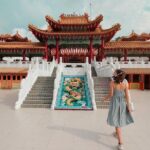
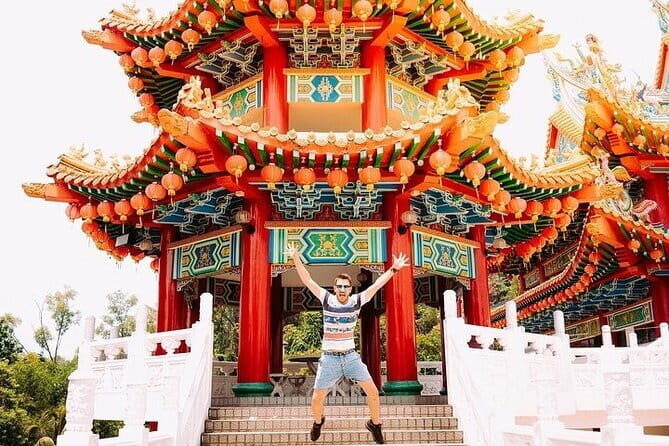
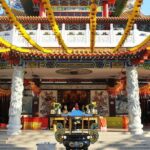
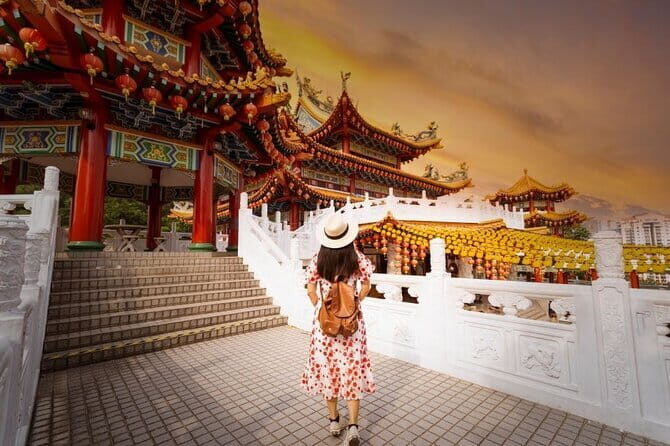
Thean Hou Temple is a Chinese temple in Kuala Lumpur dedicated to Thean Hou, the Heavenly Mother. It was completed in 1987 and is known for traditional Chinese architectural styling. If Batu Caves is all about Hindu devotion and the National Mosque gives you Islamic architecture, this stop adds a third texture: Chinese religious practice and temple atmosphere.
You get about 30 minutes here. That’s enough time to walk through temple areas, slow down for the details, and get a feel for how the site functions. The overview also notes that you can light an incense stick connected to the sea goddess devotion. If you want that kind of participation, this is the stop where it fits naturally.
Expect the mood to shift from one faith space to the next. That’s not a gimmick. It helps you compare how different traditions structure worship in physical space. One temple may emphasize dramatic elevation and cave halls; another frames worship with monumental design and gardens; this one brings you into a scene of incense, altars, and everyday devotion.
Admission is listed as free, so you can focus on the experience itself. Bring your best “observe and respect” mindset. Temple visits go more smoothly when you treat rules as part of the culture, not as inconveniences.
Petaling Street, Pasar Seni, and Brickfields: city culture beyond the temples
The tour doesn’t end when the last religious stop does. It adds time in three neighborhoods that help you understand Kuala Lumpur beyond landmark sightseeing.
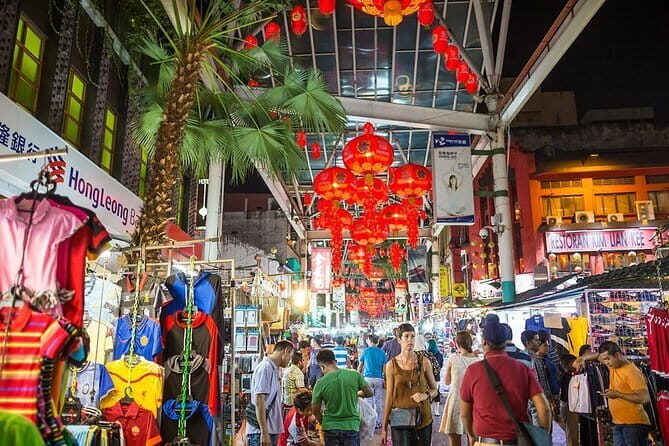
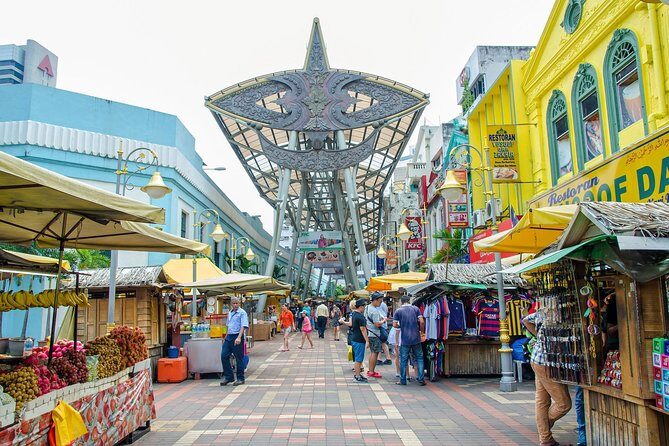
First is Chinatown around Petaling Street, scheduled for about 30 minutes. This is a practical stop: you see everyday street life and commerce, not just sightseeing facades. Even in a short window, you can pick up snacks, browse, and get a feel for how busy this part of town stays.
Next comes Central Market (Pasar Seni) for about 30 minutes. It was established in 1888 and has shifted from a wet market into a cultural and shopping hub. That transition is a big part of why it’s worth visiting: you’re walking through a building that has adapted over time, so it feels both historical and current.
Finally, you’ll spend about 1 hour in Little India in Brickfields. This area highlights the heritage of Malaysia’s Indian community and gives you a colorful, energetic contrast to the earlier temple zones. It’s also the part of the day where you can slow down a bit and shop, if that’s your thing.
One balanced way to approach these neighborhood stops: use them to recharge your eyes after the concentrated temple settings. You’ve already seen three major faith sites. Now you’re looking at daily culture, food smells, storefront signs, and street rhythms—without needing extra admissions or long transfers.


The driver/guide is the secret sauce (and names people remember)

This tour is private, and that matters most in the human details. You get an English-speaking driver/guide in an air-conditioned vehicle, with hotel pickup and drop-off. That support can turn a complicated city route into a smooth afternoon.
Past experiences highlight how guides like Sathesh, Kumar, Shiva, and Vikram have been praised for staying informative and helpful. A common theme is practical assistance: helping with photo angles, pointing out what to look for, and keeping things relaxed instead of rigid. One guide was also noted for being patient with kids, which you’ll appreciate if your group needs flexibility.
If you care about photo-taking, the guide element is useful because you don’t waste time asking strangers where to stand. If you care about comfort, the car ride also means you don’t have to bounce between stops in heat or wind while you figure out transport.
There’s another underrated benefit: a good driver helps you feel safe and guided. One past feedback example described the experience as on-time and smooth, with the driver meeting people at a convenient location. That kind of reliability is worth something when you’re trying to protect the limited hours you have in Kuala Lumpur.
Timing, pace, and how the 4 hours actually fit together
The whole schedule is designed for about 4 hours, so it’s not a “stay all day” temple crawl. Your stop mix looks like this in practical terms: Batu Caves first (about 1 hour), then the National Mosque (about 30 minutes), Thean Hou Temple (about 30 minutes), followed by neighborhood time in Chinatown (30 minutes), Central Market (30 minutes), and Little India (about 1 hour).
The order isn’t random. It helps you manage energy because you hit the steep climb at Batu Caves early in the day while you’re fresh. Then you shift into shorter, calmer stops that are easier to fit between drives and walking.
Morning vs afternoon matters too. If you’re someone who gets tired in strong midday heat, the morning departure can feel easier. If you like late-day atmosphere for street browsing, afternoon may suit you better. Either way, the private setup keeps you from being stuck in awkward waiting loops.
Also, remember the tour does not include food and beverages. That’s not a downside if you plan for it. It simply means you should budget for a meal on your own schedule or grab something quick during the neighborhood stops.
Price value: what $30 buys you here
At $30 per person for about four hours, the big question is value. Here’s how I think about it.
First, the tour includes private transportation in an air-conditioned vehicle, plus hotel pickup and drop-off. Those are real costs if you’re using taxis or ride-hailing between multiple stops. Second, the main religious stops are listed with free admission, which keeps your spending predictable.
So what you’re paying for is not ticket fees. You’re paying for time-saving logistics and a human guide to help the day click. That’s where private tours can feel worth it: you remove friction.
One more value lever is group discounts. If you’re traveling with family or friends and can book as a group, the “per person” feel gets better. And because this is a private activity, you’re not sharing the day with strangers who move at a different speed.
The main cost to watch is meals, since food and beverages aren’t included. Plan that part yourself, and the overall experience becomes a clean half-day plan.
Should you book this half-day private cultural discovery?
I think you should book this if you want a compact Kuala Lumpur plan that hits major spiritual landmarks and then switches gears into city neighborhoods. The private door-to-door format is the real win, especially if you have limited time or you’d rather not wrestle with transport between far-flung stops.
Book it especially if:
- You like structure but still want flexibility inside each stop
- You want free entry experiences and guided context
- You’re traveling as a group that benefits from an air-conditioned, private pace
Skip it or adjust it if:
- Your travel dates land on a Friday, since the National Mosque is closed to tourists then
- You’re not willing to follow the Batu Caves clothing expectations and shoe needs
If that all sounds manageable, this is a smart way to understand Kuala Lumpur’s spiritual mix and everyday culture in one go—without turning your day into a logistics project.
More Private Tours in Kuala Lumpur
- Private Tour Kuala Lumpur with Petronas Twin Towers Observation Deck & Batu Cave
★ 5.0 · 1,029 reviews