Three hours to see Batu Caves right. This is a small-group ride with pickup, factory stops, and live commentary before you tackle Batu Caves. I especially liked having guides such as Mohammed or Al handle the flow, so you spend less time figuring things out and more time looking at what matters.
Two things I love: the stress-free hotel/area pickup in air-conditioned comfort, and the value-added stops that explain Malaysia craftsmanship before you climb. You also get a tidy time plan—no all-day marathon.
One drawback to plan for: site entrance fees and food/drinks are not included, and Batu Caves has a strict dress code (knees covered, no sleeveless tops), which can slow you down if you’re not ready.
In This Review
- Key highlights you’ll feel fast
- Why this 3-hour Batu Caves plan works in Kuala Lumpur
- Royal Selangor Visitor Centre: pewter that’s more than souvenirs
- Batu Caves and the 272 steps: how to make it feel worth it
- Dress code: the deal-breaker before you even start
- Crowds: the calmest strategy
- Cave Villa: a short stop that adds meaning
- Malaysia Tourism Centre: the practical reset point
- Jadi Batek Gallery: watching batik get designed and printed
- Price and money reality check: what $18 covers (and what doesn’t)
- Picking the right expectations: who this tour suits best
- Should you book this Kuala Lumpur countryside and Batu Caves tour?
- FAQ
- How long is the Malaysia Countryside and Batu Caves Tour?
- Is pickup from my hotel included?
- Are entrance fees included for the sites?
- What dress code do I need for Batu Caves?
- Where does the tour start and end?
- How many people are in the group?
- What happens during Thaipusam if Batu Caves is closed?
Key highlights you’ll feel fast
- Hotel pickup that keeps your day simple: free pickup within 3 km of KLCC Area, plus shared transfer options at different times.
- Royal Selangor Pewter stop with real production focus: you go past the gift shop and see how pieces are made.
- Batu Caves temple time with the famous 272 steps: you’ll get a practical amount of time to climb and visit the caves.
- A quick museum-cave break: Cave Villa adds murals and deity images for context.
- Batik workshop viewing at Jadi Batek Gallery: you see how batik is designed and printed, with a demo running daily.
Why this 3-hour Batu Caves plan works in Kuala Lumpur
Batu Caves is one of those places where you can lose half your time just trying to navigate trains, buses, and transfers. This tour cuts that hassle with an air-conditioned vehicle and English-speaking driver. Even better: the group is capped at 15 travelers, so the day feels more like a guided outing than a rushed bus tour.
The timing also helps. You’re looking at about 3 hours total, which is perfect if you’re in Kuala Lumpur for a short stay, or you want Batu Caves without sacrificing your entire day. You still get multiple stops, though—pewter, caves, and batik—so you come away with more than one photo spot.
One small practical note: this isn’t billed as a meal tour. You’ll want to eat before you go, or plan to buy snacks during breaks on your own, since food and drinks aren’t included.
You can also read our reviews of more tours and experiences in Kuala Lumpur.


Royal Selangor Visitor Centre: pewter that’s more than souvenirs
The first stop is the Royal Selangor Visitor Centre, tied to the Royal Selangor Pewter brand. This is the sort of place that can feel like a shopping stop on paper, but the setup here is different: you’re visiting a major pewter factory with production-style explanations.
What you’ll likely enjoy is the contrast between items you’ve seen in stores and what the brand does behind the scenes. Pewter is easy to dismiss until you see how consistent forms and finishes are achieved—especially when the factory is described as large and modern, with internationally recognized quality and craftsmanship.
A practical tip: take your time early. If you’re prone to heat fatigue, a factory stop gives you a calmer indoor pacing before the stairs at Batu Caves. It’s also a good moment to ask questions through the tour’s live commentary, because once Batu Caves starts, your attention will go vertical.
Batu Caves and the 272 steps: how to make it feel worth it
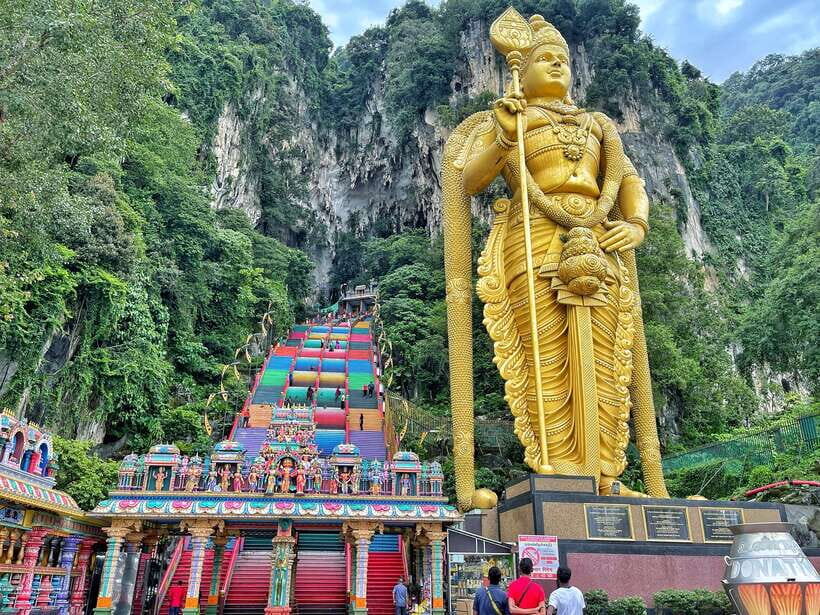
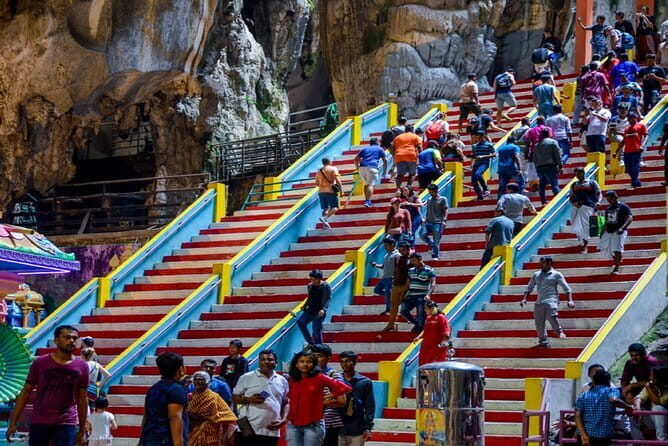
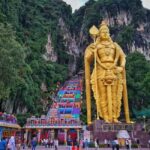
This is the main event: Batu Caves, a limestone hill complex with several caves. The temple area is associated with Lord Murugah, and the iconic climb is 272 steps up to the main temple cave.
Here’s what makes this stop work on a guided tour: you’re not just dropped at the bottom. You get a structured amount of time to climb, look around, and take in the religious cave setting. On tours like this, I like that the schedule respects the reality of steps. If you’ve ever tried to “just power through,” you know that’s how you end up with a bad experience. Having guided timing helps you pace it.
Dress code: the deal-breaker before you even start
Batu Caves requires a dress code:
- No short skirts or shorts that don’t cover the knees
- No sleeveless shirts or tops
This can be the difference between a smooth visit and an awkward moment at the entrance. If you’re coming from beachwear or a hot-day outfit, bring a light cover-up that actually reaches your knees.
Crowds: the calmest strategy
If you’re traveling around major Hindu celebrations, Batu Caves can be crowded. The tour notes that Batu Caves is closed for three days during Thaipusam, but on surrounding days you may still see heavy foot traffic. If crowds show up, you’ll enjoy the visit more if you focus on one thing at a time:
- Climb at your own pace
- Pause to take in the temple cave area
- Save your best photos for moments when the flow slows
Also, give yourself grace. The steps are manageable, but they’re still steps, and the sun can be a factor.




Cave Villa: a short stop that adds meaning
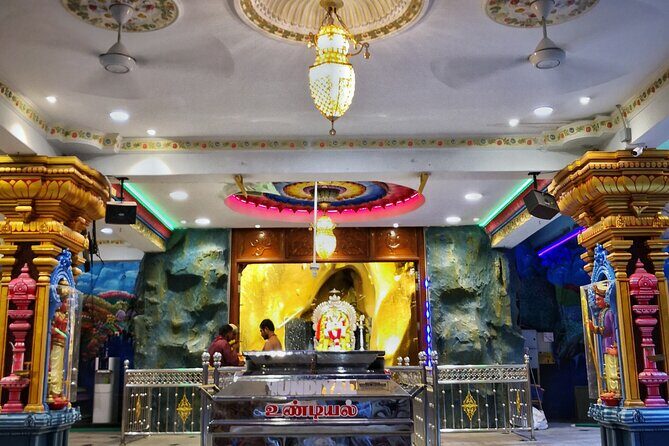
After Batu Caves, you’ll spend time at Cave Villa, described as a museum cave filled with images of deities and murals from Hindu scriptures. This isn’t the biggest “wow” stop like the main temple cave, but it’s the one that often makes the whole trip click.
When you include a cave-with-context, you stop treating the visit as a sightseeing checklist. You start noticing symbols and scenes instead of only looking at architecture.
Time-wise, it’s a shorter segment (about 30 minutes). That’s good. It keeps the day from dragging while still giving you enough presence to actually read what’s there—rather than sprinting through it.
Malaysia Tourism Centre: the practical reset point
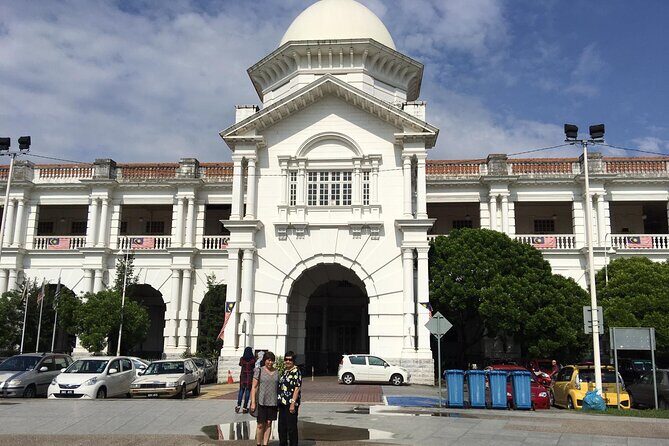
Next comes the Malaysia Tourism Centre area, which acts as a hub for visitor information, a gift shop, and services, plus on-site festivals and music performances.
Even if you don’t plan to shop, this stop can be useful for two reasons:
- It’s a natural place to regroup after the caves
- It helps you reconnect with local context and options for the rest of your day
The tour also notes that this location can function as the starting and ending point for travelers outside the pickup zone, so it’s worth using as your mental anchor. You’ll feel less lost, because the tour returns you here.
Jadi Batek Gallery: watching batik get designed and printed
The final activity is at Jadi Batek Gallery, a batik factory and handicraft centre. Here, the tour focus is clear: you’ll see how batik is designed and printed, with a demonstration at the workshop running daily.
If you’ve bought batik shirts in Kuala Lumpur, this is where the purchase makes more sense. You get to see the steps behind patterns and the process of production. The tour includes a workshop stop (with free admission listed for this segment), so it’s often a high value moment: you get an educational experience without paying extra entry fees on top.
One detail to plan for: the tour description says visitors are welcomed to create their own batik, but it doesn’t specify how long that activity takes or what’s included in every option. If hands-on making matters to you, it can be worth asking at the start of the workshop whether there’s an included try-it option during your group’s time slot.
Price and money reality check: what $18 covers (and what doesn’t)
At $18 per person for roughly 3 hours, this tour can be a strong value if you care about organization and time. The included items matter:
- English-speaking driver
- Air-conditioned vehicle
- All taxes/fees/handling charges
- Hotel pickup and drop-off where eligible (free pickup within 3 km of KLCC Area)
What’s not included:
- Food and drinks
- Gratuities
- Entrance fees for sites
That last line is key. Batu Caves has entrance fees, and the pewter/cave attractions can too. So your total trip cost will be higher than $18 once you add tickets. Still, the value can remain good because you’re paying for transport, commentary, and an organized route with a small group.
My practical take: if you’re comfortable paying a few site entries once you’re there, this is a straightforward deal. If you want a single fixed price with everything included, you’ll need to budget for the missing entries.
Also, the tour offers mobile tickets and group discounts. That doesn’t automatically lower costs for everyone, but it’s the kind of setup that tends to make check-in faster and less stressful.
Picking the right expectations: who this tour suits best
This tour fits best if you:
- Want Batu Caves without wrestling with local transport
- Like a morning/afternoon plan that includes more than one stop
- Prefer a small group and guided commentary over wandering alone
- Care about Malaysian crafts, not just landmark photos
You might skip or choose a different format if you:
- Don’t meet the Batu Caves dress code and you don’t want to modify clothing
- Want free time to explore independently at each site without the group schedule
- Are very sensitive to stairs and sun (the 272 steps are the headline)
If you do go, pack for comfort. Comfortable walking shoes are a must, and I’d carry water for the climb. One review notes water was readily available in the car, which is exactly what you want on a hot day.
Should you book this Kuala Lumpur countryside and Batu Caves tour?
Yes, if your goal is a simple, guided Batu Caves visit with extra value. The structure is what makes it attractive: pickup (within the KLCC area), air-conditioned transit, live commentary, and a short set of stops that cover pewter and batik before you climb the caves.
I’d especially recommend it for first-timers who want the famous 272 steps experience, but also want to understand what they’re looking at—pewter production, temple imagery in the caves, and batik design. The small group size (up to 15) keeps the day from feeling like a stampede.
Book with care if you’re traveling near Thaipusam. The tour notes Batu Caves closes for three days during Thaipusam, though you can still enjoy the CuteraK festival experience. If your timing overlaps, confirm what the alternative looks like for your exact departure day before you commit your schedule.
FAQ
How long is the Malaysia Countryside and Batu Caves Tour?
The tour duration is listed as approximately 3 hours.
Is pickup from my hotel included?
Yes, hotel or port pickup and drop-off is included. Free pickup is noted within 3 km of the KLCC Area, and shared transfer is possible for early or late pick-ups.
Are entrance fees included for the sites?
No. Entrance fees for the sites are not included.
What dress code do I need for Batu Caves?
You must follow the dress code for this religious site: no short skirts or shorts that don’t cover the knees, and no sleeveless shirts or tops.
Where does the tour start and end?
The tour starts at MATIC109, Jln Ampang, Kuala Lumpur 50450, and it ends back at the meeting point. The Malaysia Tourism Centre (Pusat Pelanco) is also referenced as the starting/ending point for travelers outside the pickup zone.
How many people are in the group?
The tour has a maximum of 15 travelers.
What happens during Thaipusam if Batu Caves is closed?
The information notes that Batu Caves is closed for 3 days during Thaipusam, but you can still enjoy the CuteraK festival experience.