REVIEW · KUALA LUMPUR
Batu Caves and Sari Experience with Batik Workshop
Book on Viator →Operated by Ivy Holidays · Bookable on Viator
Sari glamour meets temple steps in one half day. This tour pairs a hands-on batik painting session with a sari try-on and temple exploring at Batu Caves, then tops it off with Indian sweets and a cup of Malaysia’s famous teh tarik.
I love the combo value here: hotel pickup in an A/C vehicle, sari rental with dressing help, and a batik mini piece you get to keep. I also like the human touch from guides such as Sasi or Wilson, who bring the stops to life with clear, story-driven explanations while you’re moving between locations.
The main consideration is Batu Caves logistics: you’ll climb stairs, you must remove your shoes, and you need to follow the temple clothing rules. On festival days it can get crowded, and the walk from the drop-off can feel longer than you planned.
In This Review
- Key highlights you’ll care about
- Batu Caves plus batik in one tidy 4.5-hour plan
- How the pickup and morning flow really work
- Stop 1 at Batik CHONG: what you’re actually paying for
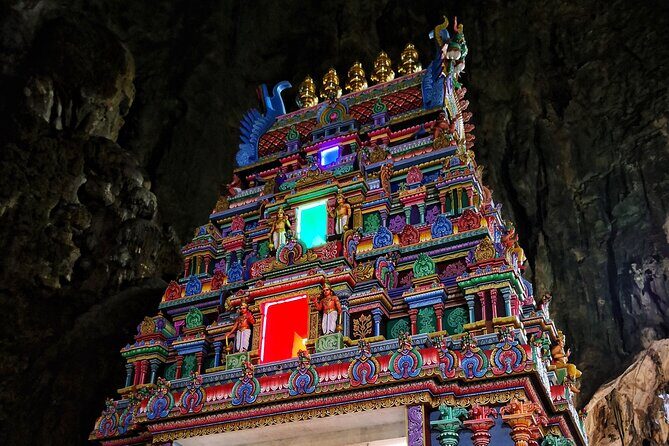
- Sari try-on at Batu Caves: fast makeover, best photo angle
- Temple exploration: stairs, shrines, and how to not lose time
- Indian sweets and teh tarik: the small food stop that feels local
- Price and value check: why $54.85 can make sense
- What to pack and how to prepare without stress
- Guide quality: why Sasi and Wilson keep showing up
- Who this tour suits best (and who should choose differently)
- Should you book this Batu Caves and Batik combo?
- FAQ
- What time does the tour start?
- Is pickup available from Kuala Lumpur hotels?
- Is there a batik workshop, and can I keep what I make?
- Do I need to follow a dress code for Batu Caves?
- Will I need to remove my shoes?
- What food and drinks are included?
- What happens if it rains or weather is poor?
Key highlights you’ll care about
- Batik CHONG workshop (Stop 1): hands-on painting and you take your artwork home
- Sari rental and dressing help (Batu Caves): quick makeover plus a dedicated photo session
- English driver-guide model: one person handles driving and guided commentary while you’re in transit
- Small tastings, big payoff: Indian sweet shop stop plus teh tarik tasting
- Temple etiquette is non-negotiable: shoe removal and covered clothing requirements
- Festival-day reality check: crowds can change how the walk feels from the drop-off area
Batu Caves plus batik in one tidy 4.5-hour plan
If you like your travel days to feel structured, this is a smart half-day mix. You get art-making first, then you shift gears to one of Malaysia’s most iconic Hindu temple sites. It’s not just sightseeing. The batik stop gives you a quick creative anchor, and the sari moment helps you photograph the scene in a way that feels connected, not random.
The timing matters. At roughly 4 hours 30 minutes, you’re not signing up for an all-day endurance test. Still, Batu Caves has real physical demands because the main temple area involves climbing stairs. Think “manageable hike,” not “sit back and coast.” If you’re good with moderate walking, you’ll be fine.
One more thing I appreciate: you’re not left scrambling for what to do next. Between the guide, the set photo moment, and the stop order, you get a clear rhythm. That’s especially helpful if you’re visiting Batu Caves for the first time and want to know what’s worth your attention.
You can also read our reviews of more tours and experiences in Kuala Lumpur


How the pickup and morning flow really work
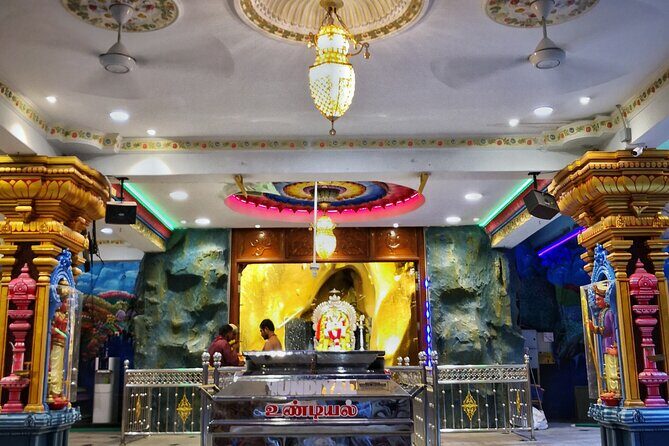
The tour meets at Starbucks on the ground floor of Berjaya Times Square (Imbi area) and starts at 9:00 am. If you pick the round-trip option from KL City Centre selected hotels, you’ll be picked up in an air-conditioned vehicle and returned back to the meeting point area at the end.
The vehicle setup is practical. It’s a shared group experience (not private in all cases), and it can include other people depending on that day’s arrangement. Either way, you’ll travel with a single English-speaking driver-guide who also provides commentary while you’re in the car.
A few logistics notes that can make your day smoother:
- No eating or drinking is allowed in the vehicle. It’s an avoid-the-mess rule, but it also means you should finish any snacks before you board.
- The tour recommends you bring a hat, sunglasses, and rain protection. Even in wet weather, the plan continues as scheduled.
- If there are road closures during major festivals, the return drop-off may be the closest possible point to your hotel based on conditions.
I also like that bottled water is included. Batu Caves heat plus stairs can add up fast, and you don’t want to burn time hunting for something to drink.
Stop 1 at Batik CHONG: what you’re actually paying for
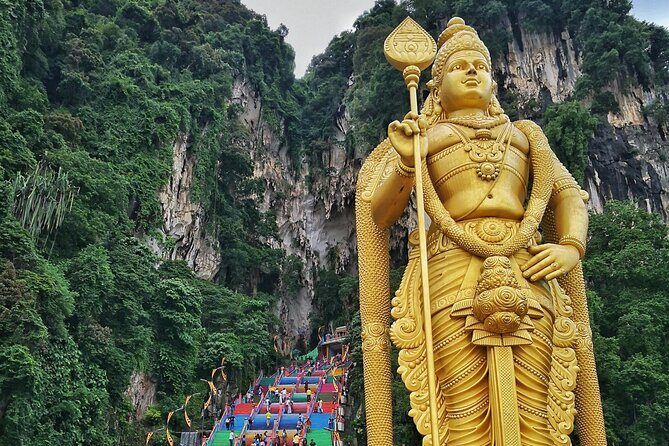
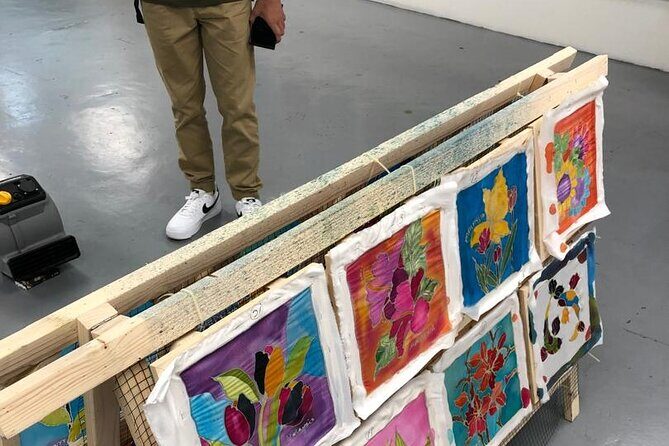
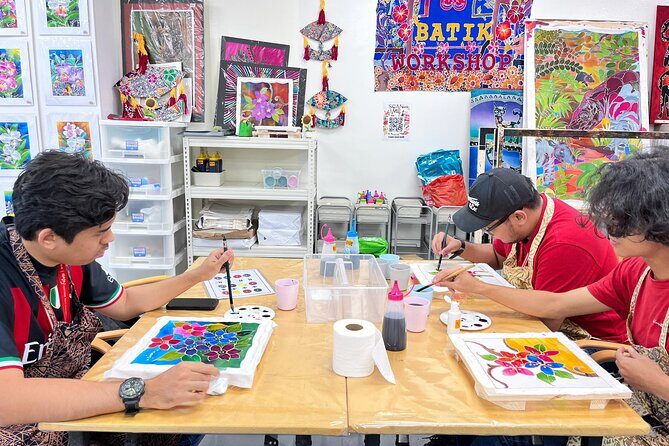
Your creative start is at East Coast Batik Sdn Bhd (Batik CHONG). This is where the tour justifies its price in a big way: it’s not only admission to “watch someone else work.” You do the painting yourself.
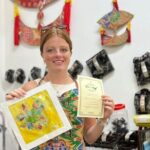
The workshop runs about 1 hour, and you’ll create a mini batik piece that you can keep. The exact process and design choices can vary by workshop format, but the takeaway is clear: you leave with something tangible. That’s a better souvenir than another photo, because you can remember the moment you made it.
This stop also sets the tone for Batu Caves. Batik and temple culture aren’t the same thing, but both are rooted in visual storytelling. After you paint, Batu Caves feels less like a random monument and more like a place where people express belief through art, symbols, and daily rituals.
If you’re worried about language or skill level, don’t. You’re not being asked to master a craft overnight. You’re being given a structured activity that matches the time you have. Bring curiosity, not expectations of perfection.
Sari try-on at Batu Caves: fast makeover, best photo angle
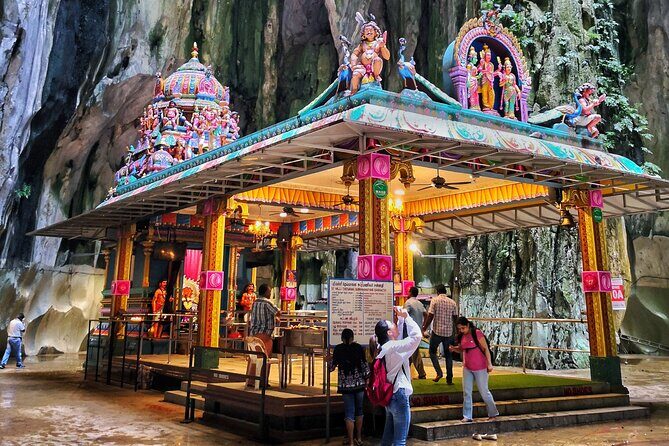
One of the most eye-catching parts of the tour is the sari rental with dressing assistance. At Batu Caves, you’ll do a sari try-on and a photo session before you head deeper into the temple area.
This is the kind of experience that only works because it’s guided. Getting the sari styled correctly (and comfortably) takes practice, and doing it on your own usually turns into a frustrating knot-tying session. Here, you have help, and that makes the photos much more likely to turn out well.
For your wardrobe, remember the temple rules. The tour specifically notes that shorts and sleeveless shirts are not allowed for temple visits. That means your day can’t be purely beach casual. You’ll want light, covered clothing that still feels breathable for Malaysia’s weather. If you end up sweating, that’s normal. But you do want fabric that won’t look wrong when you’re standing near shrines.
Also, Batu Caves requires shoe removal inside the temple areas. That’s not optional. Plan to bring socks you’re comfortable walking in, or at least be ready for the “no shoes” moment. You’ll thank yourself later.
Temple exploration: stairs, shrines, and how to not lose time
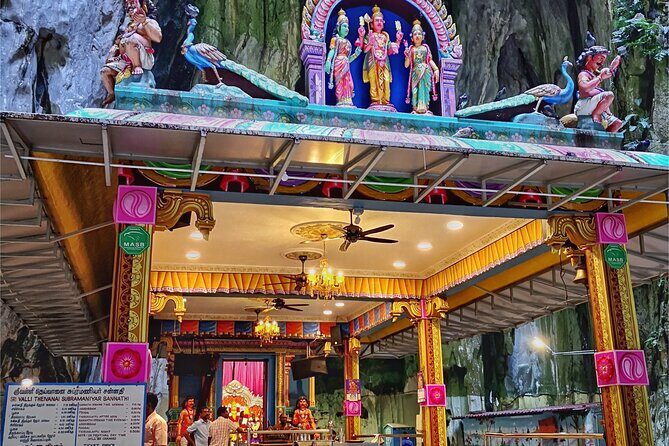
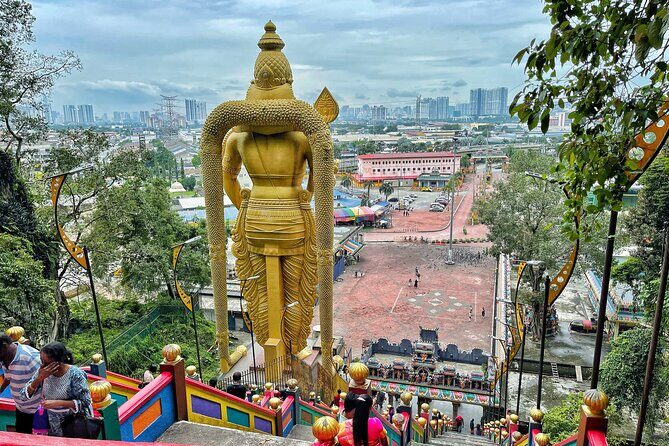
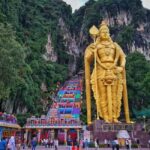
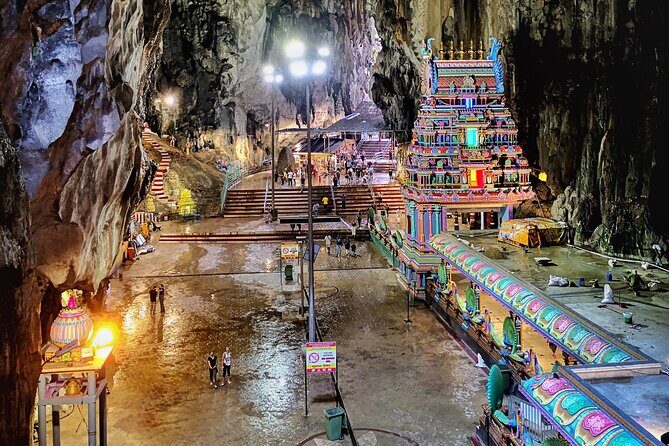
After the photo session, you’ll explore the temple area for about 2 hours. Batu Caves is famous for its massive steps and dramatic views, but what makes it work on a tour is guidance: you’re not just climbing. You’re learning what you’re seeing and where to look.
That’s where the guide’s role matters. In reviews, guides like Sasi and Wilson are praised for sharing stories and history of what you pass. I find that especially helpful at Batu Caves because the place can feel overwhelming if you’re wandering without context. A good guide helps you connect visuals to meaning so your photos stop being random.
Crowds are the wild card. One review noted heavy crowding due to a festival, plus a long walk from where the bus dropped the group. This matches real-world Batu Caves timing: popular holidays can change traffic, and road closures can affect where you start walking from.
What you can do:
- Wear shoes you can remove quickly.
- Use a hat and sunscreen if you’re sensitive to heat.
- Bring an umbrella or raincoat. The tour proceeds even if it’s wet, so you’ll want protection that doesn’t slow you down.
And one more practical tip: go slow on the stairs. It’s easy to get carried away by momentum and then regret it halfway up. Take breaks if needed. The tour gives you time to explore, but it’s still a physical place.


Indian sweets and teh tarik: the small food stop that feels local
The final stop is simpler but genuinely enjoyable: about 1 hour at Batu Caves with an Indian sweet shop plus a teh tarik tasting.
This is not a big meal. It’s a flavor break. You’re tasting, not building a whole lunch plan, which fits the tour’s half-day schedule. It also adds variety after temples and creative work. You get a moment where the day turns more social and less ceremonial.
Teh tarik is all about the ritual of pouring and the balance of tea strength with creamy texture. If you’ve never had it in Malaysia, this is a great low-pressure first try. The sweet shop stop gives you a taste of Indian-style sweets commonly associated with the area, and it’s a nice cultural bridge between the batik workshop and the temple setting.
Just remember: no eating or drinking on the vehicle. Your food break is planned for stops, not mid-drive. That keeps things cleaner and more comfortable.
Price and value check: why $54.85 can make sense
At $54.85 per person, this tour isn’t trying to be the cheapest option. It’s more about packing several paid elements into one easy morning.
Here’s what’s included that usually costs extra if you piece it together yourself:
- Round-trip air-conditioned transportation from a KL City Centre selected hotel
- Bottled water
- Sari rental and dressing assistance
- Batu Caves experience includes admission tickets (listed as free)
- Batik workshop entry and a mini batik piece you keep
- Indian sweet + teh tarik tasting
If you were to price those separately—especially workshop time plus guide support plus transport—the total can climb quickly. The sari help is also a big value point because it’s not just renting fabric. Someone helps you wear it in a way that photographs well and suits the temple environment.
The only reason the price might feel steep is if you’re not interested in the sari or the batik piece. If you mainly want to see Batu Caves and nothing else, you might prefer a simpler option. But if you want art plus temple plus food in one shot, the cost starts to look fair.
What to pack and how to prepare without stress
This tour is pretty clear about what you need to bring, and that clarity helps.
Do bring:
- Comfortable walking shoes (you’ll climb stairs at Batu Caves)
- A hat/cap and sunglasses
- An umbrella or raincoat (the tour proceeds in wet weather)
- A camera or phone with enough storage for the sari photo session
Also prepare for:
- Shoe removal at the temple areas
- Clothing compliance: no shorts or sleeveless shirts for temple visiting
- Heat and crowds, especially if a festival is on
If you’re sensitive to motion sickness, the tour notes it’s a good idea to prepare in advance. A smooth ride can still feel bumpy in busy city traffic.
Finally, confirm your mobile number is active so the provider can reach you if needed.
Guide quality: why Sasi and Wilson keep showing up
The reviews place strong emphasis on guide personality and clarity. Guides like Sasi and Wilson are repeatedly described as friendly, funny, and good at explaining what you’re seeing at each stop. That matters because Batu Caves and batik can both be misunderstood if you only treat them as photo opportunities.
This tour is structured so you’re not just following the group. You’re being taught. Even when the commentary is mainly during car rides, the guide presence still shapes the day, because it helps you decide what to photograph and what to take your time with.
Also, communication seems to be a selling point. Reviews mention smooth communication and an easy experience overall. When you’re in a new city and the plan includes stairs and dress rules, that kind of organization reduces stress.
Who this tour suits best (and who should choose differently)
This is a great match for you if:
- You want culture plus hands-on art in a half-day schedule
- You like guided temple visits with context, not just landmarks
- You’re interested in a sari photo moment and are okay following temple clothing rules
- You enjoy small tastings like teh tarik and Indian sweets
It might not be the best fit if:
- You don’t want to climb stairs or you dislike crowds
- You only care about Batu Caves and not the batik workshop or sari segment
- Your schedule can’t handle festival-day crowding and longer walks
Also, if you’re traveling as a family or a mixed group, this kind of itinerary tends to work because it alternates active and creative moments.
Should you book this Batu Caves and Batik combo?
I’d book it if you want a morning that feels more complete than a temple-only trip. The best reason is that you get more than one cultural angle: art-making (batik), temple experience (Batu Caves), and food flavor stops that tie into the day’s vibe.
Before you commit, think about two things:
1) Are you comfortable with stair climbing and shoe removal?
2) Are you okay dressing with temple rules in mind, even if you’d normally wear shorts in Kuala Lumpur?
If the answer is yes, this tour is a strong value package for a first visit. If not, you may prefer a simpler Batu Caves plan.
FAQ
What time does the tour start?
It starts at 9:00 am.
Is pickup available from Kuala Lumpur hotels?
Yes, round-trip transportation is available from selected KL City Centre hotels.
Is there a batik workshop, and can I keep what I make?
Yes. You’ll do a hands-on batik painting workshop at Batik CHONG and you can keep your mini batik piece.
Do I need to follow a dress code for Batu Caves?
Yes. Shorts and sleeveless shirts are not allowed for the temple visit.
Will I need to remove my shoes?
Yes. You have to remove your shoes before entering the temple areas.
What food and drinks are included?
You’ll get an Indian sweet and a teh tarik tasting.
What happens if it rains or weather is poor?
The experience requires good weather. If it’s canceled due to poor weather, you’ll be offered a different date or a full refund.