REVIEW · KUALA LUMPUR
Batik Bag Painting Workshop by myBatik
Book on Viator →Operated by TMS Art Marketing Sdn Bhd · Bookable on Viator
Batik is one of the best hands-on arts in town. In this 90-minute batik bag workshop, you’ll learn the wax-resist method and paint a cotton bag with your own pattern. I especially like that it’s practical and step-by-step, and you leave with a real take-home bag you can use right away.
The setting is also easy to fit into a Kuala Lumpur day. You’re based at myBatik near central sights, and the class runs at set times with options through the day. One thing to keep in mind: you’re responsible for your own food and getting yourself to and from the area, since transportation isn’t included.
In This Review
- Key things to know before you go
- Batik Bag Workshop by myBatik: what you’re really buying for $42
- Where the workshop fits in Kuala Lumpur (and why location matters)
- Inside a wax-resist batik class: the real technique you’ll use
- Your 90 minutes step-by-step (what the workshop actually feels like)
- What you’ll take home
- Picking colors like you mean it (without needing to be an artist)
- Traditional Malaysian batik, explained in plain terms
- After class: garden café time and a batik gallery visit
- Is it a good fit for families and first-timers?
- Practical tips that make the day smoother
- The Zoo Negara note: how to think about your day plan
- Who should book this batik bag workshop?
- Should you book? My straightforward call
- FAQ
- How long is the batik bag workshop?
- What is the starting time?
- Where does the workshop meet?
- What does the workshop include?
- What is not included?
- Can children participate?
- Is it a private experience?
- Do I get to take my artwork home?
- Is there food available nearby after the workshop?
Key things to know before you go

- Wax-resist technique, from start to finish so your pattern actually makes sense as you build it
- You paint your own undyed calico bag and then remove wax to reveal the final design
- Color choices and mixing practice using primary colors to create secondary hues
- All materials are included, plus apron and rubber gloves
- Private session for your group so the pace feels calm and focused
- A class certificate is included so you can keep a souvenir of the process
Batik Bag Workshop by myBatik: what you’re really buying for $42
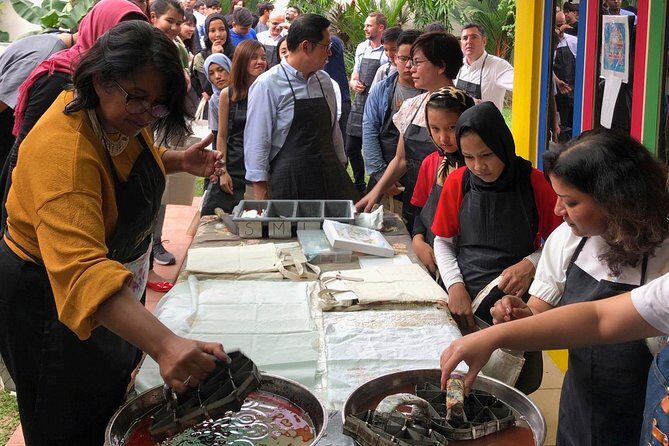
At $42 per person for about 1.5 hours, you’re not just paying for a fun activity. You’re paying for materials, instruction, and a full small-batch craft result you can take home: a finished 100% calico cotton bag measuring 13 inches (34 cm) across.
What makes the value feel solid is the structure. You start with an undyed fabric bag, learn the wax-resist idea, add color, and then do the reveal step. That full loop matters because batik isn’t just about painting. It’s about knowing what wax does, why it’s applied, and how the dye process creates clean shapes.
I’d also frame this as a family-friendly “skills” experience. You’ll be doing real craft work for a set time, not watching from the sidelines. The included certificate and hands-on tools (apron and rubber gloves) make it feel more official than a casual demo.
You can also read our reviews of more tours and experiences in Kuala Lumpur


Where the workshop fits in Kuala Lumpur (and why location matters)
The workshop is at myBatik, by appointment only, at 51, Embun Kemensah, Jln Tiara Kemensah 3, 68000 Ampang Jaya, Selangor. It’s described as a short distance from the Kuala Lumpur Twin Towers and downtown attractions, with lots of transport options nearby.
That’s helpful for planning because you can stack it with other sights without needing a dedicated tour bus. Just know the class start time is listed as 10:30 am, even though the provider also runs classes throughout the day. If you want a tighter schedule, book a time that matches how you’re already moving around the city.
One practical note: transportation to and from the workshop isn’t included. That’s normal for many city activities, but it affects how you should plan your day. If you’re relying on public transit, double-check the last-mile route before you go.
Inside a wax-resist batik class: the real technique you’ll use
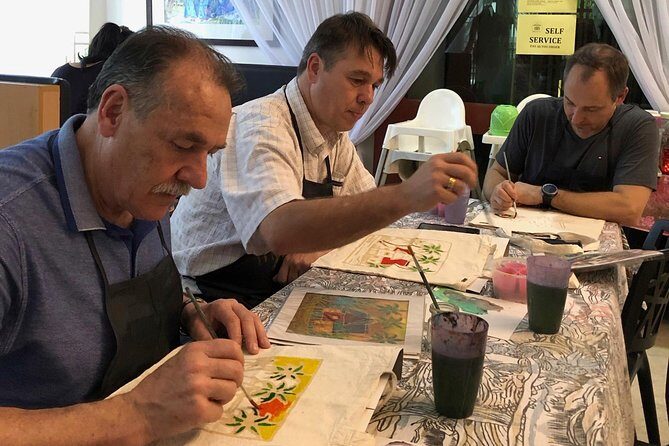
Batik is famous for a very specific trick: wax-resist dying. You use wax to block dye from reaching parts of the fabric, then you paint or apply color, and the final pattern is revealed after the wax is removed.
Here’s the flow you’ll follow:
- Start with an undyed fabric bag (a calico cotton bag).
- Apply wax to create your pattern.
- Choose your colors and fill in the design areas.
- Learn how to work with color, including practicing mixing primary colors into secondary hues.
- After you finish painting, remove the wax so the finished look appears.
That “wax goes first, dye goes around it, reveal at the end” concept is the whole point of the workshop. Once you see it in action, batik stops being a mysterious look and becomes a method you can picture yourself doing again.
Your 90 minutes step-by-step (what the workshop actually feels like)
A good workshop is one where the pace is clear, the tools are ready, and you don’t spend half your time waiting. This one is built as a structured session of about 1 hour 30 minutes, with classes held throughout the day.
When you arrive, you’ll be guided through the basics of painting batik. You’ll start with the bag that’s already prepared as undyed calico. From there, you build your design using wax, then you add color. Even if you come in with zero art experience, the course is set up so you’re doing real steps, not just making random marks.
The included equipment matters here. You’re provided an apron and rubber gloves, and the session includes the batik demonstration, workshop certificate, and local taxes. That takes away the “what do I bring” guessing game and helps the class stay focused on the craft itself.
What you’ll take home
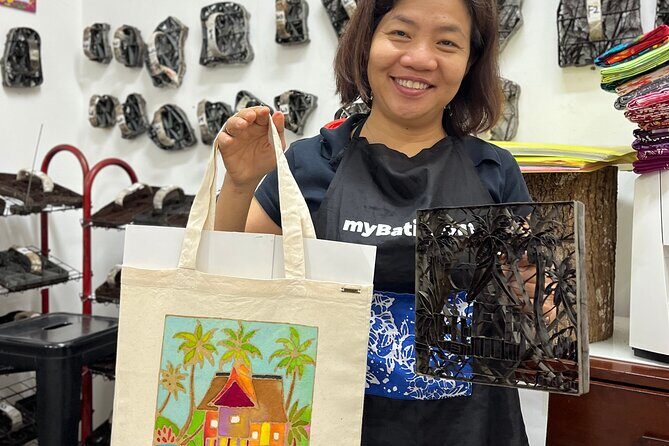
You don’t leave with a sample or a half-finished craft. The finished product you bring home is a 100% calico cotton bag, about 13 inches (34 cm) across. That’s a great souvenir size: big enough to be useful, not so large that it becomes luggage.
Also, since the bag is the core of the experience, I like that the workshop doesn’t treat the art as extra. It’s the main event, and everything else (technique, color, wax, timing) supports that outcome.






Picking colors like you mean it (without needing to be an artist)
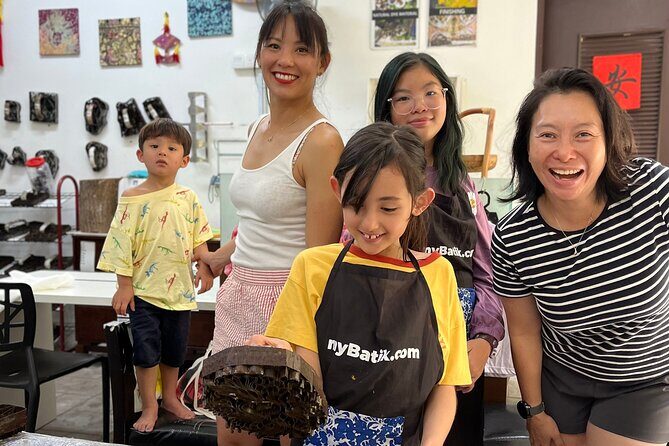
Many craft classes let you choose a color or two. This one teaches more than that. You’ll choose your colors and practice filling them in, plus you get practice mixing primary colors into secondary hues.
If you’ve ever looked at Malaysian batik patterns and wondered how people get those confident color areas, this part is where the mystery starts to fade. You’re not just applying color—you’re learning how color choices change the look of your design.
You can also go traditional or personal. The workshop explains that Malaysian batik has distinctive colors and patterns, and you can try a traditional approach or create your own design from scratch. That flexibility is smart for families, because different ages often want different levels of freedom.
Traditional Malaysian batik, explained in plain terms
One reason batik is so popular as a learning activity is that the technique is old, but the learning experience can be simple. You’ll hear about wax-resist dying and how it’s been practiced in Southeast Asia for hundreds of years, with Malaysian batik having its own look.
What matters for you as a student is not the number of years. It’s the cause-and-effect:
- Wax blocks dye.
- Where wax is applied, color won’t reach.
- When wax is removed, you reveal the pattern you protected.
That’s the moment the craft clicks. After that, you can judge your design as you work rather than just hoping it turns out.
After class: garden café time and a batik gallery visit
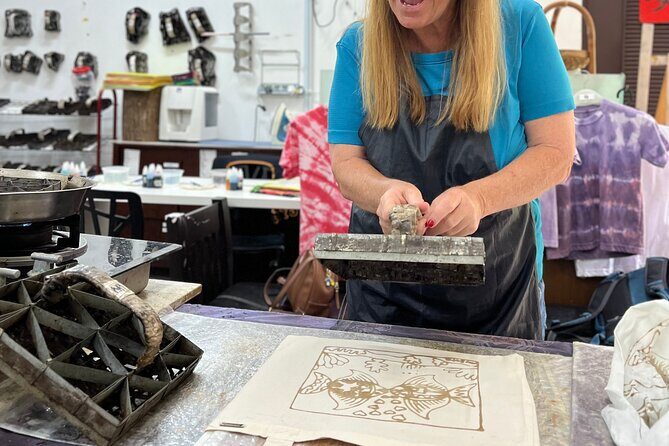
When the workshop ends, you get access to a nearby garden café and a batik gallery. This is the nice “let it sink in” phase. You can compare your bag to other batik work and notice how different patterns use wax placement and color control.
Food is a separate decision. The café area is available on-site, but food and drinks aren’t included with the class. On the positive side, there’s also Green Tomato Cafe inside the myBatik centre, and it offers all-day breakfast, lunch, and snacks.
That’s useful if you’re traveling with kids. It turns the end of class into a low-stress plan, not a scramble to find lunch across town.
Is it a good fit for families and first-timers?
Yes, this is a strong choice for families. It’s specifically described as an ideal option for families, and the workshop is designed around a guided process you can follow even if you’ve never touched a brush.
There’s also a clear rule for children: kids below 7 must be accompanied by an adult. If you’re traveling with little ones, plan on a close adult-to-child ratio, since wax and paint work are hands-on and need supervision.
What I like about this kind of workshop for groups is the contained timeframe. Ninety minutes is long enough to learn the method and get an actual result, but short enough that your energy doesn’t collapse before lunch.
Practical tips that make the day smoother
You’ll have the materials covered (wax and paint setup, apron, gloves), but you can still prepare so you feel comfortable.
Here’s what I’d do:
- Wear clothes that can handle paint risk. Even with gloves and an apron, art can be messy in real life.
- Plan your route to and from myBatik ahead of time since transportation isn’t included.
- Bring a smartphone camera and take photos during the process, not just at the end. The wax stage is where your design takes shape.
- If you’re choosing a time besides 10:30 am, check the schedule early so you don’t end up bouncing between multiple parts of the city.
If you’re pairing this with other Kuala Lumpur stops, keep the day flexible. The workshop is time-bound, but the pre-and post-window can be your buffer.
The Zoo Negara note: how to think about your day plan
The schedule you’ll see includes a Zoo Negara stop listed as Stop 1. The workshop itself is centered at myBatik near Kuala Lumpur’s downtown area, so this could be part of a broader day routing reference depending on how the provider structures your overall timing.
Because your class time matters, I’d treat this as a cue to confirm how the day flows with your booking. If you’re trying to squeeze in Zoo Negara or any nearby attraction, make sure you understand whether the Zoo Negara mention affects timing or is simply a day-plan reference.
Who should book this batik bag workshop?
Book it if you want a hands-on cultural activity with a clear result. This works especially well for:
- Families looking for something that’s creative but structured
- Beginners who want real instruction and not just a souvenir-making session
- People who enjoy seeing how a traditional technique actually works
- Anyone who likes the idea of taking home a useful art piece (not a postcard)
If you only want to watch from a distance or you’re short on time and want a quick stop, this might feel like too much effort for the payoff. But if you want to learn the method and make a bag you’ll actually use, it’s a great match.
Should you book? My straightforward call
I’d book this workshop if your goal is to learn batik in a way that makes sense, then leave with a finished, usable item. The price feels fair because you’re getting all the materials, tool support (apron and rubber gloves), a guided process from wax application to reveal, and a certificate.
The only real reason to hesitate is planning friction: you’ll handle getting there and getting your own food. If you’re good with that, this is an easy win for a Kuala Lumpur day.
FAQ
How long is the batik bag workshop?
It runs for about 1 hour 30 minutes.
What is the starting time?
The listed start time is 10:30 am, though classes are offered throughout the day.
Where does the workshop meet?
Meeting is at myBatik, by appointment only, at 51, Embun Kemensah, Jln Tiara Kemensah 3, 68000 Ampang Jaya, Selangor, Malaysia.
What does the workshop include?
All materials are included, along with the fee for the batik demonstration, a workshop certificate, an apron, and rubber gloves, plus local taxes.
What is not included?
Food and drinks are not included, and transportation to and from the attractions is not included.
Can children participate?
Yes. Children below 7 must be accompanied by an adult.
Is it a private experience?
Yes. It’s private, and only your group will participate.
Do I get to take my artwork home?
Yes. You’ll take home a finished 100% calico cotton bag, 13 inches (34 cm) across.
Is there food available nearby after the workshop?
Yes. You’ll have access to a nearby garden café, and there is also Green Tomato Cafe inside the myBatik centre offering all-day breakfast, lunch, and snacks.