REVIEW · KUALA LUMPUR
Malaysian Batik Experience-Handkerchief
Book on Viator →Operated by JADI BATEK · Bookable on Viator
Batik feels like magic, but it’s surprisingly hands-on. In Kuala Lumpur at Jadi Batek, you learn the traditional process step by step, then create your own design using Canting (the hot-wax tool) and color it with real fabric dyes. What I like most is the clear guidance from start to finish, and the freedom to pick a look you can actually use as a souvenir. One note to keep in mind: the timeline can shift if you choose certain end products, like a washable piece or a handkerchief.
You’ll sketch a design, apply wax, paint, and then plan for drying and finishing. The workshop is set up for beginners, but batik still rewards patience—your first wax lines might not be as crisp as you hoped. If you’re flying the next day or you need a perfectly dry, ready-to-wash finish, build in extra time.
Key takeaways before you go
- A guided start-to-finish class: no experience needed, with help while you wax and paint
- Traditional hot-wax method: you use the Canting tool, a technique used for over 100 years
- Choose your own design: templates plus colors mean your batik can feel personal
- Everything supplied: tools, materials, GST, bottled water, and snacks are included
- Time depends on the finish: scarf-style take-home can be quick, but handkerchiefs and wash-ready pieces may need extra drying time
- Meet Ms. Carol if you can: one guest specifically recommends looking out for her guidance
In This Review
- Where Your Batik Journey Starts at Jadi Batek Gallery
- Sketching Your Scarf Design: Templates and the Freedom to Make It Yours
- Using the Canting: The Hot-Wax Step That Makes Batik Batik
- Painting Your Fabric with Dye: Color Choices That Actually Matter
- Drying, Finishing, and When You Might Need to Return
- Price, Value, and What’s Actually Included in the $17 Class
- Logistics That Make the Workshop Easy on Your Day
- Who This Batik Workshop Suits Best
- Optional Extras: Edge Sewing and Courier Help
- Should You Book? My Honest Take
- FAQ
- How long is the Malaysian Batik Experience-Handkerchief?
- Do I need any experience to make batik?
- What is included in the price?
- Can I take my batik home the same day?
- Are there any optional add-ons?
- Where do I meet for the workshop?
Where Your Batik Journey Starts at Jadi Batek Gallery
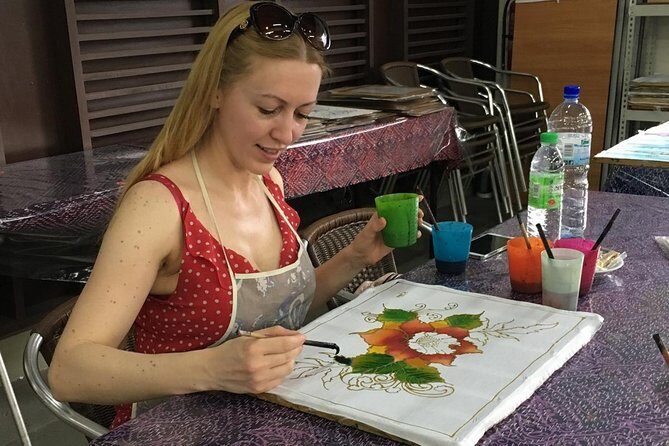
You’ll meet at Jadi Batek, a downtown Kuala Lumpur studio/gift gallery at 30, Jalan Inai, Imbi, 55100 Kuala Lumpur. The location is noted as being near public transportation, which matters in KL because traffic and parking can eat time fast. This is also a private setup for your group, so you’re not sharing tables with strangers or waiting your turn to ask questions.
What makes the start special is that the class doesn’t treat batik like a single photo-op. You begin with an introduction to the history and traditional process of Malaysian batik, then you move straight into sketching and making. That blend of context + action is exactly why this kind of experience stays memorable after you leave.
If you’re thinking you’ll just pick a pattern and color inside the lines, don’t worry—that’s not what happens here. You’ll still get structure, but you’ll be making real choices about the design and the colors.
Sketching Your Scarf Design: Templates and the Freedom to Make It Yours
Once you arrive, the flow is simple. First comes an overview of how batik works. Then you start sketching your design for your scarf (and you can also make a handkerchief option, depending on what you want to take home).
You’ll get templates and inspiration. That’s a big deal if you’re not confident drawing. One guest even compared their results to their partner’s “terrible attempts,” which is a friendly reminder that you don’t need to be an artist to get a respectable outcome.
Here’s the practical advantage of working from a template: it helps you plan where you want wax resist and where you want color to flow. Batik is more than coloring. The wax determines shapes, and your later dyeing highlights the contrast you planned in your sketch.
You can also read our reviews of more tours and experiences in Kuala Lumpur.



Using the Canting: The Hot-Wax Step That Makes Batik Batik
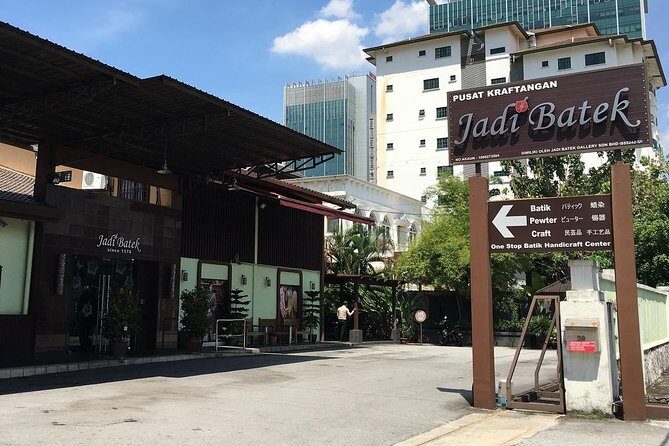
The signature moment is when you use a traditional tool called the Canting to apply hot wax onto your sketch. In plain terms, the wax blocks the dye in the areas you draw. That’s how you get crisp patterns and those classic batik contrasts.
The workshop explicitly links this to tradition, noting that Canting-based decoration has been used for more than 100 years. That matters because it helps you understand why the tool is so central: it’s how the pattern gets transferred onto fabric with control.
You’ll likely find this part more challenging than you expect—at least it’s common to feel that way with any fine-line technique. One review called it intense and noted it takes a steady hand. Translation: don’t rush. If you’re the type who wants perfect results immediately, give yourself permission to learn in real time.
And if you’re curious about watching others, there’s a larger space where you can see batik being hand drawn too. That’s helpful if you learn by copying what you see.
Painting Your Fabric with Dye: Color Choices That Actually Matter
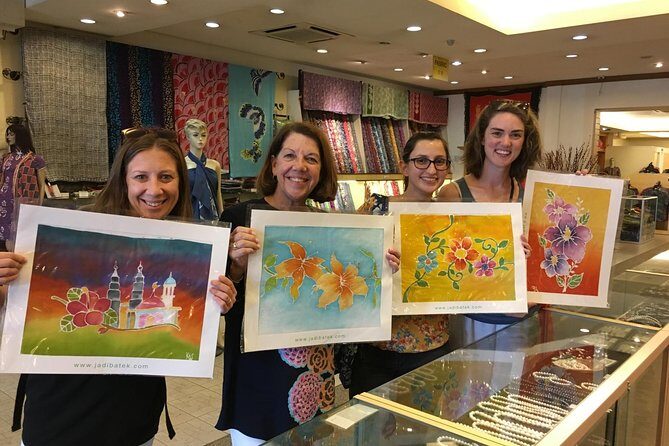
After waxing, you move into coloring. You can paint your fabric with the dyes from the workshop, and you can even mix custom colors. This is where your batik stops looking like a generic craft and starts looking like your design.
The class is structured so this feels approachable. You’re not left alone with a brush and a hope. You’ll get guidance for the process, and the setup is meant to be fun for families and beginners—not just for people who already know how dye reacts on fabric.
One smart tip from the experience itself: your choice of colors affects how dramatic your final design feels. If you pick a tight palette, your patterns will read as subtle and elegant. If you go bold, you’ll get strong contrast between wax-resisted lines and dyed areas.
Also pay attention to your intended final use. If you’re aiming for something that you can wash, plan for drying/finishing time beyond the simple two-hour flow.
Drying, Finishing, and When You Might Need to Return
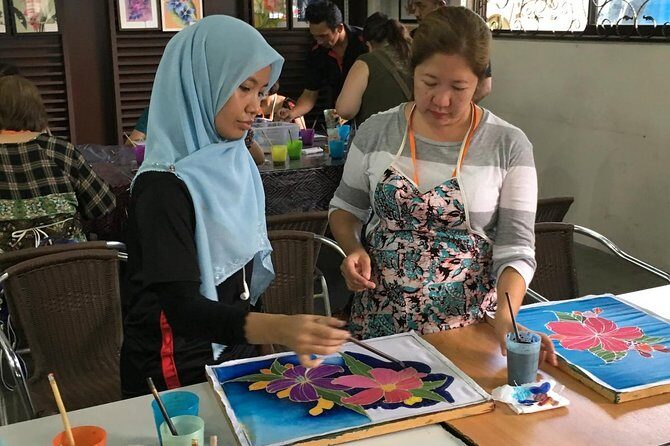
Once the drawing and painting are done, the team dries your fabric so you can take it home. The basic promise is that you can have your completed piece ready in about two hours.
But there’s a real-world fork in the road, and it’s worth planning for:
- If you want to take home a scarf-style finished piece, the class can work within the main session window, thanks to how they dry and prep the item.
- If you choose a handkerchief option, you may need to wait longer—either around 4 hours or by coming back the next day to collect the final artwork.
Drying sounds simple until you remember fabric dye and wax resist aren’t like marker ink. They need time to settle and finish properly. One guest also warned that if you want to remove wax for white outlines, you’ll need an extra day. That’s consistent with how wax work and finishing usually behave: the sharper the end goal, the more time the fabric needs.
One more detail to know: in the workshop experience, there’s an emphasis on what it takes for the item to be wash-ready. If that’s important to you, give yourself enough time for them to finish drying and prepping it properly.
Price, Value, and What’s Actually Included in the $17 Class
At $17 per person, this is one of those Kuala Lumpur activities that feels fair because your cost covers the hard parts. You’re not paying just for space—you’re paying for a guided craft with supplies.
Included in the price:
- Tools and materials
- GST (Goods and Services Tax)
- Bottled water
- Snacks
That “supplies included” part matters more than it sounds. Batik requires proper materials and dyes, and the workshop handles all of it so you don’t have to hunt for specialty items later. It also means you can focus on the process rather than the logistics of buying and carrying supplies around the city.
Another value point: the class is private for your group, which is rare for a hands-on workshop at this price. If you’re coming with friends or family, that helps your per-person value because the instructor support doesn’t get diluted.
The only place where value can shift is time. If you choose options that require waiting or returning, factor that into your schedule. Money is one thing. Time is another. And batik is a craft where the fabric does not care about your sightseeing plan.




Logistics That Make the Workshop Easy on Your Day
This experience runs about 2 hours (approx.), and the workshop provides a mobile ticket. That helps you keep things simple on arrival, especially if you’re already juggling KL transit, heat, and dinner plans.
Also note the meeting point is in a practical part of Kuala Lumpur (Imbi area). That’s helpful because you’re not forced into a far-flung detour. You can fit this into a morning or afternoon without turning your day into a commuting exercise.
If you’re trying to time it around your travel schedule, here’s what I’d do:
- Plan for at least part of the session as a true work block, not something to multitask.
- If you want a handkerchief finish or a wash-ready piece, treat the next-day pickup as a realistic possibility.
- If you’re flying soon after, confirm whether your exact end product needs extra finishing time.
Who This Batik Workshop Suits Best
This is a great fit if you want an authentic Kuala Lumpur souvenir that isn’t mass-produced. The batik process is old-school, but the class itself is very beginner-friendly.
It’s also ideal for:
- Couples or solo travelers who want something calm and creative
- Families with kids who can handle close-work with guidance (the workshop is described as suitable for primary school age and up)
- Anyone who likes crafts but worries they’ll be bad at drawing
One review described the experience as relaxing and even therapeutic. That tracks. Wax and dye work can be surprisingly calming once you slow down and focus on the pattern.
If you’re short on patience and want instant results, batik might test you. But if you enjoy learning by doing, you’ll probably end up proud of what you create—even if it’s not perfect in every tiny line.
Optional Extras: Edge Sewing and Courier Help
You can add on extra services for an additional fee:
- Sewing the edge of the batik (RM10)
- Courier service to your home, with fees depending on location
These extras can make a big difference if you plan to pack light. Edge sewing can turn your batik into something more ready-to-wear, while courier helps if you don’t want to manage fragile or dye-stained fabric while traveling.
Should You Book? My Honest Take
Yes, I think you should book this if you want a hands-on Kuala Lumpur cultural experience that produces something you can keep. The biggest wins are the start-to-finish guidance, the traditional Canting wax step, and the chance to pick your own design and colors. It’s not just watching someone else make art—it’s learning how batik gets its look.
I’d hesitate only if your schedule is extremely tight or you need a specific end result immediately, like a wash-ready piece or certain handkerchief finishes that may require additional waiting or a return trip. If that’s you, plan your pickup time before you lock in anything else.
If you have a flexible afternoon, or you’re okay with a possible next-day collection, this is a smart use of time in KL.
FAQ
How long is the Malaysian Batik Experience-Handkerchief?
It takes about 2 hours (approx.) for the main experience, but the handkerchief option may require additional waiting time to collect the finished piece.
Do I need any experience to make batik?
No. The class is designed so you can participate even with no prior experience, and your guide is there from start to finish.
What is included in the price?
Tools and materials are included, along with GST, bottled water, and snacks.
Can I take my batik home the same day?
You can take home the finished piece after the activity when it’s dried and prepped, typically fitting within the two-hour experience. If you make a handkerchief, you may need to wait about 4 hours or return the next day to collect it.
Are there any optional add-ons?
Yes. You can pay extra to sew the edge of the batik (RM10) or add courier service to your home, with fees depending on your location.
Where do I meet for the workshop?
The meeting point is Jadi Batek, 30, Jalan Inai, Imbi, 55100 Kuala Lumpur, Malaysia, and it’s noted as being near public transportation.