REVIEW · KUALA LUMPUR
Kuala Lumpur Half Day Batu Caves And Cultural Group Tour
Book on Viator →Operated by Travelvago · Bookable on Viator
Four hours, five cultural stops. This half-day group tour strings together Batu Caves plus major Kuala Lumpur religious sites and two market areas, so you get variety without juggling train or bus schedules. It also runs in an air-conditioned vehicle, which matters when KL heat decides to show up.
I especially like the hotel pickup within Kuala Lumpur city. It saves you time and stress, and it lets you focus on the sights instead of figuring out how to get across town.
I also like that it includes an English-speaking driver/guide. You’re not just looking at buildings and temples—you’re getting context you can actually use as you walk around. The main catch is the Batu Caves climb: plan for 272 steps and go at your own pace.
In This Review
- Key highlights to plan for
- Four hours to see Batu Caves and KL’s religious and market side
- Batu Caves: your 272-step reality check (and how to enjoy it)
- Thean Hou Temple: a different angle on faith in Kuala Lumpur
- Masjid Negara (National Mosque): gardens, bold design, and dress rules
- Petaling Street Market: food and street life without the overwhelm
- Little India Brickfields: textiles, jewelry, and dosa + banana-leaf curries
- Pickup, air-conditioned comfort, and the “small-group” advantage
- Price value: what $35 really buys you in KL time
- Guides and on-the-ground pacing: what you can expect
- Who should book this half-day Batu Caves cultural tour
- My honest booking call: should you go?
- FAQ
- FAQ
- How long is the Kuala Lumpur Batu Caves and cultural group tour?
- What time does the tour start?
- Do you include hotel pickup and drop-off?
- Are admissions included for the stops?
- What should I wear for the National Mosque?
- Is the National Mosque open to tourists on Friday?
- What’s not included in the tour price?
Key highlights to plan for
- Hotel pickup and drop-off inside Kuala Lumpur city, plus air-conditioned transport for a tight schedule
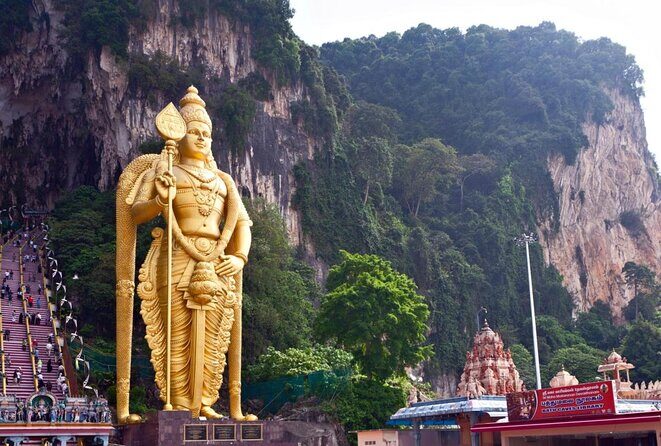
- Batu Caves first, with Hindu shrines/deities and a climb of 272 steps
- Thean Hou Temple (six-tier pagoda) plus Masjid Negara (National Mosque) for religion in the real world
- Petaling Street Chinatown market time and Little India Brickfields textile, jewelry, and food stops
- Small group cap (max 15), which usually feels easier for photos and moving between sites
Four hours to see Batu Caves and KL’s religious and market side
If your Kuala Lumpur trip is short, this kind of half-day tour hits a practical sweet spot. You’re not just ticking off landmarks—you’re moving between Hindu, Buddhist, and Islamic sites, then ending in two neighborhood food-and-shopping zones.
The schedule is built for momentum: a scenic drive sets you up for Batu Caves, and then the day shifts into cultural context at Thean Hou Temple and Masjid Negara. After that, you’ll get time in Petaling Street Market and Little India (Brickfields), where the vibe is more about everyday life than museum-style viewing.
The group size (up to 15) matters. It keeps things from feeling chaotic when you’re moving from place to place, especially in temple and market areas where people naturally cluster.
You can also read our reviews of more tours and experiences in Kuala Lumpur.
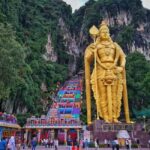

Batu Caves: your 272-step reality check (and how to enjoy it)
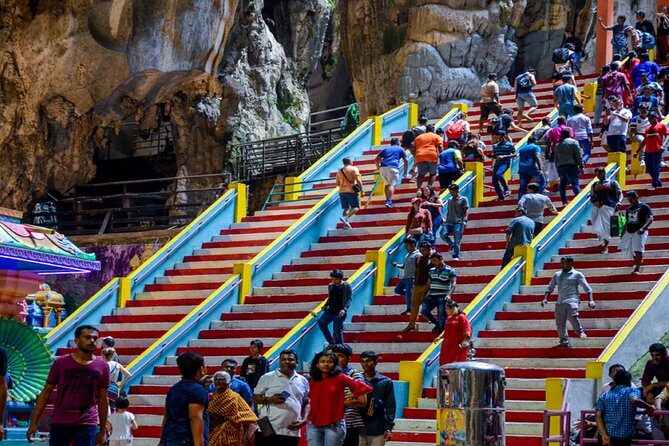
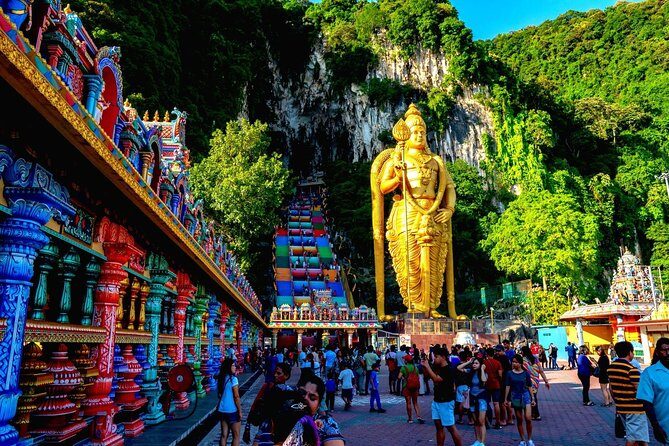
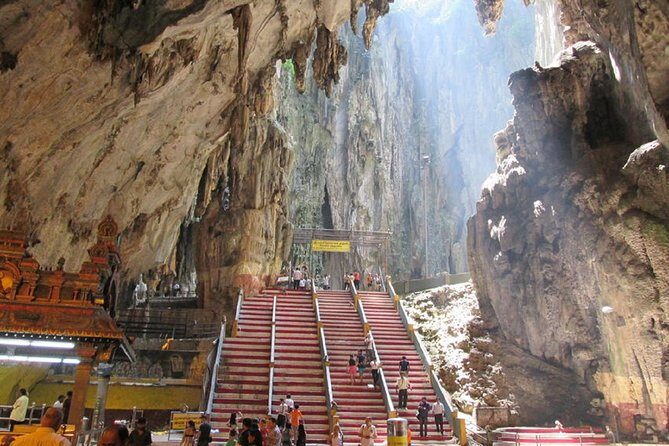
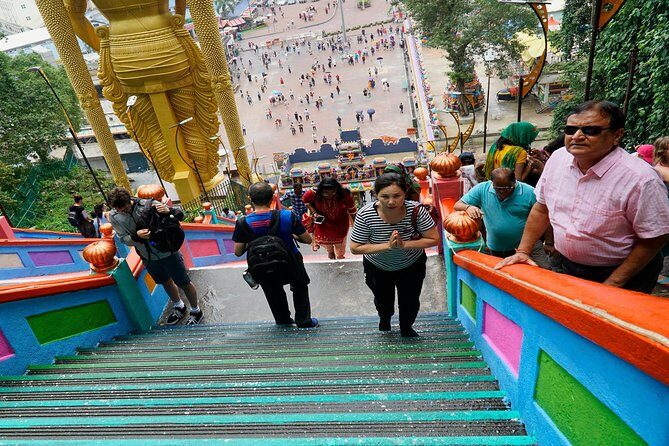
Batu Caves is the headline stop for a reason. You’ll arrive after about a 30-minute scenic drive, then step into a complex known for Hindu shrines and religious deities. You’re there to see the place up close, and that means climbing.
Yes, the climb is real: the tour is built around ascending 272 steps. This is the one part where you should be honest with yourself. If you have knee trouble, it’s smart to pace slowly, take breaks, and decide early whether you’ll stop partway rather than pushing through.
A practical tip: wear comfortable sneakers. In temple areas, footing can be uneven, and you’ll want grip for the stairs. Also, keep your shoulders and torso respectful as you move through sacred spaces—especially as you near the main areas.
Once you’re up, the best way to enjoy Batu Caves is to slow down and look for how the shrines connect to daily practice. The guide’s explanations help here, because the site is not just a viewpoint—it’s an active religious setting with meaning that becomes clearer the more you listen.
Thean Hou Temple: a different angle on faith in Kuala Lumpur
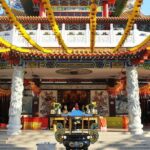
After Batu Caves, the tour turns toward a Buddhist temple experience at Thean Hou Temple. This one is a six-tiered pagoda temple sitting atop Robson Heights. The description is specific about the timeline too: it was completed in 1987 and officially opened in 1989.
This stop is valuable because it adds contrast. Batu Caves is intense and vertical, while Thean Hou Temple gives you a more layered architecture-and-culture moment. You’ll also learn that it was built by the Hainanese community of Kuala Lumpur and is dedicated to the temple’s main goddess (the tour description references a Ti… form).
Even if you don’t know Buddhism well, the structure helps. Tier by tier, the temple becomes a visual story—where you can focus on design, symbols, and how communities express devotion through architecture.
Masjid Negara (National Mosque): gardens, bold design, and dress rules
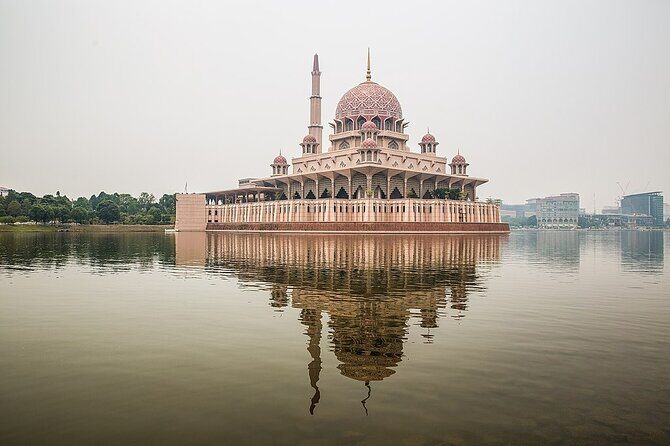
Then comes Masjid Negara, the National Mosque, set in 13 acres of gardens. The tour frames it as a design statement from the late 1950s, with architecture meant to symbolize aspiration. In practice, this stop feels calmer than the caves and markets, which is exactly what you want in a half-day plan.
This is also where you should pay attention to clothing. The tour notes clear guidelines:
- Ladies: wear long dresses or pants with shoulders covered
- Men: simple tee with knee-length shorts or pants
- Comfortable sneakers are also recommended
If your outfit is borderline, fix it before you arrive. A scarf or wrap for shoulders can save your morning. The mosque may be beautiful, but if you’re dressed incorrectly, you’ll lose time.
One more timing reality: Masjid Negara is closed for tourist visits on Friday. If your schedule lands on a Friday, plan for that stop not being available.
Petaling Street Market: food and street life without the overwhelm
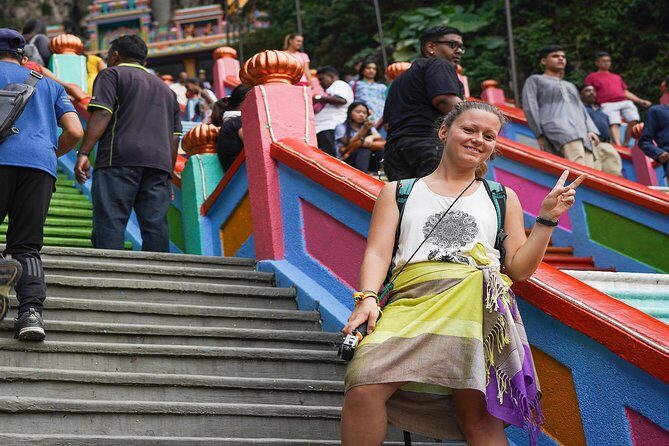
After the mosque, you head toward Chinatown, including Petaling Street Market. This isn’t a “stand in front of a photo spot” stop. You’re walking through an area filled with restaurants and food stalls tended by a mix of communities—Chinese, Indian, Malay, and Bangladeshi traders.
The tour’s specific food examples are helpful when you’re deciding whether to snack or just look:
- Curry noodles
- Other local favorites the guide points out as you walk
The big benefit of having a guided walk here is context. Markets can feel like sensory overload, but with an English-speaking guide, you’ll understand what you’re seeing and how different groups fit into the food scene.
Also, remember the obvious practical point: food and drinks aren’t included on this tour. So treat your final market area time as your chance to buy a snack or light meal, not something that’s already handled for you.


Little India Brickfields: textiles, jewelry, and dosa + banana-leaf curries
Next is Little India in Brickfields, a neighborhood near KL Sentral. The tour describes it as a maze of shops—especially textile and jewelry stores—plus low-key places to eat.
What I like about adding this stop is how different it feels from Petaling Street. You’re getting a new set of sights, smells, and shopping styles, all while staying within the same half-day framework.
Food-wise, the tour points out:
- dosa pancakes
- banana-leaf curries
Even if you’re not shopping, this is a good place to step into everyday culture. If you want souvenirs, textiles and jewelry are usually where your money goes farthest. If you’re not shopping, you can still enjoy watching how the neighborhood works—without needing to commit to a purchase.
Pickup, air-conditioned comfort, and the “small-group” advantage
Logistics can make or break a half-day tour. This one includes hotel pickup and drop-off as long as your hotel is within Kuala Lumpur city. That’s a big deal when you’re trying to fit Batu Caves and several inner neighborhoods into only about four hours.
The vehicle is air-conditioned, which helps you stay fresh. It also means you’ll arrive ready to walk, not already cooked from commuting.
A small-group cap of 15 travelers matters more than you might think. With a smaller number, you’re more likely to stay together when the group shifts from stairs to temples to streets.
You’ll also use a mobile ticket, so keep your phone charged and accessible. It’s a small thing, but it prevents last-minute friction at check-in points.
Price value: what $35 really buys you in KL time
At $35 per person, this tour can feel like a good deal because you’re paying for several things that add up fast in a short trip:
- Guided movement between sites outside the city center (Batu Caves)
- A local English-speaking driver/guide
- Air-conditioned transport
- Hotel pickup/drop-off (within KL city)
- Free listed admissions at the major stops in the schedule
What you should still budget for is food and drinks, since those are explicitly not included. Also consider any personal shopping in Petaling Street or Little India.
In other words, you’re not really paying for entry fees. You’re paying for time saved, transport handled, and explanations that help the stops make sense.
Guides and on-the-ground pacing: what you can expect
The tour experience depends heavily on the people guiding it. The information you’re given says it includes an English-speaking driver/guide.
From the guide names that come up—Aru and Sither—the pattern is clear: people appreciate cultural explanations and a helpful, accommodating attitude. I’d use that as your expectation baseline.
Still, here’s a fair caution: sometimes a driver’s role may feel more like transportation than full narration. If you want constant talk, ask what kind of guide time you can expect when you receive your confirmation details.
Either way, your job is easy: listen during key moments, then wander with purpose once you’re in each site.
Who should book this half-day Batu Caves cultural tour
This tour is a strong match if you:
- Want the big-name sites without planning routes and timetables
- Like a mix of religious landmarks and neighborhood markets
- Can handle a moderate climb (the 272 steps at Batu Caves are the main workout)
- Prefer small-group pacing instead of a large bus crowd
It’s not the best fit if you:
- Have mobility issues that make stair climbing hard
- Need a very long sit-down break (this is active and walking-heavy)
If you’re going with kids or older relatives, be realistic about the steps and build in backup plans for rest.
My honest booking call: should you go?
I’d book this if you want a compact cultural sampler with transport + guidance included and you’re comfortable with the Batu Caves staircase. It’s the kind of half-day that makes Kuala Lumpur feel bigger than the city center by connecting Hindu, Buddhist, and Islamic landmarks to the day-to-day market neighborhoods.
Skip it—or choose a lighter version—if stairs are a deal-breaker for you. And if your trip day is Friday, remember that Masjid Negara is closed for tourist visits, so the mosque stop won’t happen.
FAQ
FAQ
How long is the Kuala Lumpur Batu Caves and cultural group tour?
It runs for about 4 hours.
What time does the tour start?
The start time is 9:00 am.
Do you include hotel pickup and drop-off?
Yes, hotel pickup and drop-off are included for hotels within Kuala Lumpur city.
Are admissions included for the stops?
The tour lists admission ticket free for the main stops (Batu Caves, Thean Hou Temple, National Mosque, Petaling Street Market, and Little India Brickfields).
What should I wear for the National Mosque?
Ladies need long dresses or pants with shoulders covered. Men can wear a simple tee and knee-length shorts or pants. Comfortable sneakers are also recommended.
Is the National Mosque open to tourists on Friday?
No. Masjid Negara is closed for tourist visits on Friday.
What’s not included in the tour price?
Food and drinks are not included.