REVIEW · KUALA LUMPUR
Ten Wonders Of Kuala Lumpur Shared Tour
Book on Viator →Operated by Wutz holiday · Bookable on Viator
One day in Kuala Lumpur can feel tight. This shared tour is built to stack the big sights fast, from temple steps at Batu Caves to the markets of Chinatown. You get transport, a guide who adds context as you go, and enough time at each place to actually take photos and look around.
I especially like how the day mixes top landmarks with cultural stops that aren’t just photos. Batu Caves gives you that dramatic limestone setting, while Central Market adds the chance to understand how KL grew from a working market into a city icon.
The main drawback to consider is how fast the pace is. With a shared group and time-boxed stops, you’ll get broad highlights, but you won’t go deep—especially if you’re hoping for lots of detailed museum-style explanations at every location.
In This Review
- Key highlights at a glance
- Price and how 5.5 hours fits a KL day
- Pickup at Suria KLCC and the “shared tour” reality
- Batu Caves: your first taste of KL’s temple side
- Jadi Batik Gallery: a fast look at craft, not just souvenirs
- National Mosque (Masjid Negara) and what the architecture teaches
- The River of Life, Merdeka Square, and Sultan Abdul Samad: KL’s civic core
- Thean Hou Temple and the turn toward Chinese religious heritage
- Brickfields (Little India): where KL’s older industry story shows up
- Central Market: the smart “break from streets” stop
- Petaling Street Market: Chinatown energy and haggling culture
- Guide quality and how much information you’ll get
- What I think you should do with your time during the tour
- Who this shared tour suits best (and who should skip)
- Should you book the Ten Wonders of Kuala Lumpur tour?
- FAQ
- How long is the Ten Wonders of Kuala Lumpur shared tour?
- Where does the tour start?
- Does the tour include transportation between stops?
- What’s included in the tour price?
- Is lunch included?
- Which major stops are included?
- Are the attractions tickets included?
- What’s the group size limit?
- What if the weather is bad?
- Can I cancel for a refund?
Key highlights at a glance
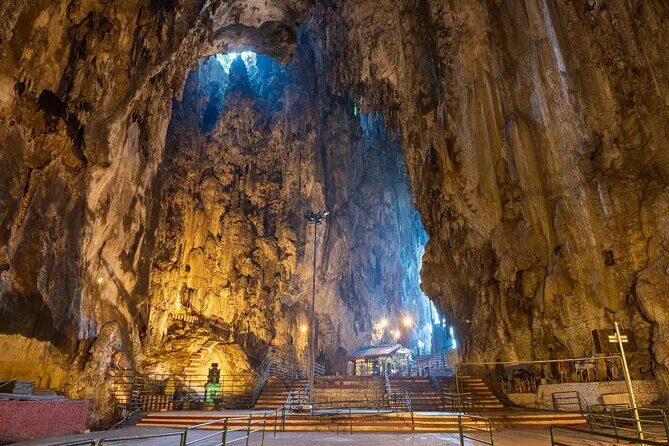
- Batu Caves first stop: enough time for the caves, shrines, and the famous stair-and-temple vibe
- National Mosque outside the usual route: a star-shaped dome and a tall minaret you’ll recognize fast
- Old-meets-new KL landmarks: Merdeka Square, Sultan Abdul Samad, and the River of Life in one smooth sweep
- Temple variety in a half day: Thean Hou Temple adds a very different religious architecture to the mix
- Craft-and-market contrast: batik gallery, Central Market, and Petaling Street Chinatown all in one day
- Small-group feel with a cap: up to 50 people, plus air-conditioned transport to make the logistics painless
Price and how 5.5 hours fits a KL day
At about $55.97 per person for roughly 5 hours 30 minutes, this tour is priced like a practical “I need the highlights” option. The value comes from two things you’d otherwise have to juggle yourself: transportation between far-flung stops and a guide who can explain what you’re looking at while you’re there.
It’s also a good fit for first-timers because Kuala Lumpur’s top sights aren’t clustered tightly. Batu Caves sits outside the city center, while places like Merdeka Square and Central Market are in the core. Doing it solo means figuring out routes, ticket lines, and timing. Doing it on this shared circuit means you can keep your energy for walking and photos instead of transit math.
One more money-saving angle: several stops list admission as free, and Central Market and the Sultan Abdul Samad Building stop include their tickets. Lunch isn’t included, but you’re given food recommendations so you can eat what you want without guessing.
You can also read our reviews of more tours and experiences in Kuala Lumpur.

Pickup at Suria KLCC and the “shared tour” reality

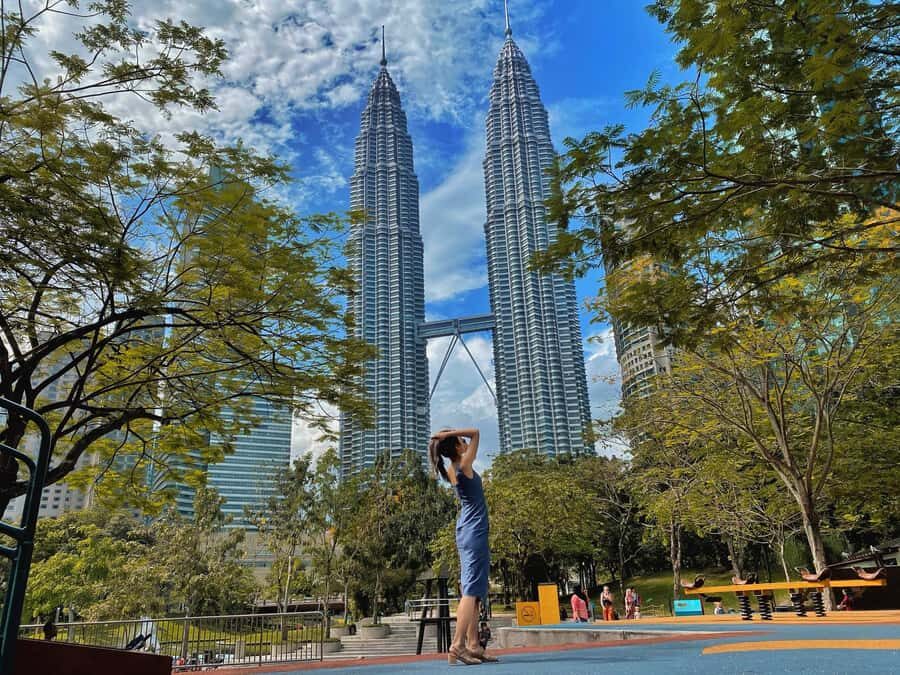
Your morning kicks off at Suria KLCC, Level 2, Menara Berkembar Petronas (Petronas Twin Towers area), with a start time of 9:00 am. The tour uses an air-conditioned vehicle and includes an English-speaking driver/guide, which matters in a city where signage and local rhythms can be fast.
This is a shared tour with a maximum of 50 travelers. In real life, that size usually feels easier than a big coach, though it still means you’ll follow the group tempo. Expect an early start, some walking, and quick transitions between stops.
Also note the tour ends in a different location than where it starts. That’s common for city circuits, but it’s worth keeping in mind if you planned a later reservation somewhere near KLCC. If you’re going to another part of the city after, give yourself a buffer.
Batu Caves: your first taste of KL’s temple side
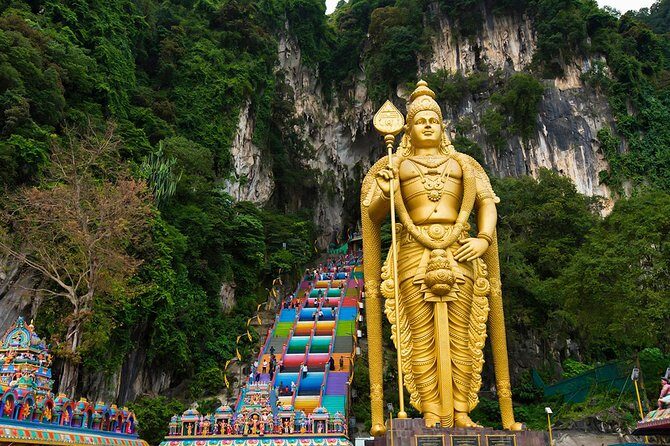
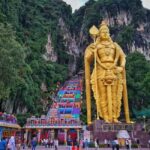
The day starts at Batu Caves, with about 1 hour on site. This is the iconic Kuala Lumpur stop for a reason: you’re walking into a limestone outcrop with cave temples and Hindu shrines, plus that stairway climb that turns every photo into a mini poster.
Even if you’ve seen images before, the scale hits in person. The caves feel like a place with long-term devotional life, not just a theme-park set. You’ll also likely notice the famous playful monkeys around the area. They’re entertaining, but treat them like wildlife—don’t feed, keep small items secure, and watch your step.
Practical tip: wear shoes with grip. You’ll be on uneven surfaces and stairs. If you’re sensitive to sun or heat, bring a hat and water. Since lunch isn’t included, you might also want a small snack for later, because the day is packed.
Jadi Batik Gallery: a fast look at craft, not just souvenirs
Next up is Jadi Batik Gallery for about 30 minutes. Batik is more than pretty cloth here. The point of this stop is to show you batik as an art and process, not just a printed product you grab at a market.
I like this kind of cultural stop because it gives you context before you hit the shopping areas later. When you see batik in a gallery setting, you’re more likely to understand why patterns matter and how the craft has history in the Klang Valley.
The tradeoff is time: it’s a short visit. If you want deep hands-on lessons, this won’t be it. But if you want a meaningful pause that doesn’t feel like a random detour, it works.
National Mosque (Masjid Negara) and what the architecture teaches
At Masjid Negara (National Mosque) you get about 30 minutes. The standout details are obvious fast: a star-shaped dome and a 73m-high minaret. Even from the outside, that design makes the mosque feel modern and landmark-like at the same time.
This stop is useful because it anchors the day in Malaysia’s Islamic heritage, then later you’ll see temples and street-life markets from other cultural angles. In a short tour, that mix helps you build a bigger picture of Kuala Lumpur instead of only focusing on one theme.
One consideration: if your visit date lands on a day when mosque access is restricted (a review flagged Friday access as a potential issue), don’t assume you’ll always be able to enter every area. The exterior experience still gives you the architectural “aha” moment.

The River of Life, Merdeka Square, and Sultan Abdul Samad: KL’s civic core
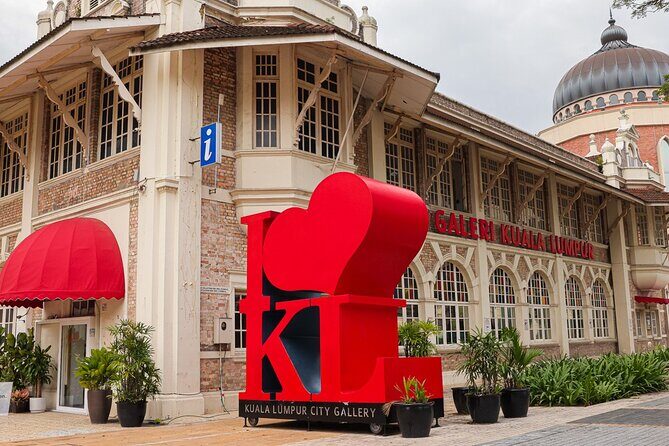
After the mosque area, you’ll pause at The River of Life, near Masjid Jamek Sultan Abdul Samad. This spot is described as a convergence point of two rivers, including the Klang River, and it’s meant to draw your attention to how the city’s geography and civic identity overlap with its landmarks.
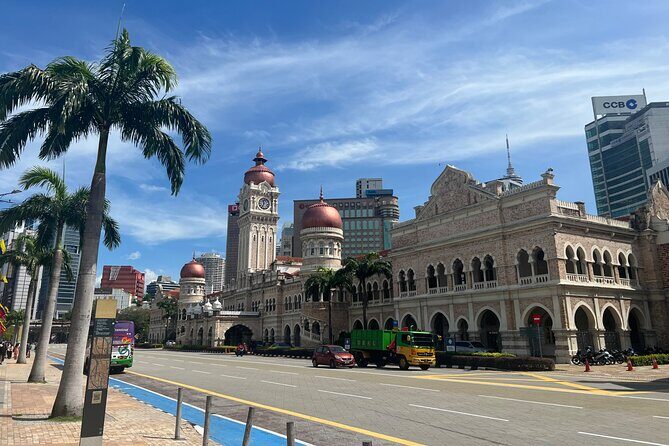
Then comes Dataran Merdeka (Independence Square), across from the Sultan Abdul Samad building. This is where the union flag was lowered—a clear historical marker in the middle of a modern city.
Finally, you’ll see the Sultan Abdul Samad Building, a late 19th-century structure from 1890 with a distinctive Moorish design. This combination works well on a shared tour because the places are close enough to be walked-in, looked-at, and photographed without losing the day’s momentum.
Time reality check: these are relatively short stops, around 20–25 minutes each where listed. Think of it as orientation. You’ll learn what each landmark represents, then move on—perfect if you don’t have many hours in KL, less perfect if you want to study architecture in depth.
Thean Hou Temple and the turn toward Chinese religious heritage
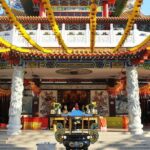
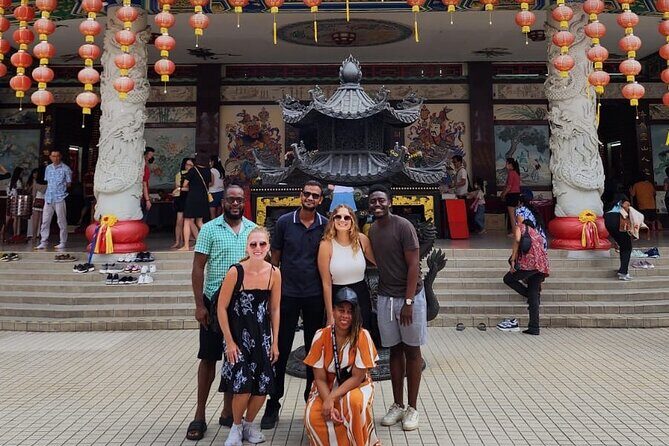
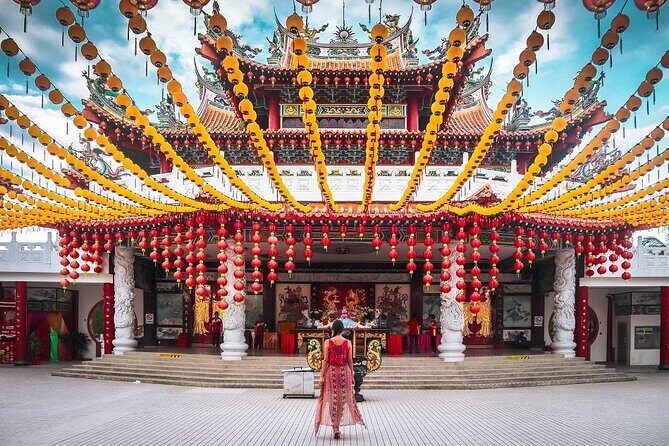
The day shifts again with Thean Hou Temple, a six-tiered temple dedicated to the sea goddess Mazu. You’re also told it sits on Robson Heights on Lorong Bellamy, overlooking the surrounding area, which helps you understand why temples here often double as viewpoints over the city.
This is one of the stops that makes the tour feel genuinely like Kuala Lumpur, not just a list of famous sites. You get religious architecture with a different visual language than the mosque you saw earlier—more ornate, more layered in structure, and built for a different kind of worship atmosphere.
If you like taking photos, this is a good one to slow down. Even with a short time window, you can capture the tiered rooflines, exterior details, and the temple setting.
Brickfields (Little India): where KL’s older industry story shows up
One of the most interesting non-glitzy parts of the circuit is the stop around Brickfields—described as a center of brick-making in the late 19th century. You’re also told about the dramatic disruption in 1881, when fire and flood swept through Kuala Lumpur and the wooden town was heavily damaged.
This matters because KL isn’t only skyscrapers and tourism zones. Brickfields signals how the city’s growth was connected to practical work and rebuilding. Even a short stop helps you notice that today’s neighborhoods carry older economic stories underneath.
Time on this part is less clear in the details you’re given, so treat it as a quick look rather than a long neighborhood walk. If you’re the kind of traveler who loves wandering, you might want to save extra time for Brickfields later on your own.
Central Market: the smart “break from streets” stop
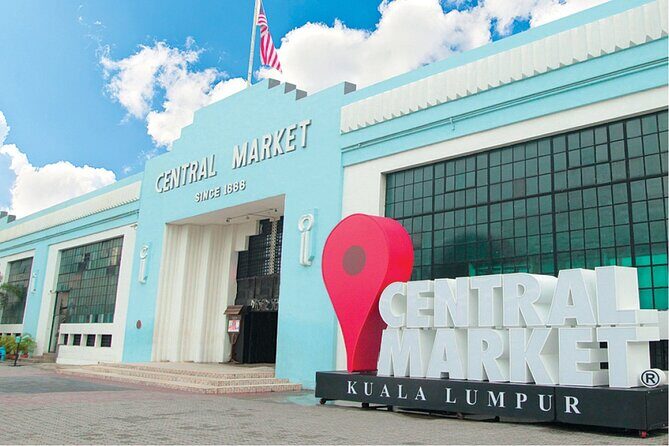
Central Market Kuala Lumpur is where the tour balances sightseeing with an easy-to-enjoy place to stop and breathe. You get about 45 minutes, and the stop includes the relevant admission ticket.
This market started as a wet market in 1888, built by Yap Ah Loy, the city’s Chinese Kapitan. Knowing that makes the building feel less like a modern souvenir mall and more like a long-running civic hub that changed roles as KL changed.
I like Central Market for two reasons. First, it’s a place where you can slow down without the pressure of negotiating on every corner. Second, it’s one of the best stops in a short day to pick up small gifts or local snacks because you can browse while still feeling you’re in the heart of the city’s commercial history.
Petaling Street Market: Chinatown energy and haggling culture
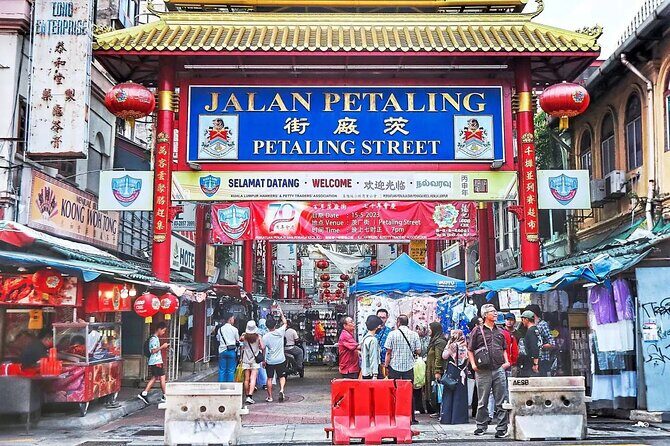
Next is Petaling Street Market, described as Chinatown KL. You’ll get about 30 minutes, and the main thing you’ll experience is street-market life: crowds, shopfronts, and that real Chinatown rhythm where haggling is common.
This stop is fun, but it’s also where you should manage expectations. In half an hour, you can sample the vibe and snap photos, but you probably won’t do the deep-shopping circuit you’d do in a full afternoon. Use this time to choose one or two things you really want, then move on.
Also, if crowds aren’t your thing, go into Petaling Street with a plan: pick a lane, keep moving, and save heavier shopping for another day.
Guide quality and how much information you’ll get
The tour includes an English-speaking driver/guide, and from the names highlighted in past departures—people like Happy, Steven, Ben, Raj, and Patrick—the best days seem to come down to how much storytelling you get between stops.
In the more positive accounts, guides don’t just point. They explain. They also keep things smooth and safe, and one guide even provided a bottle of drinking water for each person, which is the kind of small kindness that matters when you’re walking in KL heat.
Still, there’s an important caution: some experiences are described as lighter on guiding, with more time spent “drop-and-go” and less site-by-site explanation. If you care most about in-depth commentary, don’t assume every departure will feel equally guided.
What I think you should do with your time during the tour
This tour is built for motion, not museum-level study. So I’d treat it like a guided highlights tour with photo stops and cultural context.
Here are a few ways to make it feel worth your money:
- Wear comfortable shoes. You’ll combine temple stairways and market walking.
- Bring light sun protection. Several outdoor portions stack up across the day.
- Plan to snack. Lunch isn’t included, so keep energy up between stops.
- Use the guide to choose your next meal. You’ll get food recommendations, and it’s often the easiest way to eat local without going on a guessing mission.
- Decide your shopping strategy. Central Market is a good browse-stop; Petaling Street is where you’ll likely bargain.
If you go in expecting a fast, friendly orientation to KL, you’ll enjoy it more than if you expect a slow, deeply narrated tour of everything.
Who this shared tour suits best (and who should skip)
This tour fits best if you:
- have limited time in Kuala Lumpur and want the main landmarks in one half day
- want an easy way to handle transport between city center sights and Batu Caves
- like a mix of cultures: mosque, Hindu caves, Chinese temple, and market streets
- prefer air-conditioned rides with set stops over navigating everything yourself
You might want to skip it if you:
- expect long, detailed explanations at each place
- want to visit sites you’ve heard about in a slow, flexible way
- don’t like crowds or short shop-and-go market time
- need a strict plan for how you’ll return to a specific hotel address (the tour ends in a different location)
Should you book the Ten Wonders of Kuala Lumpur tour?
I’d book this tour if you want to get your bearings fast and cover a lot of KL in one efficient sweep. The mix of Batu Caves, National Mosque, civic landmarks like Merdeka Square and Sultan Abdul Samad, plus the cultural contrast of Thean Hou Temple, Central Market, and Petaling Street is exactly what a short KL visit needs.
But book it with eyes open: it’s a packed 5.5 hours. You’re buying convenience and context, not an all-day slow crawl. If you’re okay with a highlights-and-photos pace, this shared tour is a solid way to see Kuala Lumpur without spending your day stuck in transit.
FAQ
How long is the Ten Wonders of Kuala Lumpur shared tour?
It runs for about 5 hours 30 minutes.
Where does the tour start?
The meeting point is Suria KLCC, Level 2, Menara Berkembar Petronas, Kuala Lumpur City Centre, with a start time of 9:00 am.
Does the tour include transportation between stops?
Yes. You’re provided an air-conditioned vehicle, and pickup is offered.
What’s included in the tour price?
The tour includes air-conditioned vehicle transport and an English-speaking driver/guide. Some site admissions are listed as included, such as Central Market and the Sultan Abdul Samad Building stop.
Is lunch included?
No. Lunch is not included, but food recommendations are provided so you can buy on your own.
Which major stops are included?
Key stops include Batu Caves, Jadi Batik Gallery, National Mosque (Masjid Negara), The River of Life, Dataran Merdeka, Sultan Abdul Samad Building, Thean Hou Temple, Brickfields, Central Market Kuala Lumpur, and Petaling Street Market.
Are the attractions tickets included?
Many stops list admission as free, while Central Market and the Sultan Abdul Samad Building stop are listed as admission ticket included.
What’s the group size limit?
The tour has a maximum of 50 travelers.
What if the weather is bad?
This experience requires good weather. If it’s canceled due to poor weather, you’ll be offered a different date or a full refund.
Can I cancel for a refund?
Yes. Free cancellation is available up to 24 hours in advance for a full refund, based on the local start time.