REVIEW · KUALA LUMPUR
Full-Day Malacca City Tour
Book on Viator →Operated by MALAYSIAN TOURS RIYAS · Bookable on Viator
Malacca in one day feels like time travel. You’ll leave Kuala Lumpur with hotel pick-up and drop-off, then spend hours moving through Dutch, Portuguese, and British-era landmarks in the city center. I love how many major stops you can fit into a 7–8 hour outing, and I also like that the day is organized enough to keep you from worrying about directions. One thing to consider: this is a full hot-day walking plan and it’s not wheelchair accessible.
Here’s the part that matters most for your expectations: this is a private tour with an English-speaking driver handling the logistics. That works great if you want smooth transport and stops close together, but it’s less ideal if you’re expecting a detailed historian-style guide at each location. I’d also double-check lunch—some descriptions mention a set lunch, while the tour notes say meals aren’t included.
In This Review
- Key points before you go
- Price and logistics: what $55 buys you
- Starting smart from Kuala Lumpur (and why morning matters)
- Stadthuys and the Red Square: Dutch power in red-and-stone
- A Famosa: the Portuguese fortress that survived
- St. Paul’s Hill and Church: Portuguese origins, oldest church building claim
- Jonker Street: antiques, snacks, and old neighborhood energy
- Christ Church: a working Protestant landmark
- Mini Malaysia & ASEAN Cultural Park: fun photo stop, paid entry
- Cheng Hoon Teng Temple: three-doctrine faith in one place
- Kampung Kling Mosque: Harmony Street and blended architectural style
- Malacca River and the Straits Mosque: trade route past, modern skyline present
- What to expect from an English-speaking driver (and how to avoid disappointment)
- Lunch: included set lunch vs meals not included—check your voucher
- Who this tour is best for
- Should you book this Malacca City Tour from Kuala Lumpur?
- FAQ
- How long is the full-day Malacca City Tour?
- Does the tour include hotel pick-up and drop-off?
- What does the tour cost?
- Is lunch included?
- Are entrance fees included for the stops?
- Is this tour wheelchair accessible?
- Is the tour private?
- What language do you get with the driver?
- What is the cancellation cutoff for a full refund?
Key points before you go
- Hotel pick-up and drop-off from Kuala Lumpur keeps the day simple and low-stress
- English-speaking driver + air-conditioned vehicle means you’re not stuck figuring out roads between sites
- Many stops are free to enter (most major landmarks listed are admission free)
- Mini Malaysia and ASEAN Park charges entry and that cost isn’t included
- Expect short photo stops (often around 15 minutes each) rather than long museum time
- Not wheelchair accessible, and parts of the city require walking on uneven streets
Price and logistics: what $55 buys you
At $55 per person, this is mainly paying for the transport package. You’re getting an air-conditioned vehicle, an English-speaking driver, and round-trip hotel pick-up between Kuala Lumpur and Malacca, plus time to visit a long list of key sights.
What makes the value feel better: many of the stops listed are free (Stadthuys, A Famosa’s remaining gate area, St. Paul’s Hill/Church complex, Jonker Street, Christ Church, Cheng Hoon Teng Temple, Kampong Kling Mosque, the river area, and the Malacca Straits Mosque). The main “paid add-on” you should plan for is Mini Malaysia & ASEAN Cultural Park, where entry is not included.
Two practical notes from the real-world rhythm of the day:
- You’re dealing with a time-boxed schedule. Most listed stops are around 15 minutes, with longer time at places like Jonker Street.
- You’ll want a smooth day even if you’re not a museum person. This tour is built for “see the landmark, take photos, move on,” not for deep academic study at each site.
You can also read our reviews of more city tours in Kuala Lumpur
Starting smart from Kuala Lumpur (and why morning matters)
This tour runs about 7 to 8 hours, so timing is everything. Plan to be ready a bit early—one day report called out a 7:00 AM pickup—because leaving on time helps you get to the city before the heat and crowds fully build.
You’ll also get a clear advantage over going independently: the driver keeps the day moving across multiple neighborhoods. Malacca’s main sights cluster around the historic core, the river, and nearby areas, so road efficiency matters.
If you don’t like the pressure of short visits, you can still make it work. The best strategy is to decide in advance which 2–3 places are your “must capture” stops, then treat everything else as a bonus.
Stadthuys and the Red Square: Dutch power in red-and-stone
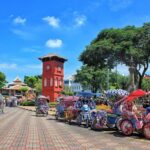
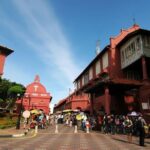
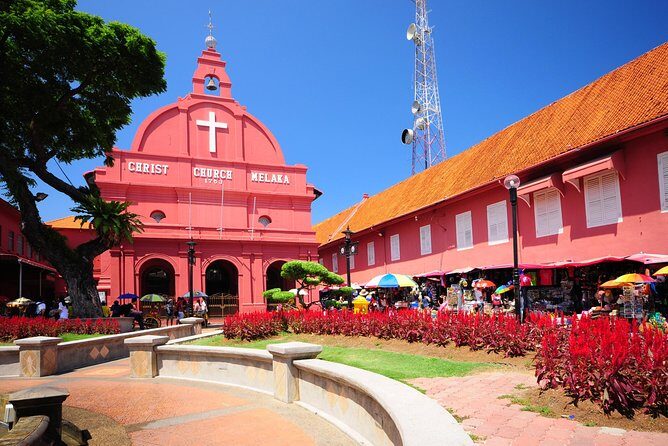
Your day typically starts at the Stadthuys in the Red Square area. This red exterior building is a Dutch-era landmark built in 1650, originally as offices for the Dutch Governor and Deputy Governor. It’s right in the heart of Malacca’s historic administrative zone, so it’s a strong “orientation stop.”
Why I like this moment: it sets the visual theme for the day. When you see the red facade and the nearby clocktower area, the Dutch influence becomes easy to recognize as you hop to the next stops.
What to watch for: this is mostly a quick look-and-photo stop. You’re not going to spend a long time here, so don’t wait until you’re tired to take your pictures.
A Famosa: the Portuguese fortress that survived
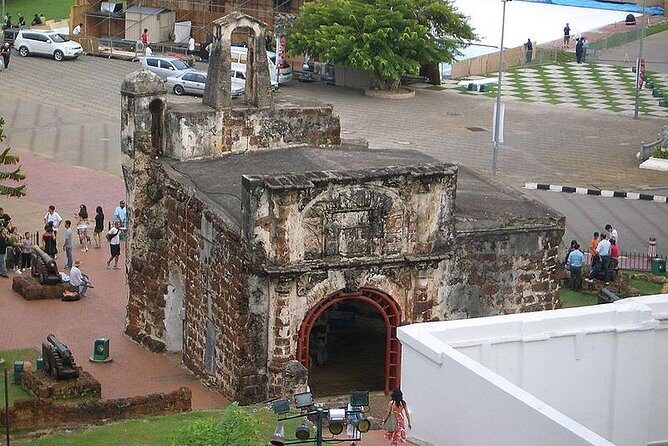
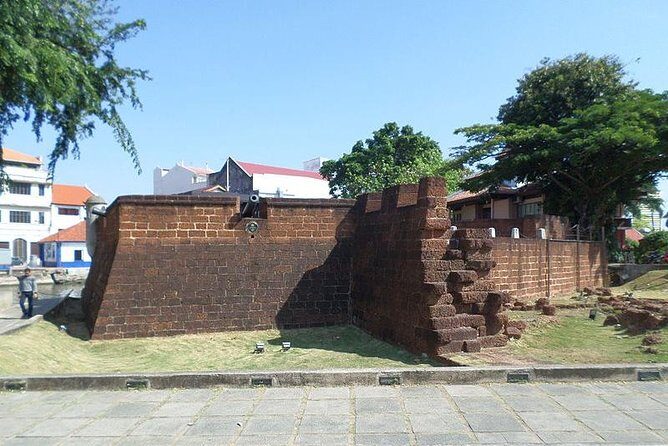
Next comes A Famosa, often linked with the Portuguese fortress era. The big idea here is that only the Porta de Santiago gate house remains. That’s not a drawback if you’re okay with history as fragments; it’s actually a useful reminder of how much older European architecture in Southeast Asia has changed over centuries.
If you want a simple takeaway: A Famosa is about surviving traces. Even with a shorter visit window, the gate is a tangible piece of early 1500s European presence in Malacca.
Quick tip: wear breathable clothes. Even with shade, the day can feel warm, and the forts-and-courtyards vibe means you’re often in open air.
St. Paul’s Hill and Church: Portuguese origins, oldest church building claim
St. Paul’s Hill and its church complex are one of the most interesting stops on the route. The current church area ties back to a Portuguese chapel from 1521, built as a dedication to the Virgin Mary. It’s described as the oldest church building in Malaysia and Southeast Asia, and it’s set on the hill, which makes it feel like a historical viewpoint even if you keep the visit short.
Why this stop works: it connects a lot of threads—Portuguese beginnings, later changes in use, and the idea that faith communities in Malacca overlapped rather than replaced in a clean timeline.
Consideration: it’s a hilltop stop. If you’re not keen on stairs or sloped paths, you’ll feel it. This is one of the moments where a “fast photo” becomes a little more active.
You can also read our reviews of more tours and experiences in Kuala Lumpur


Jonker Street: antiques, snacks, and old neighborhood energy
Jonker Street is the Chinatown street area (Jalan Hang Jebat) and it’s usually where you get a slower pace. You’ll spend about 30 minutes here, long enough for a walk, shopping browsing, and a snack break if you find something you like.
This isn’t just modern street shopping. It reflects the shift from Dutch-era residential streets (Heeren Street area) to a richer Peranakan presence after the Dutch left. You’ll see historical shopfronts and houses dating back to the 17th century, and the street is built around antiques, textiles, handicrafts, and food.
What to do with your time:
- If you’re shopping, decide on a budget before you start.
- If you’re just browsing, focus on the older storefronts and take a few slow pauses for photos.
If you only have a short attention span for shopping, Jonker Street still works. It’s the best “street life” contrast to the churches and fortress gate you saw earlier.
Christ Church: a working Protestant landmark
Christ Church Malacca is an 18th-century Anglican church and is described as the oldest functioning Protestant church in Malaysia. The context matters: the Dutch conquest led to the proscription of Roman Catholicism and the re-use/conversion of existing churches.
So your quick visit isn’t just about architecture. It’s about how Malacca’s European power shifts changed the religious map on the ground.
For most people, this is a short stop with big visual payoff—calm interior moments if the church is open, plus a chance to see how the Protestant-era building fits the historic district around it.
Mini Malaysia & ASEAN Cultural Park: fun photo stop, paid entry
Mini Malaysia & ASEAN Cultural Park (in Ayer Keroh) is the one stop where entry is not included. You’ll usually have around 30 minutes, which is short but enough to get a feel for the idea: traditional houses from Malaysian states and ASEAN countries, built as mini replicas.
Is it worth it? For some travelers, yes—especially if you want a quick “regional snapshot” in one compact place. For others, it may feel like time spent away from the historic core. Since the entry cost is extra, I treat this as a choose-it-based-on-your interests stop.
If you’re the type who likes walking neighborhoods and old buildings, you might prefer spending that time at street level in the city instead. On the flip side, if you want a break from heat and still want something visual and easy, this park can be a welcome reset.
Cheng Hoon Teng Temple: three-doctrine faith in one place
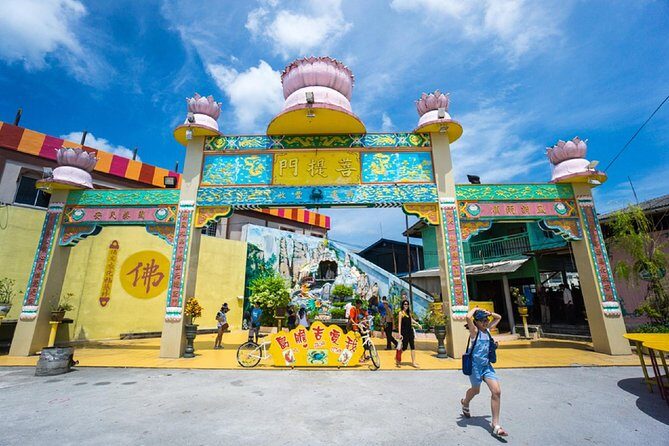
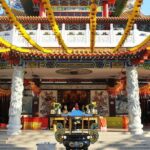
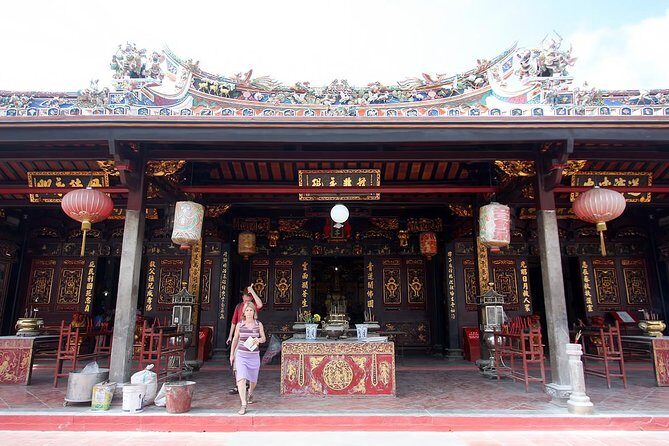
Cheng Hoon Teng Temple (Temple of Green Cloud) is listed as the oldest functioning temple in Malaysia. It practices the Three Doctrinal Systems—Buddhism, Confucianism, and Taoism—and it’s tied to Chinese Kapitan community leadership in the 1600s.
Even in a short visit, you can feel why it’s important. It’s not a single-era landmark; it’s a long-running community place, and the temple’s story reflects how Malacca grew as traders and communities arrived from different directions.
Practical tip: treat this stop respectfully. Dress modestly, move quietly, and save your loud talking for outside.
Kampung Kling Mosque: Harmony Street and blended architectural style
Kampung Kling Mosque is another short but meaningful stop. It’s near a cluster of older places of worship, which is why the area is sometimes described as Harmony Street due to proximity to Sri Poyatha Moorthi Temple and Cheng Hoon Teng Temple.
The mosque’s background is tied to Indian Muslim traders, with an original wooden building in 1748 and a later brick rebuild in 1872. Architecturally, it’s described as a cross between Sumatran, Chinese, Hindu, and Malacca Malay influences, which makes it visually more interesting than a plain “look and leave” experience.
What I’d plan for: since it’s a working religious site, there can be rules about where you can stand and when photos are okay. Stay flexible and keep your visit calm.
Malacca River and the Straits Mosque: trade route past, modern skyline present
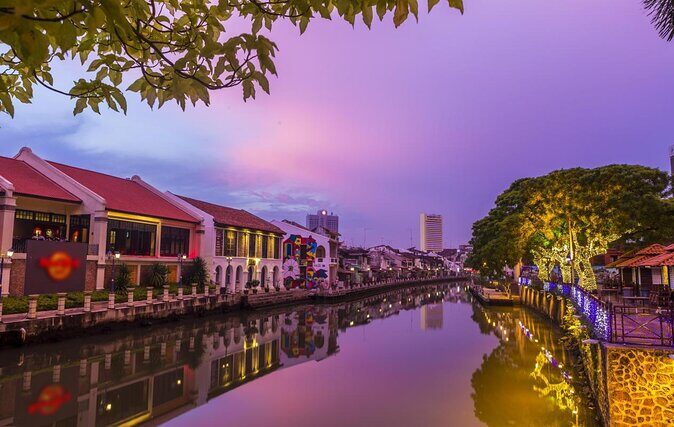
The Malacca River stop is about context. Historically, the river was vital for the Sultanate’s trade in the 15th century, flowing from Negeri Sembilan into the Strait of Malacca. The area also points to modern efforts to revive and restore the waterfront, with upgrades like dredging, restored buildings and bridges, and river walkways.
Even if you don’t do a long riverside walk, it helps to see where the city’s story ran: commerce, shipping, and the movement of people. This is the “why Malacca mattered” stop.
Then you’ll reach Melaka Straits Mosque on the man-made Malacca Island. It opened in 2006 and is designed to look like it’s floating when water levels are high. This is a modern contrast to the older European and religious sites earlier in the day.
If you like mixing old and new in one route, this ending hits the mark. If you want only older architecture, you might feel the modern mosque is less “historic,” but the location and design are still worth the quick visit.
What to expect from an English-speaking driver (and how to avoid disappointment)
This tour is driver-led. That’s a good thing when you want logistics, timing, and transport handled. It’s also the source of many mismatches in expectations: if you’re hoping for a full, location-by-location guided lecture, you may find the day feels more self-directed than you expected.
One key thing to know is how the driver operates. You’re getting an English-speaking professional driver, air-conditioned vehicle, and included hotel pick-up and drop-off. But the driver’s role is transportation and keeping the route smooth, not turning every stop into a guided museum narration.
A real-life pattern from day experiences is simple:
- When the driver is proactive and explains what to do at each stop, the day feels complete.
- When you arrive without much framing, you’ll have to figure out more on your own.
So here’s my practical advice: if you want interpretation at each stop, look for an option that explicitly includes a guide, not just a driver. If you’re happy with a “see it and enjoy it” pace, this version fits nicely.
Lunch: included set lunch vs meals not included—check your voucher
This is where you should be careful. The tour description mentions an included set lunch, but the highlights note meals aren’t included. The included list doesn’t clearly call out lunch as included.
So do this one smart move: check your booking confirmation or voucher for lunch details. If lunch isn’t included, you’ll want to bring water and have a plan for a meal near your free-time areas (like around Jonker Street), rather than hoping every stop has food nearby.
Who this tour is best for
This full-day Malacca city tour makes sense if you:
- Want a tight schedule with transport handled from Kuala Lumpur
- Like religious and colonial-era landmarks in a single day
- Prefer short visits and photo moments over long museum time
- Enjoy walking historic streets like Jonker Street without planning your own route
It may be less ideal if you:
- Need wheelchair access (the tour is not wheelchair accessible)
- Want long stays at each attraction
- Want deep, guided commentary at every stop rather than a driver-led plan
- Are very sensitive to heat and walking on uneven ground
Should you book this Malacca City Tour from Kuala Lumpur?
I’d book it if your top priority is efficient, low-planning sightseeing across Malacca’s best-known European-era landmarks plus temples and mosques. The combination of hotel pick-up/drop-off, mostly free admissions, and a sensible 7–8 hour structure makes it feel like good value for many people.
Skip or reconsider if you’re expecting a guided lecture at every stop, or if your day needs wheelchair accessibility. Also, confirm whether lunch is truly included on your specific booking.
If you want Malacca without the headache of routing and timing, this is a practical way to do it—just go in knowing it’s driver-led and built for a fast, landmark-hopping day.
FAQ
How long is the full-day Malacca City Tour?
It runs about 7 to 8 hours.
Does the tour include hotel pick-up and drop-off?
Yes. Hotel pick-up and drop-off are included, and you travel in an air-conditioned vehicle with an English-speaking driver.
What does the tour cost?
The price is $55.00 per person.
Is lunch included?
The information provided says there is an included set lunch, but it also notes that meals are not included. Check your booking confirmation or voucher to confirm what applies to your specific trip.
Are entrance fees included for the stops?
Most stops listed are marked as admission free, but Mini Malaysia & ASEAN Cultural Park entry is not included.
Is this tour wheelchair accessible?
No. The tour is not wheelchair accessible.
Is the tour private?
Yes. It’s private, and only your group participates.
What language do you get with the driver?
The driver is English speaking.
What is the cancellation cutoff for a full refund?
You can cancel up to 24 hours in advance for a full refund. If you cancel less than 24 hours before the experience starts, the amount paid is not refunded.