REVIEW · KUALA LUMPUR
Full-Day Malacca City Tour from Kuala Lumpur
Book on Viator →Operated by MALAYSIAN TOURS RIYAS · Bookable on Viator
Malacca history fits neatly into one day. I like the convenience of hotel pickup and a helpful English-speaking driver who keeps everything running on schedule. You get a guided sweep across the city’s big landmarks, from the Red Square area to churches and temples.
I also love that the route covers multiple communities and eras, so you’re not just ticking off one kind of sight. One heads-up: this tour notes it is not wheelchair accessible, so plan around uneven sidewalks and steps.
Key things to know before you go
- Hotel pickup and drop-off from Kuala Lumpur saves you time and hassle.
- English-speaking driver handles logistics so you can focus on seeing.
- Many stops are free to enter, but Mini Malaysia charges are not included.
- A set lunch is included, but drinks and extra meals may cost extra.
- Jonker Street is on the route, yet it shines most after dark, so you may want a follow-up plan.
In This Review
- Price and Logistics: What You’re Paying For on This KL-to-Malacca Day Trip
- Why Malacca Fits Well as a Day Trip (and How to Get the Most Out of It)
- The Route From Red Square to Jonker Street: Your “Colonial-to-Chinatown” Walkthrough
- Stadthuys and the Red Square: Dutch Power in One Red Facade
- A Famosa (Porta de Santiago): The Portuguese Fortress Survivor
- St. Paul’s Hill & Church: How Portuguese Gratefulness Became Malaysia’s Oldest Church Building
- Cheng Hoon Teng Temple and Kampung Kling Mosque: When Several Faiths Share the Same Streets
- Malacca River Revitalization: A Trade Route Brought Back Into View
- Mini Malaysia & ASEAN Cultural Park: A Time-Efficient Cultural Pause
- Middleburg Bastion and Hang Tuah’s Well: Small Spots That Add Shape to the Story
- Jonker Street and Christ Church: Chinatown-Style Browsing Meets Anglican Heritage
- Lunch, Timing, and What to Do With the Free-Entry Stops
- Who This Tour Suits Best (and Who Might Want a Different Fit)
- Should You Book This Malacca City Tour?
- FAQ
- How long is the full-day Malacca City Tour from Kuala Lumpur?
- Is hotel pick-up and drop-off included?
- What is the price per person?
- Is there a meal included on the tour?
- Is this a private tour?
- Will the driver speak English?
- Are tickets included for all stops?
- Is the tour wheelchair accessible?
- What are some of the main places you visit?
- Can I cancel and get a full refund?
Price and Logistics: What You’re Paying For on This KL-to-Malacca Day Trip
At $55 per person for a full-day outing, the value mostly comes from what’s wrapped into the day: door-to-door convenience, guided navigation, and an air-conditioned vehicle from Kuala Lumpur to Malacca and back. You’re not spending your morning hunting buses, coordinating taxis, or recalculating how to fit everything in.
The tour is set up for a private group, meaning only your group participates. That matters when you have different walking speeds, photo priorities, or just want fewer interruptions. It also uses a mobile ticket, which is handy if you’re trying to keep things simple with fewer printed documents.
Timing-wise, you should plan for roughly 7 to 8 hours total. That’s long enough to feel like a real day trip, but short enough that you’ll want to treat each stop as a “get your bearings and enjoy the details” moment rather than a slow museum marathon.
The main consideration I’d keep in mind is comfort and movement. The tour is not wheelchair accessible, so if your group has limited mobility, plan for stairs and curb cuts. Even if you’re totally fine walking, Malacca’s old-city streets can be a bit stop-and-go.
Why Malacca Fits Well as a Day Trip (and How to Get the Most Out of It)
Malacca works fast because it’s compact and layered. In one day, you can see Portuguese-era leftovers like A Famosa, Dutch administrative landmarks like the Stadthuys, and later English influences such as Christ Church. You also get religious architecture from multiple communities, including the Cheng Hoon Teng Temple and Kampung Kling Mosque.
To get the most out of a day like this, I’d treat your role as the navigator of meaning. The driver’s job is to get you from A to B. Your job is to notice the shifts: which building looks Portuguese, which feels Dutch, and where British Anglican style shows up. When you do that, the day stops feeling like a checklist and starts feeling like a guided walk through changing control of trade and power.
Also, don’t underestimate the “small time” stops. Places like Hang Tuah’s Well and Middleburg Bastion are short visits, but they help stitch the story together. The tour pacing keeps you moving, yet it still leaves room for the kind of visual cues that make Malacca memorable: red facades, old stone gates, and waterfront angles around the river.
You can also read our reviews of more city tours in Kuala Lumpur
The Route From Red Square to Jonker Street: Your “Colonial-to-Chinatown” Walkthrough
The day is built around a logical sweep through the central historic zone. You start near the Red Square area, then move through major surviving European structures and religious landmarks, before shifting toward the river area and ending with shopping and food energy at Jonker Street.
That order is smart. Early on, you’re fresh, and the core architectural hits land first: Stadthuys, A Famosa, and St. Paul’s Hill & Church. Later, you shift from “look at the big monuments” to “walk the streets and notice the everyday city layers,” which is where Jonker Street fits naturally.
If you’re into photography, this route helps you avoid backtracking. You’ll also see several items with free admission on the schedule, which makes it easier to budget your time and money without constantly checking extra fees.
Stadthuys and the Red Square: Dutch Power in One Red Facade
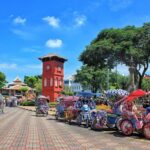
The tour kicks off with the Stadthuys, a Dutch-era civic building tied to Malacca’s administrative past. It sits in the heart of the Red Square, famous for the dramatic red exterior and the nearby red clocktower.
This stop matters because it sets the tone for the rest of the day. You’re not looking at one random old building. You’re looking at the kind of building that signals governance, trade organization, and authority. It was built by the Dutch in 1650, originally as the office of the Dutch Governor and Deputy Governor.
You’ll find this an easy win if you’re the type who likes context. Even with limited time on site, the setting helps you understand why Malacca’s colonial history feels visible. The red tones and central placement make the architecture feel intentional, not accidental.
A Famosa (Porta de Santiago): The Portuguese Fortress Survivor
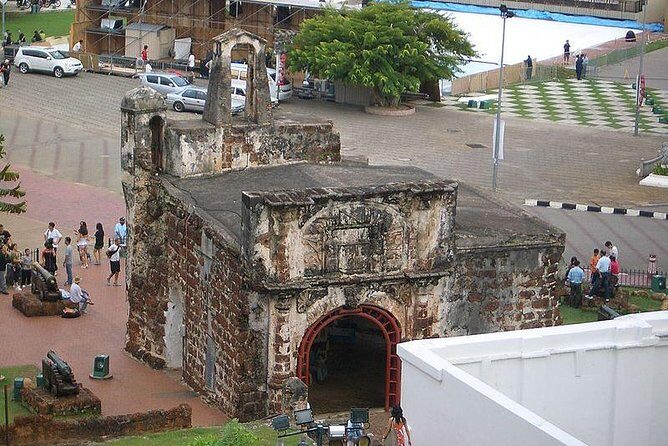
Next up is A Famosa, known in Portuguese as Kota A Famosa. This is one of the oldest surviving European architectural remains in Southeast Asia and the Far East. The key detail here is that only part of the fortress remains today, and that surviving piece is the Porta de Santiago gate house.
I like this stop because it’s compact but powerful. You can absorb the Portuguese presence without needing a big-scale ruin experience. It also gives you a physical marker for earlier power shifts, since Portuguese arrival in the early 1500s sits at the root of why A Famosa exists in the first place.
Also, there’s a practical angle: because the stop is short, it fits perfectly into the day’s momentum. You get a “wow” moment without losing the rest of the schedule.
St. Paul’s Hill & Church: How Portuguese Gratefulness Became Malaysia’s Oldest Church Building
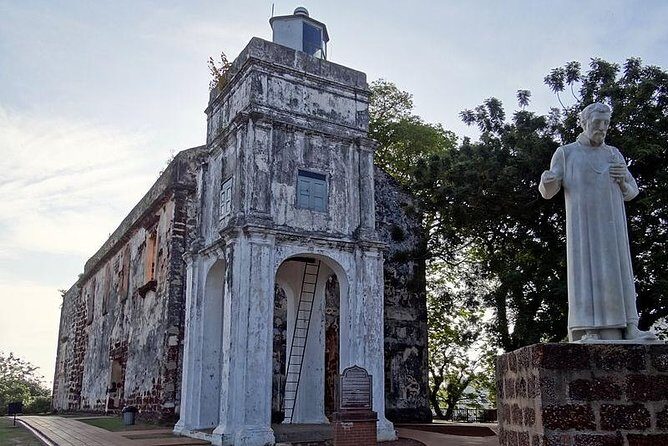
On St. Paul’s Hill, you visit St. Paul’s Church, described as the oldest church building in Malaysia and Southeast Asia. The original chapel was built in 1521, dedicated to the Virgin Mary, and linked to Portuguese activity in the region.
One of the most interesting details you can look for during this stop is the story behind the chapel’s start. It was built as an act of gratitude by a Portuguese nobleman, Duarte Coelho, after escaping a storm in the South China Sea. That’s the kind of anecdote that makes stone-and-stairs sites feel human, not just old.
This stop also connects to the larger religious arc of Malacca. You’re visiting a location that later became part of the Malacca Museum Complex, which means the area is treated as a historical cluster rather than a stand-alone viewpoint.
You can also read our reviews of more tours and experiences in Kuala Lumpur
Cheng Hoon Teng Temple and Kampung Kling Mosque: When Several Faiths Share the Same Streets
After the European sites, the tour pivots to living religious architecture: Cheng Hoon Teng Temple and Kampung Kling Mosque.
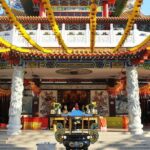
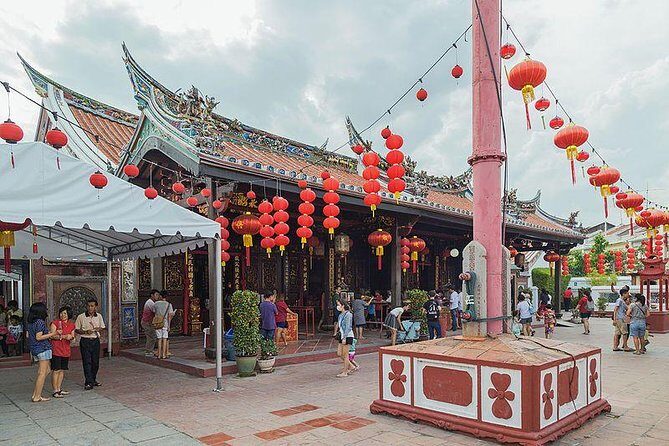
Cheng Hoon Teng, also called the Temple of Green Cloud, is practiced through three traditions: Buddhism, Confucianism, and Taoism. The temple site dates to 1645 during the Dutch era, founded by Tay Kie Ki (also noted as Tay Hong Yong), a Chinese Kapitan. Later structures were constructed in 1673 under the leadership of Li Wei King (also noted as Koon Chang) with materials imported from China.
I like Cheng Hoon Teng because it shows how trade cities grow spiritual centers. You can see the temple’s age and the layers behind it without needing a long lecture. It’s the kind of place where small details matter, and even a short visit can feel respectful and meaningful.
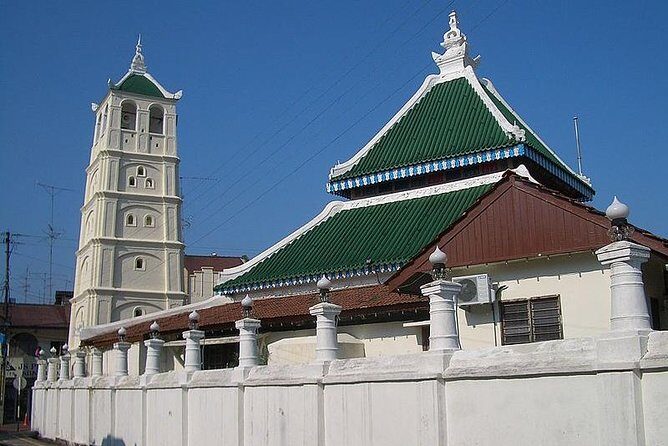
Then you head to Kampung Kling Mosque. It’s an older mosque originally built by Indian Muslim traders in 1748 and rebuilt in brick in 1872. What’s especially useful to know is its architectural mix: a cross of Sumatran, Chinese, Hindu, and Malacca Malay influences. It sits near other houses of worship on what’s described as Harmony Street.
If you want a day in Malacca that feels more than colonial monuments, this pairing does the job. You see how the city’s identity isn’t just European-era stone. It’s also local and migrant communities building continuity over centuries.
Malacca River Revitalization: A Trade Route Brought Back Into View
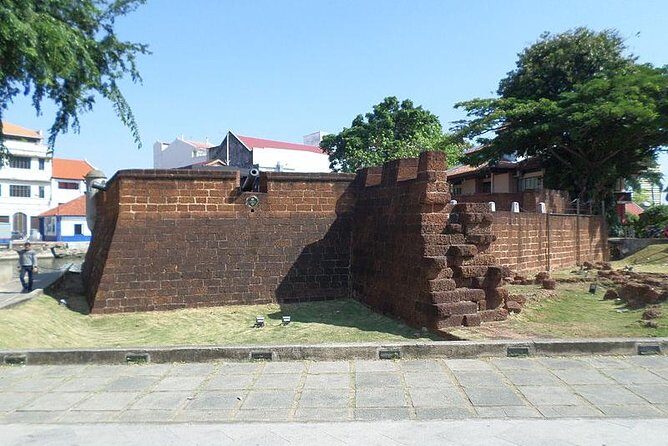
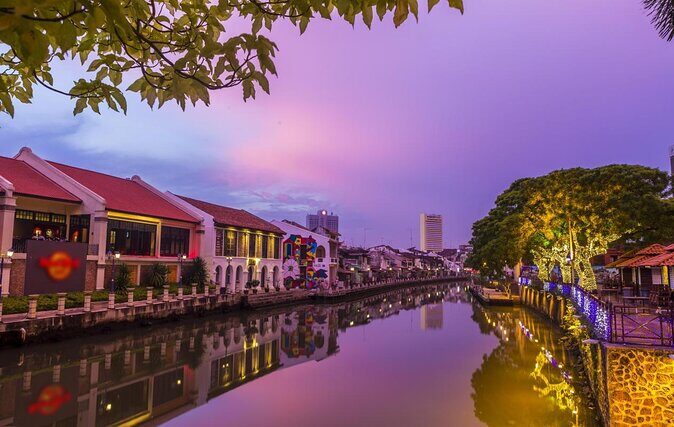
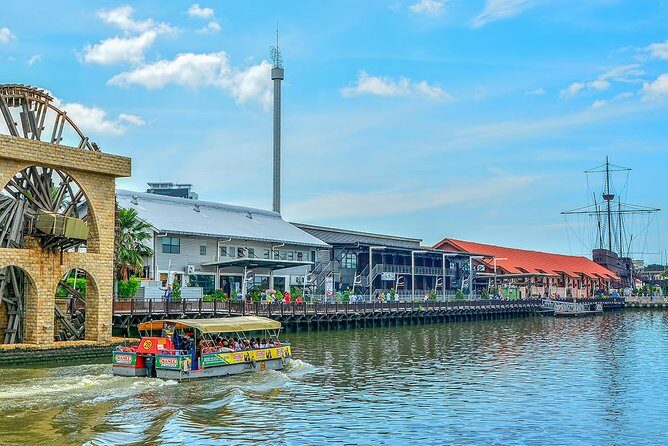
The tour includes time at the Malacca River, described as a crucial trade route during the heyday of the Malacca Sultanate in the 1400s. The river today has a visible “modern project” feel because an infrastructure effort was launched to revive and rejuvenate the riverfront.
The information shared on the tour points to major components: a tidal barrage, restorations of buildings and bridges, dredging, and more concrete riverbanks with walkways. There’s also mention of land reclamation that extends the river mouth.
This is a good stop if you’re curious how history stays relevant. You’re seeing a city trying to make its waterfront usable and attractive again, not just preserving old stones in isolation. If you want to keep your own energy up, aim to take a slower look here than you do at quick photo stops.
Note: entry/tickets aren’t included for the river portion, so if you’re the type who likes paying attention to costs before the day gets rolling, keep that in mind.
Mini Malaysia & ASEAN Cultural Park: A Time-Efficient Cultural Pause
Midday, you’ll visit the Mini Malaysia and ASEAN Cultural Park in Ayer Keroh. This is a theme park, so it’s not the same kind of historical authenticity as the old-town stops. But it can be useful in a full-day schedule because it gives context quickly.
The park showcases traditional houses from every Malaysian state and from ASEAN countries. It opened in phases starting in 1986 for Mini Malaysia and then 1991 for Mini ASEAN. You’ll get a quick “overview” of architecture and regional identity, which can refresh your brain before you hit more street-level exploring.
The key budgeting detail is that admission is not included for this part. So you’ll want to have a bit of spare cash or know how the park ticket will be handled on the day.
Middleburg Bastion and Hang Tuah’s Well: Small Spots That Add Shape to the Story
Two shorter stops round out the day with story fragments that help connect trade, defense, and local legend.
At Middleburg Bastion, you’re looking at a fortification built by the Dutch after the fall of Portuguese Malacca to the Dutch in 1641. The aim was defense against threats from outside and inside. The bastion construction is dated to 1660, placed strategically at the mouth of the Malacca River.
Next is Hang Tuah’s Well in Kampung Duyong. This is tied to the legendary figure Hang Tuah, and the well is noted as a historical monument under the Antiquities Act on 29 September 1977. It’s the kind of stop that feels almost too small for a full day tour, yet it’s useful. Legends like this are part of Malacca’s identity, and short visits help you remember that the city isn’t only made of imported architecture.
If you’re the type who likes to end a day with a little “human” flavor, these two stops are your payoff.
Jonker Street and Christ Church: Chinatown-Style Browsing Meets Anglican Heritage
The tour reaches Jonker Street, known as the Chinatown street of Malacca. It runs along Jonker Street and is described as starting near the Melaka River across from the Stadthuys.
Here’s what makes Jonker Street more than just a shopping street. The street’s past shifts as the Dutch leave, and later Peranakan communities start living and doing business there. The street is lined with historical houses dating back to the 17th century, which is a big reason the area feels layered.
Expect shops selling antiques, textiles, food, handicrafts, and souvenirs. This is also where your best “wander time” happens, since you can slow down and browse based on what catches your eye.
Then there’s Christ Church Malacca, an 18th-century Anglican church described as the oldest functioning Protestant church in Malaysia. It ties into the religious shift after the Dutch conquest of Malacca from the Portuguese in 1641, which led to Roman Catholic proscription and conversion of existing churches to Dutch Reformed use. St. Paul’s Church was renamed Bovenkerk (Upper Church), and Christ Church later becomes the key Anglican landmark.
I like ending the day with this mix: street life and a prominent church building in the same afternoon helps you remember that Malacca’s identity isn’t one thread. It’s multiple communities interacting over time.
Lunch, Timing, and What to Do With the Free-Entry Stops
You get an included set lunch, which is a big deal on a long day. Even if you don’t know the exact dishes in advance, having lunch handled keeps your energy stable so you don’t start running on fumes halfway through the religious sites.
That said, the tour info also notes that meals are not included in general, which means you should assume you may need to budget for snacks or drinks beyond the set lunch. If you rely on water breaks, plan for that.
Many stops list free admission, which is helpful for controlling costs and for staying on schedule. You don’t have to stop your day to deal with ticket lines at every point. The exceptions matter: Mini Malaysia and ASEAN Cultural Park does not have admission included, and Malacca River is also listed as not included for admission.
A smart strategy is to keep your “must-see” moments at the free sites and treat paid ones as optional add-ons you’re choosing to support.
Who This Tour Suits Best (and Who Might Want a Different Fit)
This tour is a solid fit if you want a guided Malacca overview without the planning headaches. It’s also open to all ages, and because it’s private for your group, it works well if you travel with people who want a bit of structure.
It’s especially good for you if you like:
- architecture and the visible switching of European influence across centuries
- seeing different religious communities within walking distance of each other
- a day trip that ends with time to browse on your own at Jonker Street
It may not be the best match if you need wheelchair access, or if you prefer long stays at fewer sites. This route is built for movement and variety, so if you like soaking in one museum for hours, you may find some stops brief.
Also, note the tone from experience: one reviewer really wished they could see Jonker Walk at night. That’s a clue for your own planning. The tour gives you Jonker Street during the day, but if you care about the evening vibe, consider adding your own return visit after you get back to Kuala Lumpur.
Should You Book This Malacca City Tour?
Book it if you want a well-paced day that covers Malacca’s main architectural and cultural landmarks with pickup, drop-off, and a driver handling logistics. The $55 price makes sense for a full-day circuit, especially because many major stops have free admission, and you get an included set lunch to keep your day from cracking.
Skip it or switch to a different style if you require wheelchair access, or if you’d rather spend more time in one place than sample a lot of stops. Also, if your top priority is nighttime Jonker Street, plan a separate evening outing so you’re not waiting for the day tour to deliver that atmosphere.
If you want Malacca’s big story in one day, this route does the job.
FAQ
How long is the full-day Malacca City Tour from Kuala Lumpur?
The tour lasts about 7 to 8 hours.
Is hotel pick-up and drop-off included?
Yes. Hotels/Apartments pick-up & drop-off are included.
What is the price per person?
The price is $55.00 per person.
Is there a meal included on the tour?
A set lunch is included. The tour also notes that meals are not broadly included, so you may need to budget for drinks or extra snacks.
Is this a private tour?
Yes. It is described as private, so only your group participates.
Will the driver speak English?
Yes. The tour includes an English speaking driver.
Are tickets included for all stops?
Many stops list admission ticket free, but Mini Malaysia & ASEAN Cultural Park is noted as admission ticket not included, and the Malacca River stop also lists admission not included.
Is the tour wheelchair accessible?
No. It is not wheelchair accessible.
What are some of the main places you visit?
You’ll see Stadthuys, A Famosa, St. Paul’s Hill & Church, Cheng Hoon Teng Temple, Kampung Kling Mosque, Malacca River, Middleburg Bastion, Jonker Street, and Christ Church, along with other nearby stops.
Can I cancel and get a full refund?
Yes. You can cancel for a full refund up to 24 hours in advance of the experience’s start time.