REVIEW · KUALA LUMPUR
Batu Caves & Malaysian Handicraft Tour: Pewter & Batik Experience
Book on Viator →Operated by Asni Tours & Travel (M) Sdn Bhd · Bookable on Viator
Batu Caves is the main event, and this tour keeps it easy. You’ll pair the famous 272-step limestone climb with two hands-on-style cultural stops: Royal Selangor pewter and a batik factory visit. It’s built for people who want the big sights without planning routes, transfers, and timing.
Two things I really like here: the small group size (max 15), and the fact that you’re not guessing about logistics because the tour includes an air-conditioned vehicle plus hotel pickup within 5km of the city center. A third plus is the order of the stops, which gives you a cultural warm-up before the caves.
One consideration: the visit does include factory/showroom stops where shopping is part of the experience, and on busy days Batu Caves can feel crowded. If you want Batu Caves first to avoid heat or lines, you may need to ask ahead and accept that the sequence isn’t always flexible.
In This Review
- Key things to know before you go
- Why This KL Batu Caves Combo Works for Limited Time
- Pickup, Timing, and the 3.5-Hour Pace
- Royal Selangor Visitor Centre: Pewter Factory You Can Actually Watch
- Jadi Batek Gallery: Learning Batik Design and Printing
- Batu Caves: 272 Steps, Temples, and Monkey-Spotting Reality
- Shopping Stops, Soft-Sell Energy, and How to Stay in Control
- Practical Tips: What to Wear, When to Climb, and What to Bring
- Value for Money at $29.16: What You’re Really Buying
- Who This Tour Fits Best (And Who Might Prefer Something Else)
- Should You Book This Tour?
Key things to know before you go

- Max 15 travelers: easier pacing and more time for questions than big buses.
- English-speaking driver with hotel pickup/drop-off (free within 5km of the city center).
- Royal Selangor Visitor Centre: you’ll see pewter made in a major modern facility.
- Batik factory stop: you get a look at how batik design and printing work.
- Batu Caves at the end: plan for crowds and climbing stairs right when the day is fullest.
- USD 10 pickup surcharge may apply if your hotel is beyond 5km.
Why This KL Batu Caves Combo Works for Limited Time

If you’re in Kuala Lumpur for a short visit, Batu Caves is the kind of sight that can either feel effortless or a headache—depending on how you get there. This tour is designed for the “effortless” side: you’re picked up, driven out, and returned to where you started.
What makes it work as a combo is the pacing. You’re not only stacking checkpoints; you’re seeing three connected facets of Malaysian culture and craft. Start with pewter manufacturing, then batik printing, then finish with a major Hindu shrine site set inside dramatic limestone caves. That flow helps Batu Caves land with more context than a rushed walk-through.
The tour’s also attractive for first-time visitors who don’t want to figure out public transport plus entrance timing plus crowd behavior. You can focus on the temple, the view, and the unusual scale of the caves instead of juggling maps.
You can also read our reviews of more tours and experiences in Kuala Lumpur.



Pickup, Timing, and the 3.5-Hour Pace
The tour runs about 3 hours 30 minutes, which is long enough to enjoy each stop and still short enough to fit cleanly into an afternoon or early evening plan. That matters in KL, where traffic can scramble your day if you’re on your own.
Pickup and drop-off are included, but the details are specific:
- Free pickup is available within 5km of the city center
- If your hotel is outside that radius, there’s a USD 10 per person surcharge payable on the day of the activity
You’ll also travel in an air-conditioned vehicle, and the experience uses a mobile ticket, which is practical if you’re trying to travel light.
The small-group limit (max 15) is more than a number. It usually means you’re not stuck waiting for a dozen people while you’re standing in the humidity near the steps. It also tends to make photo stops and questions feel more human and less like a conveyor belt.
Royal Selangor Visitor Centre: Pewter Factory You Can Actually Watch

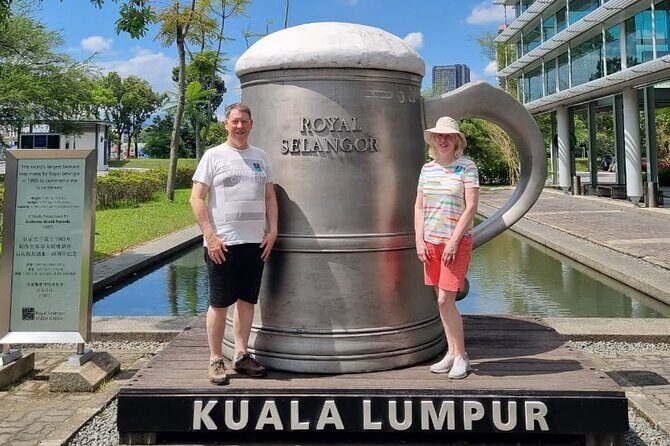
Royal Selangor is one of Malaysia’s best-known names for pewter, and the stop here is a real factory/visitor center experience rather than a random souvenir stall. You spend around 30 minutes, and admission is free for this stop.
What’s great about this stop is the visual learning. Pewter has a reputation for looking old-school, but seeing the production environment helps you understand why pieces can be so detailed. In the past, guides have explained the process and pointed out how the finished items are more than quick trinkets—each piece takes real work.
There’s also a practical side to this stop: even if you don’t buy anything, you can still enjoy it as a culture lesson before the physical climb at Batu Caves. It’s a good “settle in” moment.
The trade-off is that this is also a showroom. Some people end up doing light browsing, and you may feel a little pressure to purchase if that’s not your style. If you’re firm about window-shopping, you can still enjoy the factory viewing while keeping your wallet closed.
Jadi Batek Gallery: Learning Batik Design and Printing
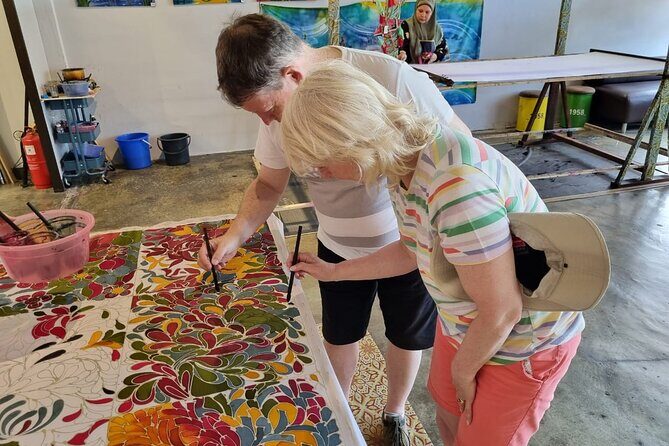
Next comes Jadi Batek Gallery, another 30-minute stop with free admission. This is where batik shifts from an idea to something you can see being made.
Batik is created through a process that involves patterning and dyeing, and the visit here is focused on how the design and printing work. Even if you don’t go for a finished product, you’ll likely leave with a clearer sense of why batik patterns look the way they do and how repeated steps build color and detail.
This stop is especially valuable if you want a more hands-on feeling than a museum-only experience. Pewter is about metal craft; batik is about color, pattern, and technique. Together, the two stops give you a stronger sense of how Malaysian handicrafts can be both artistic and skill-heavy.
Just be aware of the same reality as at Royal Selangor: a batik gallery often sells its products. Some guests feel it turns into a softer sales push. If you’d rather treat this as education first, you can do that—then buy only if a piece genuinely catches your eye.
Batu Caves: 272 Steps, Temples, and Monkey-Spotting Reality
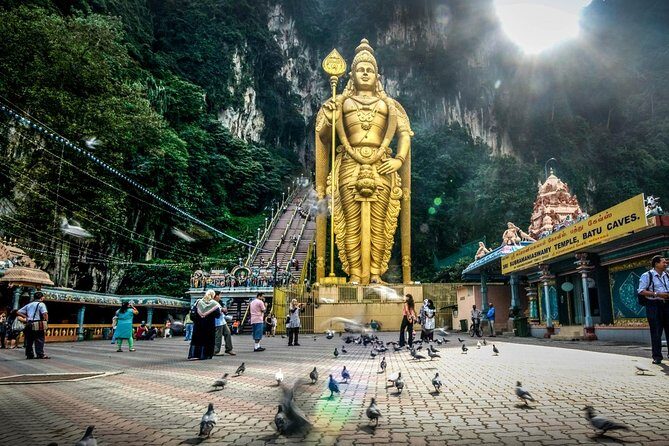
Finally you reach the limestone hills of Batu Caves—three main caverns plus several smaller caves—and the shrine area dedicated to Lord Murugah. Admission is free, and the time here is about 1 hour.
The climb is the headline: a flight of 272 steps leads up to the temple. On paper it sounds simple, but in real life it’s a mix of sun/shade, crowd flow, and steady effort. You also may end up walking more than you expect because the temple area includes side areas and additional steps.
The view and the experience are absolutely worth it, and the “small moments” can make it more fun than a checklist visit:
- You’ll see the golden statue at the entrance area as you approach
- You’ll walk through a temple zone with worshippers and incense
- You’ll likely have plenty of monkey sightings while you’re on the steps
Monkeys can be part of the show, but treat them as wild animals. Don’t offer food and don’t assume they’ll be harmless. Keep small items secure—phones, bags, and anything you wouldn’t want snatched.
Crowds are the other big variable. Batu Caves can be busy, and during busy periods the hour can feel more like “move, look, climb, repeat” than a slow, meditative visit. If it’s a high-traffic day, arriving earlier in the route can help. But this tour often has you reach the caves at the end, so plan your expectations accordingly.
Also: some people describe Batu Caves as being dirty in places. That’s not rare for high-traffic temple sites. Bring a practical mindset and don’t let it steal your joy.




Shopping Stops, Soft-Sell Energy, and How to Stay in Control
Here’s the honest rhythm of this tour: you’re shown crafts that are worth knowing about, and you’re also guided through places where purchases are expected. Some guests love that they can see the craftsmanship up close and then buy if they want. Others feel the selling side takes focus.
So how do you stay in control?
- If you want the educational part only, be clear that you’re not shopping. Friendly phrases like we’ll just look can help.
- If you feel a stop is taking too much time, you can ask for guidance on how to make the visit efficient.
- If you’d rather prioritize Batu Caves timing, ask whether you can adjust the order before you get locked into the schedule. Some groups have requested Batu first, and sometimes guides prioritize the listed sequence anyway.
One extra note: there have been mentions of an additional stop connected to selling goods, which felt unnecessary to some people. If you suspect the day is drifting toward extra retail, you’ll be better off knowing you can ask to skip any detour that doesn’t interest you.
A tour like this can still be good value even if you don’t buy. The trick is using the time to watch, learn, and enjoy the sights—and treating shops as optional.
Practical Tips: What to Wear, When to Climb, and What to Bring
Because this includes both craft stops and Batu Caves, you’ll want a mix of comfort and respect for temple rules.
Dress code: smart casual. For temple areas, you’ll want to wear clothing that covers appropriately. Women may encounter rules about coverage below the knee on the temple steps. Some visitors are asked to buy a cloth if they’re not dressed in a way that meets expectations. If you want to avoid that hassle, dress with conservative coverage from the start.
Stairs and weather: 272 steps is a serious climb. If you’re planning for heat, consider that morning visits tend to feel more manageable because shade can help on the way up. Rain can also change the experience quickly—slippery conditions and heavier crowds can make the caves feel less pleasant.
Bring essentials: good walking shoes matter more than you think. Also consider:
- a small day bag you can close securely (monkeys are opportunistic)
- water (even if food and drinks aren’t included, you can plan for hydration)
Value for Money at $29.16: What You’re Really Buying
The headline price is $29.16 per person, and that number becomes more meaningful once you look at what’s included:
- English-speaking driver
- hotel pickup and drop-off (free within 5km of the city center)
- air-conditioned vehicle
- private transportation if you choose the private option
- admission tickets are free for the key stops
- mobile ticket convenience
For a short KL visit, “simple and scheduled” can be worth more than it sounds. You’re buying time and stress reduction: no transport puzzles, no waiting for the right bus, and no worrying about when to arrive.
The main cost add-on is the USD 10 pickup surcharge outside the 5km radius. So the best value comes if your hotel is close to central areas that qualify for included pickup.
If you’re comparing options, think this way: Batu Caves alone is the draw, but the pewter and batik stops turn the day into a fuller cultural half-day. Even if you skip shopping, you still get craft-focused storytelling you might miss if you go totally on your own.
Who This Tour Fits Best (And Who Might Prefer Something Else)
This is a good match if:
- you’re a first-time KL visitor
- you want Batu Caves without transport hassle
- you like craft stops and want to see pewter and batik processes
- you prefer smaller-group attention rather than a huge bus
It may be less ideal if:
- you hate any shopping pressure and want strictly sight-focused time
- you want Batu Caves first no matter what
- you’re sensitive to crowded temple conditions and want a quieter, self-paced climb
Guide quality is often the difference-maker. Past guests have praised guides such as Aris, Matha, Fauzi, Indra, and Rayhan Raj Naidu for friendliness, punctuality, and sharing helpful context. You can’t count on any specific name for your date, but it’s a reassuring sign that many guides lean into explanation rather than silence.
Should You Book This Tour?
Book it if you want a smooth, short, culture-plus-caves day that’s easy to plug into a KL itinerary. The combination of free admissions at the stops, included pickup within 5km, and a small group max makes it strong value for the price.
Skip or reconsider if you want Batu Caves to be the only focus and you dislike the idea of factory/showroom environments. In that case, you might prefer a direct, simpler approach to the caves with less time spent in sales-oriented spaces.
If you do book, go in with a smart strategy: treat the pewter and batik stops as learning opportunities, keep your expectations realistic about crowds at Batu Caves, and wear temple-appropriate clothing so you don’t get stuck buying coverage at the last minute.