REVIEW · KUALA LUMPUR
Batu Caves and Malaysian Crafts Tour from Kuala Lumpur
Book on Viator →Operated by Asian Overland Services Tours & Travel · Bookable on Viator
Monkey chaos meets handcrafts near KL. I like how this tight tour strings together Royal Selangor pewter and batik printing, then drops you at Batu Caves for a real climb up to the Hindu shrine of Lord Murugah. One thing to think about: Batu Caves time can feel a bit rushed, and the batik stop can lean more shop-style than hands-on.
I also appreciate the human touch. When the guide is strong (Guna gets mentioned a lot for being informative), you get better context than just seeing things and moving on. Plus, it’s a small group setup, with a maximum of 10 travelers, and you get air-conditioned transport plus hotel pickup and drop-off in central Kuala Lumpur.
Key Things to Know Before You Go
- 272 steps up to Lord Murugah at Batu Caves, plus a temple museum inside the caves
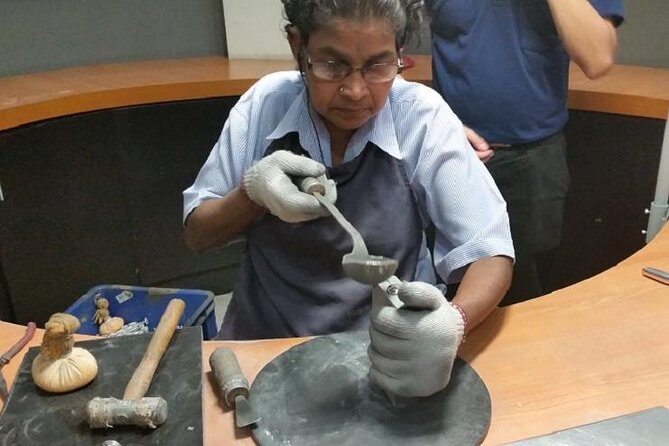
- Royal Selangor Pewter stop where you can watch casting, filing, polishing, and hammering in action
- Batik printing uses wax and colorful dyes, with artisans working in a traditional process
- Morning or afternoon tour options, so you can match your KL schedule
- Monkeys are real on the steps, so keep food and water tightly secured
- Comfortable shoes + cover-up clothing matter at Batu Caves
In This Review
- The Smart Half-Day Combo: Caves and Crafts in One Shot
- Getting Out of Kuala Lumpur: Ambassador Row to the Countryside
- Royal Selangor Pewter: Why This Factory Stop Feels Better Than a Usual Demo
- Batik Printing Center: Traditional Wax-Resist Meets the Reality of Timing
- Batu Caves Climb: Lord Murugah, Temple Murals, and the Monkey Factor
- What to wear and how to plan your time
- The biggest time-management trick
- Price and Value: What You Pay For (and What You Don’t)
- Group Size, Guides, and the Pace You Should Expect
- Who Should Book This Tour (and Who Should Skip It)
- Should You Book This Batu Caves and Malaysian Crafts Tour?
- FAQ
- How long is the Batu Caves and Malaysian Crafts Tour?
- Is hotel pickup and drop-off included?
- Does the tour include food and drinks?
- Is this tour offered in the morning and afternoon?
- Are admission tickets included for the stops?
- What should I wear for Batu Caves?
- How many people are in the group?
- Is the tour cancelable for a full refund?
The Smart Half-Day Combo: Caves and Crafts in One Shot

This tour works because it avoids the all-day trap. You get out of Kuala Lumpur long enough to feel like you did something different, then you return before your legs and patience fully tap out. In about 3.5 hours, you hit three big themes that people come to this area for: religion, metalwork, and textile craft.
I also like the flow. Instead of hopping between random stops with no connective tissue, the day moves in a straight line: drive out, see a major craft factory, watch traditional fabric production, then climb into Batu Caves. You end up with a stronger sense of how Malaysian culture shows up in everyday objects and in religious spaces.
The one caution is timing. Batu Caves is the star, and it can take longer than you think—especially if you stop for photos, watch the temple scenes, or deal with monkey activity on the stairs. Plan to move at a steady pace and let the cave experience be the focus.
Getting Out of Kuala Lumpur: Ambassador Row to the Countryside
Right away, you’re not stuck in traffic with city views for the whole trip. The drive leaves from central Kuala Lumpur and heads toward the outskirts, cruising past Ambassador Row as you depart. You’ll also see Malay villages along the way, which helps the day feel less like a museum shuttle and more like a short regional outing.
The vehicle is air-conditioned, and it’s a small-group format (max 10), so you’re not packed shoulder-to-shoulder. That matters when you’re going somewhere that involves heat, steps, and short stop times. It also helps you stay more comfortable if you’re one of those people who gets cranky when sitting too long in the sun.
Pickup and drop-off are included only for hotels in central Kuala Lumpur. If your hotel is outside that range, you may need to make your own way to a central pickup point.
You can also read our reviews of more tours and experiences in Kuala Lumpur.



Royal Selangor Pewter: Why This Factory Stop Feels Better Than a Usual Demo

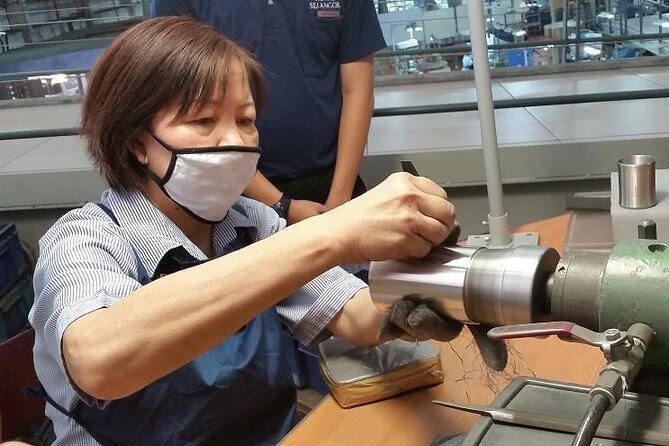
If you’ve done craft factory tours before, you might expect a quick show-and-tell. This one is different in a good way. At the Royal Selangor Visitor Centre, the emphasis is on watching real metalwork methods rather than just looking at finished products behind glass.
You’ll see artisans fashion handmade pewter pieces using techniques like:
- casting
- filing
- polishing
- hammering
That’s the kind of detail that sticks with you later. It makes the objects feel less like souvenirs and more like something people actually learned with their hands. You also get a sense of scale because Royal Selangor is described as the largest and most modern pewter factory in the world, so it’s not a tiny cottage operation tucked in a back room.
What I think is especially useful for you: this is a stop where you can ask questions without feeling like you’re interrupting. If you speak up, a good guide can connect the process to what you’ll see at Batu Caves and in batik—different mediums, same idea: skill, tradition, and symbolism.
One more practical note: the schedule gives you around 2 hours here. That’s enough time to watch, look around, and still stay on track for the big climb.
Batik Printing Center: Traditional Wax-Resist Meets the Reality of Timing
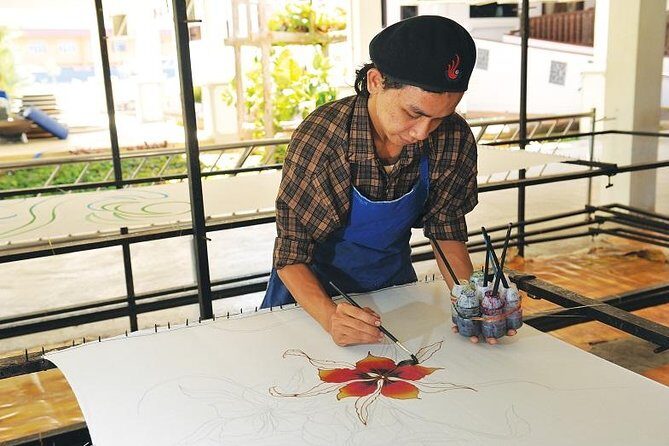
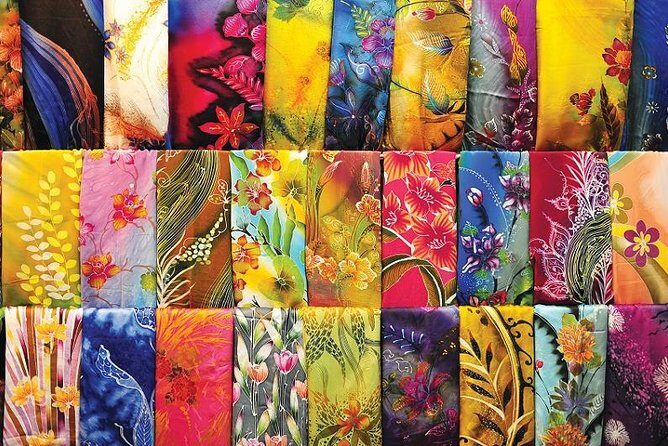
After pewter, you head to a local batik center to see how designs are created. The key idea is wax and dyes. Artisans apply wax to shape the pattern, then use colorful dyes to bring the fabric to life. It’s a classic wax-resist process, and it’s easy to appreciate even if you don’t know the technical terms.
That said, this is where the tour gets a little mixed in feel. Some people love the craft side and enjoy watching artisans at work. Others point out that the stop can also feel like a sales-oriented pause—more about browsing and buying than long explanation.
So how should you handle it? Simple:
- Go in curious, not expecting a full-length atelier workshop.
- Treat any purchase as optional, not required.
- If you’re short on patience, plan to spend your time watching demonstrations first, then only browse if it’s still interesting.
For value, this stop matters because it gives you context. Batu Caves is about spiritual life and visual storytelling; batik is about pattern, symbolism, and cultural identity you can take home in fabric form.
Batu Caves Climb: Lord Murugah, Temple Murals, and the Monkey Factor
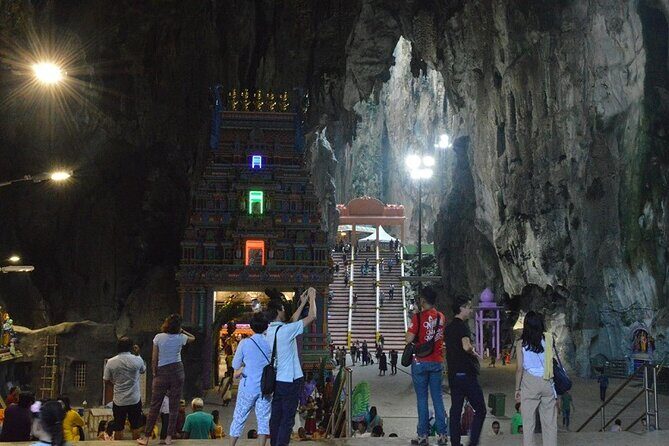
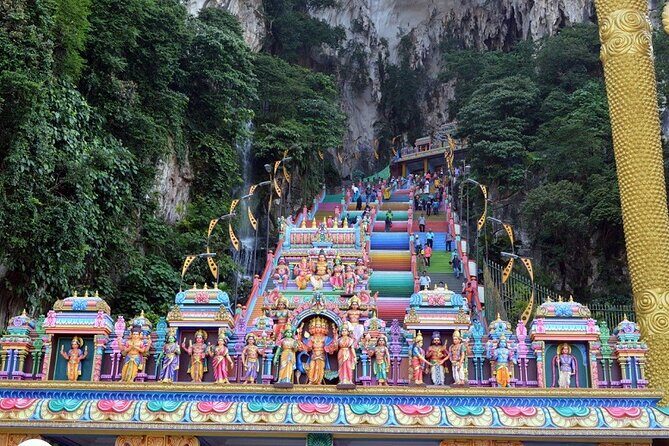
The tour ends where most people want to start: Batu Caves. The limestone hills and the big temple cave are instantly impressive. You’ll climb 272 steps to reach the shrine of Hindu deity Lord Murugah. Yes, it’s a lot of steps. If you go too fast, you’ll pay for it.
Inside, there’s a temple museum area housed within the cave spaces. Your guide shares insights into the deities represented in the temple murals. Even if you’re not a religious history scholar, the explanations help you see beyond the scenery.
Now, the practical elephant in the cave: monkeys. They’re a huge part of the experience. They’ll appear along the steps and around the cave areas, often acting like they own the place.
Here’s how to keep the day smooth:
- Don’t carry snacks openly.
- Keep water and food secured away from grabby hands.
- Avoid leaving items hanging from outside pockets or backpack nets.
One reviewer recounted a monkey grabbing a water bottle from an outside backpack compartment and drinking from it. Whether that happens to you or not, the behavior pattern is consistent: if something looks edible or drinkable, the monkeys treat it like a vending machine.
What to wear and how to plan your time
Batu Caves is a religious site, so dress appropriately—cover up. Shoulders and knees should be covered, and it’s smart to bring a light layer if your outfit is too bare. If you forget something, you might be able to cover up with a rental wrap-type skirt near the entrance area.
Also pack for the real environment:
- Comfortable walking shoes with grip
- A hat for sun
- Hand antiseptic gel or wipes
Batu Caves can be dusty and messy, and during or after events it may look worse. Toilets can be paid and may not come with paper, so tissues are useful.



The biggest time-management trick
This tour does not give you endless cave wandering time. You’re not there to do a slow hike tour of every tunnel. You’re there to see the main temple area, the museum portion, and the view from the top.
So choose your pace:
- If you’re chasing photos, slow down for the best angles, but keep moving so you don’t run out of time.
- If you just want the key temple highlights, set a clear plan in your head before you start climbing.
Price and Value: What You Pay For (and What You Don’t)
At about $24.23 per person, this tour is priced like a budget-friendly way to get three major stops without the stress of managing transport. You’re paying for:
- hotel pickup and drop-off in central KL
- an English-speaking driver/guide
- an organized route that strings together pewter, batik, and caves
- air-conditioned transport
- free admission tickets listed for the pewter and Batu Caves stops
That’s the value piece. If you try to DIY it, you might save money, but you’ll also spend time figuring out how to coordinate transport efficiently across three different locations and how to stay on schedule for the steps.
On the other hand, some people feel the craft stops could be shorter or more focused, and the batik area can feel like a shopping detour instead of a deep workshop. So the value depends on what you care about most.
If you’re mostly there for Batu Caves, you’ll probably feel that you’re paying to get there with zero hassle plus a couple of educational add-ons. If you enjoy seeing how things are made—metalwork and fabric—then the stops start to feel like more than just filler.
Group Size, Guides, and the Pace You Should Expect
This tour runs with a maximum of 10 travelers, and that’s a good size. It’s not private, but it’s small enough for the guide to keep track of people. When a guide is strong, you get explanations that turn the stops from “look at it” into “understand why it looks like that.”
Guides have made a difference here. One guide name, Guna, shows up in the feedback as particularly informative. That matters because Batu Caves isn’t just a viewpoint; it’s a religious space, and even short commentary about the temple murals can change how you experience the visit.
The pace is also worth knowing. Even though it’s called a 3.5-hour tour, the schedule includes real movement: travel, factory time, batik time, and the steps. You shouldn’t expect a slow, unhurried day with long museum-style wandering. You should expect a well-timed highlight run.
Who Should Book This Tour (and Who Should Skip It)
I think this is a great choice if:
- you have limited time in Kuala Lumpur
- you want a guided, low-stress way to see Batu Caves
- you’re interested in how Malaysian crafts are made, not just in seeing the final objects
- you prefer a small-group day trip rather than big-bus chaos
I’d be more cautious if:
- you want long time inside Batu Caves with zero rushing
- you dislike shopping-oriented stops and prefer purely practical demonstrations
- you have mobility limits that make stairs harder (the climb is 272 steps)
If you’re carrying any knee issues, plan your pace carefully. You don’t need to sprint. Many people climb at a steady, photo-taking pace, and that’s a better choice than forcing speed.
Should You Book This Batu Caves and Malaysian Crafts Tour?
Book it if you want a clean, organized way to mix Batu Caves with Royal Selangor pewter and batik printing in one short outing. The biggest win is convenience plus a guided understanding of what you’re seeing. The small group setup also helps.
Skip it (or consider a different option) if you think you’ll feel disappointed by limited cave time or if you’re mainly chasing solitude. Batu Caves brings steps, heat, and monkeys—fun for many people, stressful for a few. And the batik stop can be hit-or-miss depending on how much you value the craft talk versus browsing.
If you do book, go in with one goal: make the climb count. Keep your hands free for photos, keep your food and water secure, wear proper temple-cover clothing, and treat the craft stops as context for the final, unforgettable place you’re visiting.
FAQ
How long is the Batu Caves and Malaysian Crafts Tour?
The tour runs about 3 hours 30 minutes.
Is hotel pickup and drop-off included?
Yes. Hotel pickup and drop-off are included for hotels within Kuala Lumpur central city limits.
Does the tour include food and drinks?
No. Food and drinks are not included.
Is this tour offered in the morning and afternoon?
Yes. You can choose either a morning or an afternoon tour.
Are admission tickets included for the stops?
The Royal Selangor Visitor Centre and Batu Caves are listed as having admission ticket free.
What should I wear for Batu Caves?
Dress appropriately for a religious place of worship, with clothing that covers up. Comfortable walking shoes are also recommended, and a hat can help with sun.
How many people are in the group?
The tour has a maximum of 10 travelers.
Is the tour cancelable for a full refund?
Yes. Free cancellation is available if you cancel at least 24 hours before the experience’s start time.